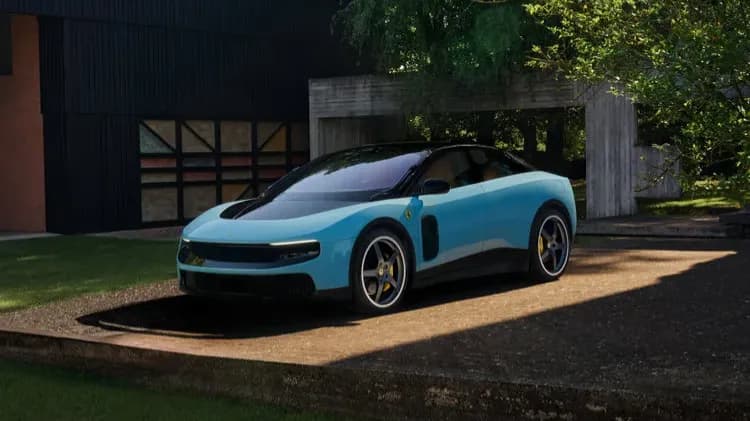
Ferrari (NYSE: RACE) unveiled the Luce on May 26, 2026 — its first fully battery-electric production car — priced at 550,000 EUR (c. $640,000) and positioned as what the company calls a "Ferrari 360°," a new product category entirely separate from its combustion lineup.
The reaction was swift. Ferrari shares fell 6.27% in Milan trading, dropping to EUR 290.55 and erasing roughly EUR 3 billion (c. $3.5 billion) in market capitalisation in a single session. The backlash was almost entirely directed at one thing: the design.
Advertisement – Continue scrolling for more
The first and most debated flashpoint is Ferrari's decision to hand the entire brief — exterior, interior, and interface — to LoveFrom, the creative agency co-founded by Sir Jony Ive and Marc Newson. Ive is best known for the original iPhone and iMac G3; Newson for the Apple Watch and a string of consumer product collaborations. Neither has designed a car before.
Critics have argued that the pairing was structurally wrong for the task: Ferrari's design language has historically been built on aggression, emotion, and sensuality — qualities that Autoevolution noted are absent from either designer's portfolio. Former Ferrari chairman Luca di Montezemolo reportedly suggested Ferrari consider removing its iconic Prancing Horse badge from the vehicle entirely.
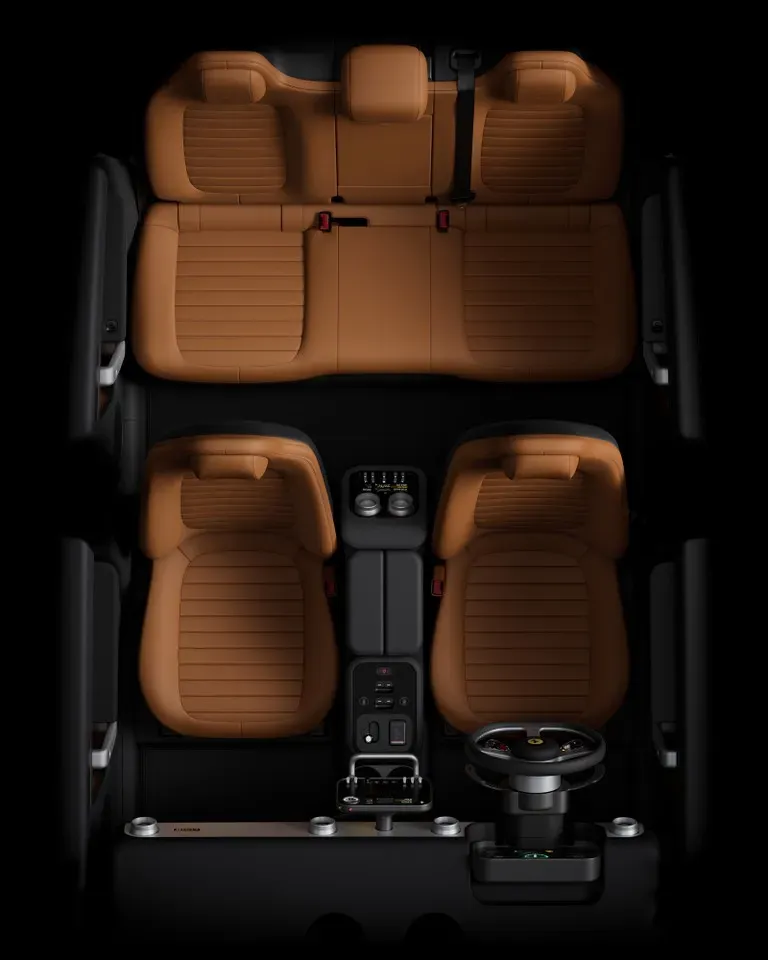
Ferrari Luce 5-seat layout (Ferrari)
The second controversy is the body format itself. The Luce is a four-door, five-seat liftback — the first Ferrari in the company's history capable of seating five passengers simultaneously. Rear occupants enter through coach doors hinged at the B-pillar, a suicide-door arrangement also used on the Purosangue.
Advertisement – Continue scrolling for more
For a brand whose identity has been built almost entirely on two-seat sports cars and mid-engine exotics, the body format alone has proven divisive, before accounting for what it actually looks like.
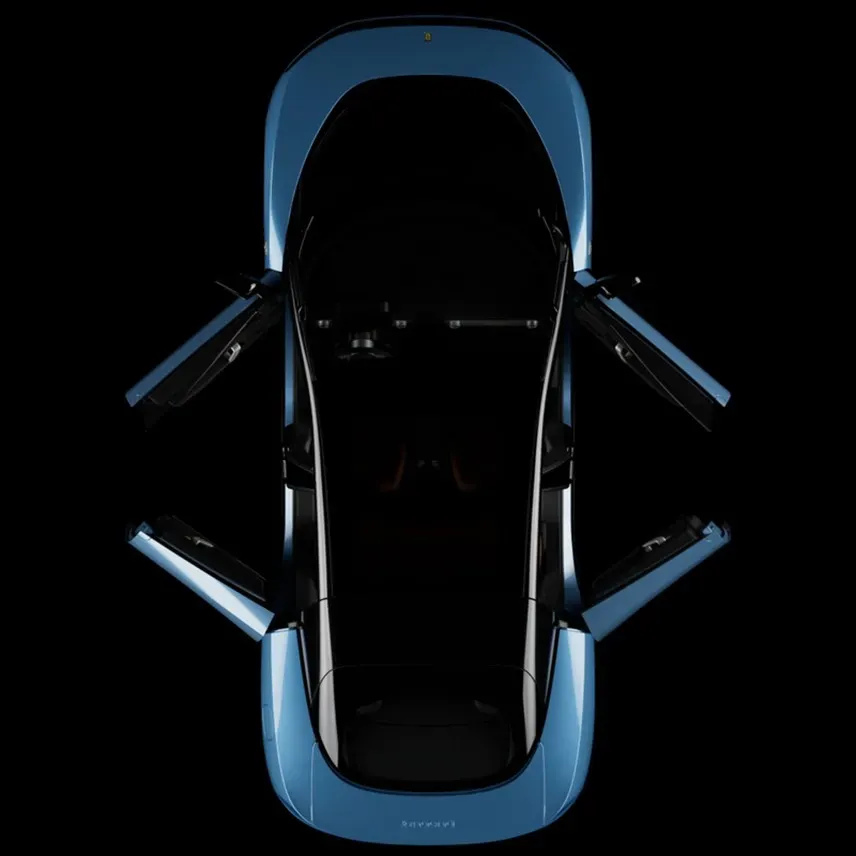
Ferrari Luce suicide-doors (Ferrari)
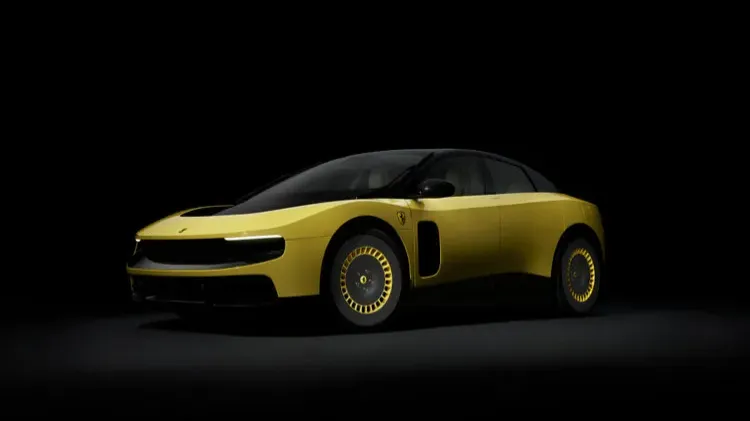
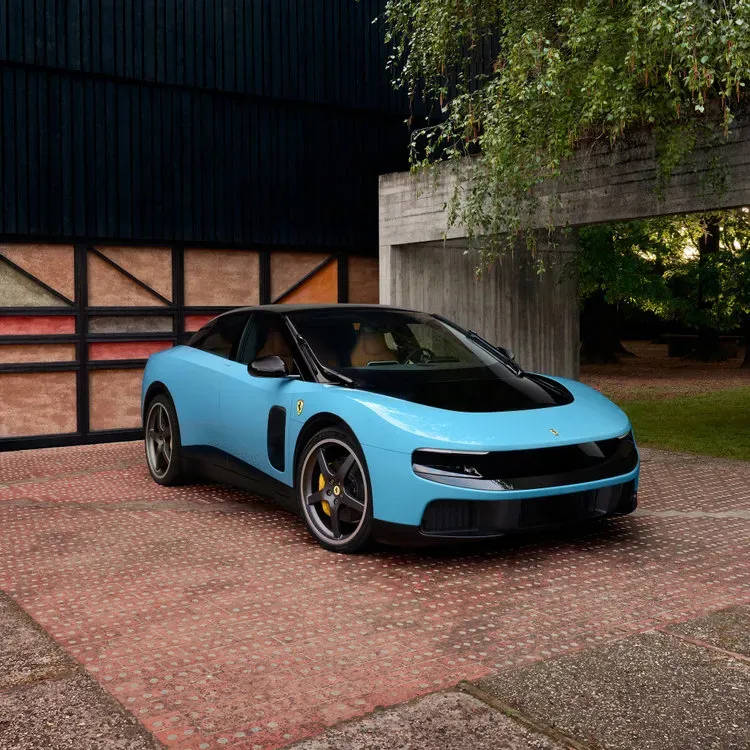
What it actually looks like is the third controversy. The Luce is defined by what Ferrari describes as a "glasshouse" design — a shell-like form flowing unbroken from the front fascia, over the roof, and to the tail.
The result, intended to project calm and refined simplicity, has instead drawn comparisons to a rejected Apple Car prototype, a Jaguar I-Pace in a tuxedo, and on multiple corners of the internet, a Honda Accord.
Advertisement – Continue scrolling for more
Ferrari's own head of product marketing acknowledged, before the reveal, that customer reaction "is going to be very much mixed." Italian Deputy Prime Minister Matteo Salvini also publicly criticised the car's aesthetics — an unusual degree of political commentary for a vehicle reveal.
Ferrari Luce (Ferrari)
The fourth controversy is at each corner. The Luce rides on 23-inch front and 24-inch rear wheels — the largest staggered fitment ever installed on a production Ferrari road car. The wheel design itself is a turbine-style flat disc, a form that several commentators have described as more industrial than celebratory.
Combined with the car's upright greenhouse and its kerbweight of 2,260 kg (4,982 lbs), the treatment amplifies rather than softens the perception of bulk. Autoblog noted that the Luce's own configurator makes it difficult to find a combination that fully works, suggesting the issue runs deeper than any single colour or wheel option.
Advertisement – Continue scrolling for more
The fifth controversy is perhaps the most visually unexpected. Rather than resting horizontally at the base of the windshield, the Luce's wipers park vertically — what Evo magazine called the world's most unusual wiper configuration on any production car.
Ferrari Luce windshield wipers (Ferrari)
The choice is driven by the Luce's continuous bonnet-to-windscreen shutline, which Ferrari calls a "breathtaking piece of design and manufacturing technique." To the engineers, it is a logical solution to an unusual surface geometry.
Advertisement – Continue scrolling for more
To critics, it has become a symbol of a design process that prioritised purity of form over visual intuition. The car also features flush Cybertruck-style door poppers on the B-pillar and a gear selector machined from Corning Gorilla Glass using laser-drilling techniques borrowed from semiconductor manufacturing — details that reinforce the Apple DNA running through the entire project.
Whether the Luce ages into an icon or into a case study may ultimately hinge on whether the driving experience — 1,035 hp, four motors, a claimed 2.5-second 0–100 km/h (0–62 mph) time — makes the exterior irrelevant once buyers are behind the wheel, or whether Ferrari has underestimated how much the soul of the badge lives in the shape of the car.
Conversion rate: 1 USD = 0.859 EUR as of May 26, 2026
Advertisement – Continue scrolling for more