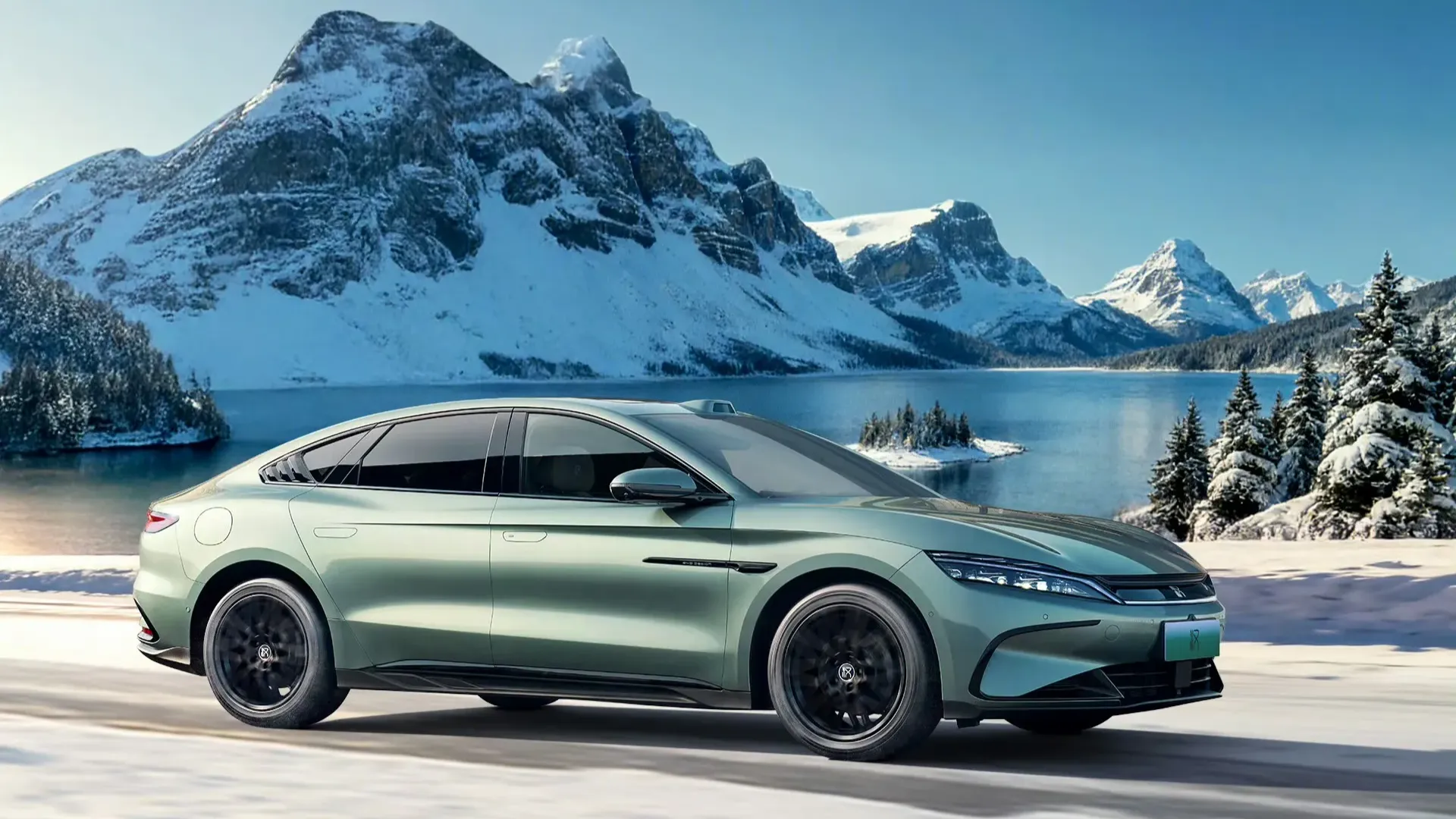
Source: BYD
Canada's shift on Chinese electric vehicles is being met with cautious but genuine public support, according to three separate polls conducted in the weeks after Prime Minister Mark Carney signed a landmark tariff-quota deal in Beijing on January 16, 2026.
The agreement reduced Canada's tariff on Chinese-made EVs from 100 percent to 6.1 percent, allowing up to 49,000 vehicles annually at most-favoured-nation rates, with the ceiling rising to 70,000 by 2031. At least half of those imports must carry an import price below CA$35,000 (c. $25,500) within five years. In exchange, Beijing agreed to reduce retaliatory tariffs on Canadian canola oil and other agricultural exports, which China had imposed in March 2025.
The backdrop matters. Canadian EV sales fell from 264,000 units in 2024 to 191,000 in 2025 following the expiry of the federal Incentives for Zero-Emission Vehicles program, which had raised effective EV prices by 8 to 12 percent.
Advertisement – Continue scrolling for more
The average transaction price for a new EV in Canada has surpassed CA$46,000 (c. $33,500), placing the segment out of reach for many buyers. Against that backdrop, the quota deal was framed by Ottawa as a route to affordability rather than a concession to Beijing.
Consumer sentiment appears to be reading it that way. A Leger poll conducted January 30 to February 2, 2026 among 1,570 Canadians found 61 percent in favour of allowing more Chinese EVs into the market, including 24 percent who strongly backed the decision. Seven in ten respondents said they were aware of the Ottawa-Beijing arrangement, with awareness higher among men and those aged 55 and over.
A separate Abacus Data survey of 2,498 Canadians, commissioned by Clean Energy Canada between January 22 and 27, 2026, found that 35 percent of Canadians are open to purchasing a Chinese EV. Among the 50 percent of respondents who are already open to buying any EV, that share rises to 70 percent. Interest skews younger — half of adults under 30 said they would consider a Chinese model — and is highest in Quebec at 45 percent, compared to 24 percent in Alberta. Only one in five Canadians viewed Chinese EVs as inferior to those currently sold in Canada, while 18 percent believed they are likely superior.
Advertisement – Continue scrolling for more
A third poll, conducted by Nanos Research for Bloomberg among 1,009 Canadians in January and February 2026, found that 53 percent said country of origin would have no bearing on their purchase decision. Another 15 percent said they would be more likely to buy an EV specifically because it was made in China, up from 9 percent in a comparable 2024 survey. That shift represents a near-reversal of sentiment: in 2024, 61 percent of Canadians said they would be less inclined to purchase a Chinese-made EV.
Resistance remains concentrated and geographically specific. The Leger poll found concerns about vehicle quality and durability at 38 percent, effects on the Canadian auto industry at 38 percent, and data security and privacy at 33 percent. Anxiety over the domestic industry is markedly higher in Ontario, which hosts plants operated by Ford, General Motors (NYSE: GM), Stellantis (NYSE: STLA), Honda, and Toyota.
Nearly two-thirds of all Canadians surveyed expressed concern about potential US retaliation should Canada deepen trade ties with China — though close to 60 percent of respondents nonetheless opposed curbing that trade to avoid such retaliation.
Advertisement – Continue scrolling for more
Political opposition has been vocal but not entirely representative of public opinion. Ontario Premier Doug Ford called for a boycott of Chinese EVs on January 21, 2026, and Unifor, Canada's largest private-sector union, described the deal as "a self-inflicted wound to an already injured Canadian auto industry."
A Pallas survey, however, found 60 percent of Ontarians supported the Ottawa-Beijing agreement, even as a majority said they trusted Prime Minister Carney more than Premier Ford to manage relations with both the US and China.
The commercial landscape is still taking shape. No confirmed brand-by-brand allocation exists, but BYD (HKG: 1211) is widely expected to be the dominant entrant given its vertical integration and pricing power.
Advertisement – Continue scrolling for more
Models under discussion include variants of the BYD Seal, Dolphin, and Atto 3, with entry-level configurations potentially priced below CA$35,000. Geely-owned Volvo and Polestar, which already manufacture vehicles in China and have established Canadian dealer networks, are also positioned to benefit — the tariff reduction applies to all China-manufactured EVs regardless of brand origin.
Chery, and XPeng (NYSE: XPEV) have also been named by industry analysts as plausible early entrants. Industry Minister Mélanie Joly confirmed meetings with BYD and Chery in late January 2026 as Ottawa pursues potential joint-venture manufacturing arrangements.
The 49,000-unit quota amounts to roughly 2.5 percent of Canada's approximately 1.9 million annual vehicle sales, a figure Carney has called "less than three percent of the overall car market."
Advertisement – Continue scrolling for more
McMaster University economist Addisu Lashitew estimated that the influx could increase total Canadian EV sales to roughly 211,000 units in the first year — a gain of about 31,000 vehicles — with total consumer savings of CA$330 million and an average saving of CA$6,700 per Chinese EV buyer on lower-cost models.
One complication that no poll has fully priced in: Chinese-made EVs will be ineligible for Canada's newly reinstated federal consumer rebate of up to CA$5,000, which applies only to EVs manufactured in countries with free-trade agreements with Canada. That asymmetry could temper the affordability argument — at least until joint-venture production begins on Canadian soil.
Whether the deal becomes a template for deeper industrial integration or remains a politically managed import channel may depend less on what Canadians think of Chinese EVs now, and more on whether a CA$35,000 model actually arrives on a dealer lot near them.
Advertisement – Continue scrolling for more