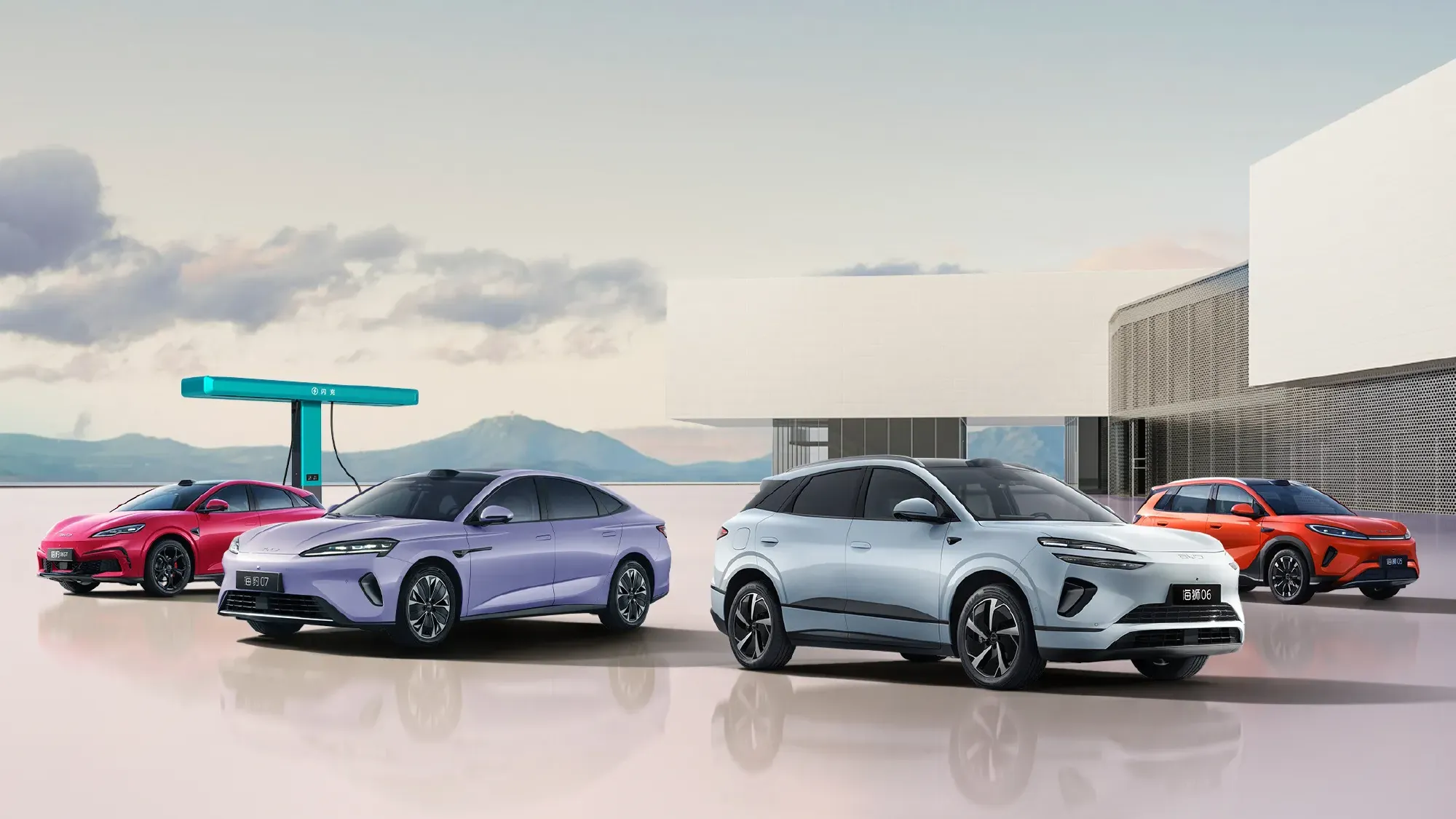
BYD (HKG: 1211), Chery, and Geely have told Canadian Industry Minister Mélanie Joly they are willing to explore joint ventures to manufacture electric vehicles in Canada, Automotive News reported on June 22, 2026 — a notable softening from the position BYD executive vice president Stella Li stated in March, when she told Bloomberg that "I don't think a JV will work."
The reversal follows sustained government pressure. At the G7 summit in France on June 17, 2026, Prime Minister Mark Carney doubled down on Ottawa's demand for joint-venture investment, stating that Chinese capital would only be welcome when it delivered real Canadian manufacturing rather than token assembly. Joly separately met BYD, Chery, and Geely executives during a recent visit to China, telling reporters she wanted to bring "the best technologies to Canada while protecting the 500,000 jobs tied to our auto sector."
The commercial logic for local production is compelling. Chinese-built vehicles entering Canada under the 6.1% tariff quota — set at 49,000 units for 2026, rising to 70,000 by 2030 — are ineligible for Canada's federal EV rebate of up to C$5,000 (c. $3,530). Only vehicles produced domestically, or in free-trade partner countries, qualify. A Canadian plant also bypasses the annual import ceiling entirely. Chinese financial analysts have further noted that manufacturing in Canada — if vehicles meet the 75% North American regional content threshold under USMCA — could open tariff-free access to the US market, making Canada a strategic gateway whose value extends well beyond its own 49,000-unit annual quota.
Advertisement – Continue scrolling for more
The question of where remains open, though a leading candidate has now emerged publicly. In its June 22, 2026 coverage, GM Authority identified General Motors' CAMI Assembly plant in Ingersoll, Ontario, as a potential production site for a Chinese automaker. CAMI has sat idle since GM discontinued the BrightDrop electric delivery van and suspended production there. The plant was purpose-built for EV manufacturing and retains tooling and workforce infrastructure suited to a restart. GM has been in separate discussions that could lead to a sale, with the Belgium-based Dumarey Group among those exploring acquisition — and a Chinese automaker meeting Ottawa's JV conditions could emerge as an alternative buyer.
The Brampton Assembly Plant — also in Ontario and idled since Stellantis moved Jeep Compass production to Illinois — appeared briefly as an alternative after Stellantis proposed assembling Leapmotor EVs there from Chinese knock-down kits. Joly rejected the proposal in April 2026, stating the plant "needs to support the local supply chain." Ontario Premier Doug Ford similarly called the arrangement unacceptable, and the episode set a clear floor for what Ottawa will not tolerate: rebadging pre-assembled Chinese components in Canada without genuine local manufacturing depth.
Advertisement – Continue scrolling for more
BYD already holds a physical presence in Ontario. The company opened a 45,000-square-foot electric bus assembly plant in Newmarket in 2019 — the first new electric bus plant to open in the province in a generation — before the contract wound down due to parts supply issues. That facility gives BYD direct experience in Canadian regulatory and labour conditions. It cannot serve as a passenger vehicle plant at meaningful scale, but it remains a corporate and operational anchor in the province.
Ottawa's four conditions — majority Canadian ownership, Canadian labour standards, local parts integration, and secure software — will require material concessions from a company whose competitive model is built on vertical integration. Stella Li separately signaled openness to acquiring a legacy automaker outright, which could accelerate the timeline: an acquisition of an existing Canadian plant with a domestic partner structure could satisfy Ottawa's JV requirement while preserving operational control. Whether the world's largest EV maker ultimately bends its model to gain a North American foothold — and where it plants that flag — may be the most consequential manufacturing decision Canada's auto industry faces in a decade.
Advertisement – Continue scrolling for more