Canada's decision to cut its tariff on Chinese-built EVs from 100 per cent to a 6.1 per cent most-favoured-nation rate, inside a 49,000-vehicle annual quota that took effect March 1, 2026, has set off a contest among Chinese automakers over who builds the country's first domestically produced Chinese EV. BYD (HKG: 1211) has emerged as the frontrunner: its executive vice-president has confirmed the company is evaluating a wholly owned Canadian factory, and BYD already holds a regulatory and retail head start none of its rivals can match.
Ottawa's deal with Beijing, reached in January 2026, replaced the punitive tariff imposed in October 2024 with the lower quota rate, which climbs 6.5 per cent annually toward roughly 70,000 vehicles by 2030. Under the quota's terms, the share reserved for vehicles priced at or below $35,000 CAD rises gradually, from 10 per cent in the quota's second year to 50 per cent by its fifth, according to Global Affairs Canada. Prime Minister Mark Carney's government has said the agreement is meant to draw new joint-venture investment into Canadian manufacturing, a structure BYD has already said it does not want.
Advertisement – Continue scrolling for more
BYD Executive Vice-President Stella Li told Bloomberg News on March 13, 2026, that the company is evaluating Canada as a site for a wholly owned manufacturing plant and has not ruled out acquiring an established automaker outright. "I don't think a JV will work," Li said, pointing to BYD's practice of building its own batteries, motors and semiconductors in-house rather than sharing ownership with a partner.
BYD already has a foothold that predates the tariff fight. It has assembled electric buses in Ontario since 2019, and it is the only Chinese automaker with existing Transport Canada compliance clearance, earned through its earlier bus and taxi applications. The company has also hired Markham, Ontario-based consultancy Dealer Solutions Mergers and Acquisitions to build out a retail network, targeting roughly 20 dealerships in its first year, starting in the Greater Toronto Area before expanding to Vancouver, Montreal and Calgary.
Advertisement – Continue scrolling for more
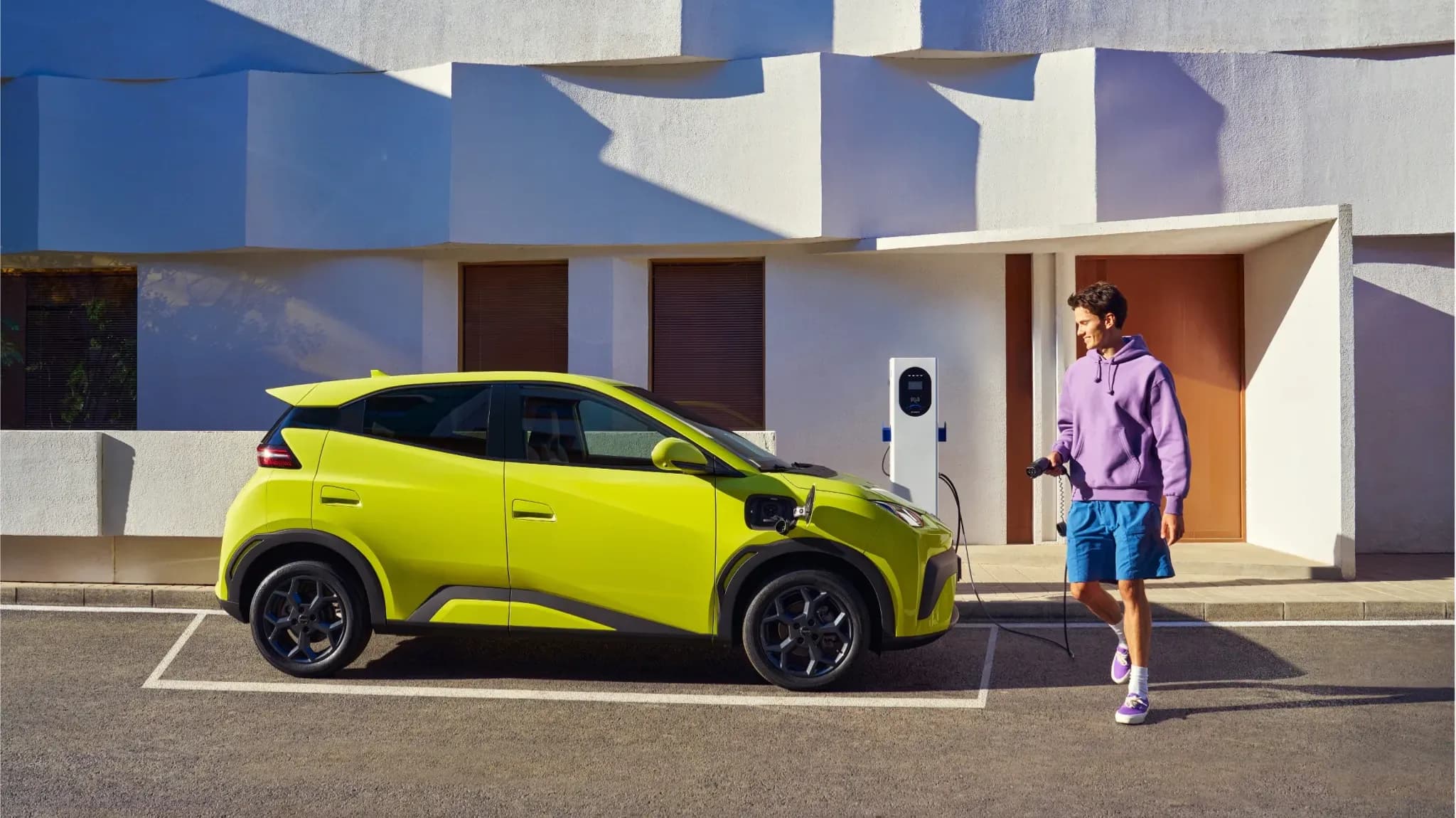
BYD's smaller, cheaper models are expected to lead its Canadian lineup, since they fit the quota's affordable-vehicle carve-out, though BYD has not confirmed pricing or a launch date for any model. A wave of reports in May 2026 citing an impostor account impersonating CEO of BYD Americas, Europe, Middle East, and Africa, Stella Li, claimed a $25,000 CAD Seagull and a firm late-2026 launch date; those specifics were fabricated, and outlets that ran the story have since refuted the claims.
Rivals are further behind. Geely's parent company has said it expects Canadian certification soon for some models and will eventually localize production, though its chief executive has described the brand's strategy as export-led for now. Chery, China's largest automaker by export volume, has filed Canadian trademarks and is recruiting locally but has made no manufacturing commitment. Stellantis's (NYSE: STLA) plan to build Chinese partner Leapmotor's (HKG: 9863) EVs from knock-down kits at its idled Brampton, Ontario plant was rejected by Industry Minister Mélanie Joly in April 2026, who said any revived production there must support Canada's parts supply chain rather than simply assemble imported components.
With an existing assembly plant, pre-cleared import status and a retail network already taking shape, BYD holds a head start few of its rivals can match. Whether that translates into Canada's first Chinese-built passenger EV may hinge on whether Ottawa can persuade a company that has publicly rejected joint ventures to accept one anyway.
Advertisement – Continue scrolling for more