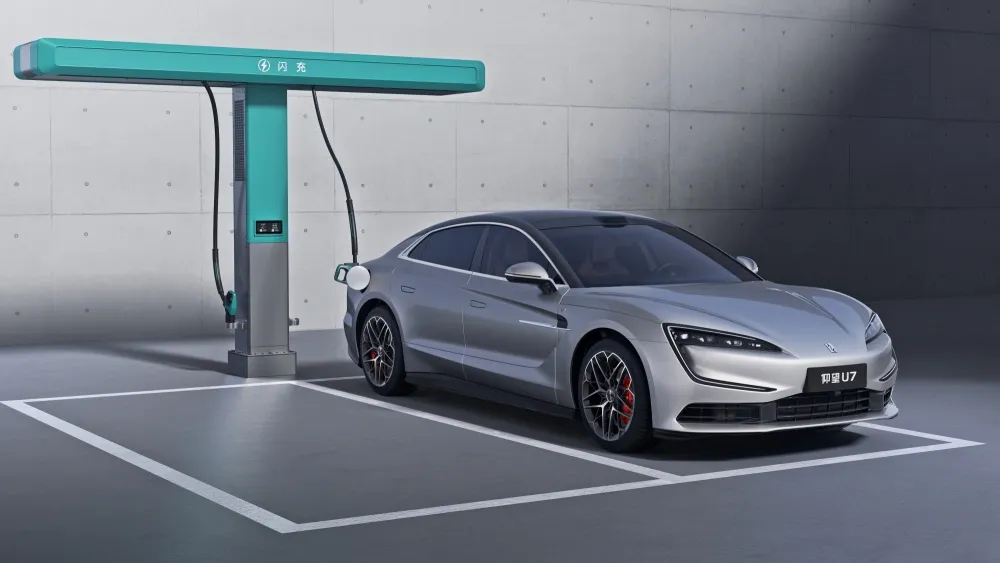
Source: BYD
BYD (HKG: 1211) unveiled its second-generation Blade Battery and Flash Charging 2.0 technology on March 5, 2026, at an event in Shenzhen, promising to charge from 10% to 97% in nine minutes — a speed that, for the first time in mass production, brings EV refuelling broadly in line with a petrol stop.
The announcement comes as the world's largest electric vehicle manufacturer faces a domestic sales crisis. Combined January and February 2026 deliveries fell roughly 36% year-on-year, with February marking a 41% single-month drop — the steepest since early 2020. China's reinstatement of a 5% purchase tax on new energy vehicles at the start of 2026 pulled purchases forward into late 2025, hollowing out early-year demand.
Advertisement – Continue scrolling for more
The Blade Battery 2.0 uses lithium iron phosphate (LFP) chemistry — the same cobalt- and nickel-free approach as its predecessor — while pushing energy density more than 5% higher than the outgoing generation. LFP cells currently cost around $81 per kilowatt-hour, compared with $128/kWh for nickel manganese cobalt chemistry, according to BloombergNEF, making the cost trajectory a key differentiator over rival packs.
BYD has also extended the battery's warranty to lifetime coverage on the cells, up from the previous generation, and raised the guaranteed capacity retention rate by 2.5 percentage points.
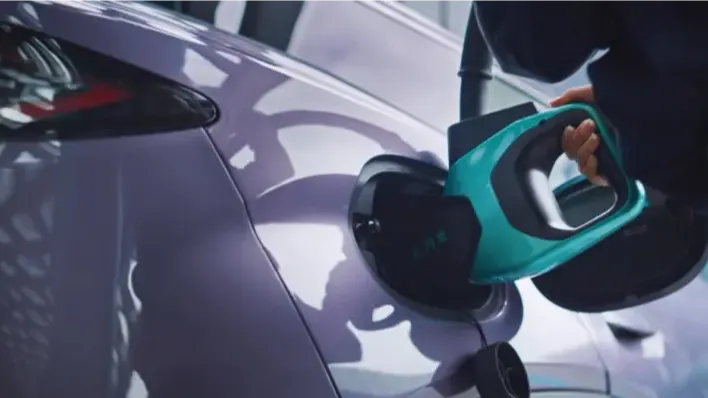
Source: BYD
The headline charging figures — 10% to 70% in five minutes, 10% to 97% in nine minutes — come with a firm caveat. BYD chairman Wang Chuanfu confirmed that achieving these speeds requires one of the company's new Flash Charging stations, each rated at a peak output of 1,500 kW at 1,000 volts.
The stations use overhead-suspended cables on a sliding rail system — designed to cope with the considerable weight of liquid-cooled charging guns — and can serve either side of a parked vehicle.
In the absence of dedicated Flash Charging hardware, vehicles equipped with Blade Battery 2.0 can still use China's roughly 4.8 million existing public charging piles, charging 30% to 50% faster than conventional models.
Advertisement – Continue scrolling for more
Cold-weather performance is also part of the pitch. After 24 hours at –30°C, the battery charges from 20% to 97% in 12 minutes — only three minutes longer than at room temperature, a meaningful claim for BYD's northern China customer base.
Safety testing included nail penetration under active charging after 500 fast-charge cycles, with no smoke or fire recorded, and a bottom-impact test rated at ten times China's updated national standard.
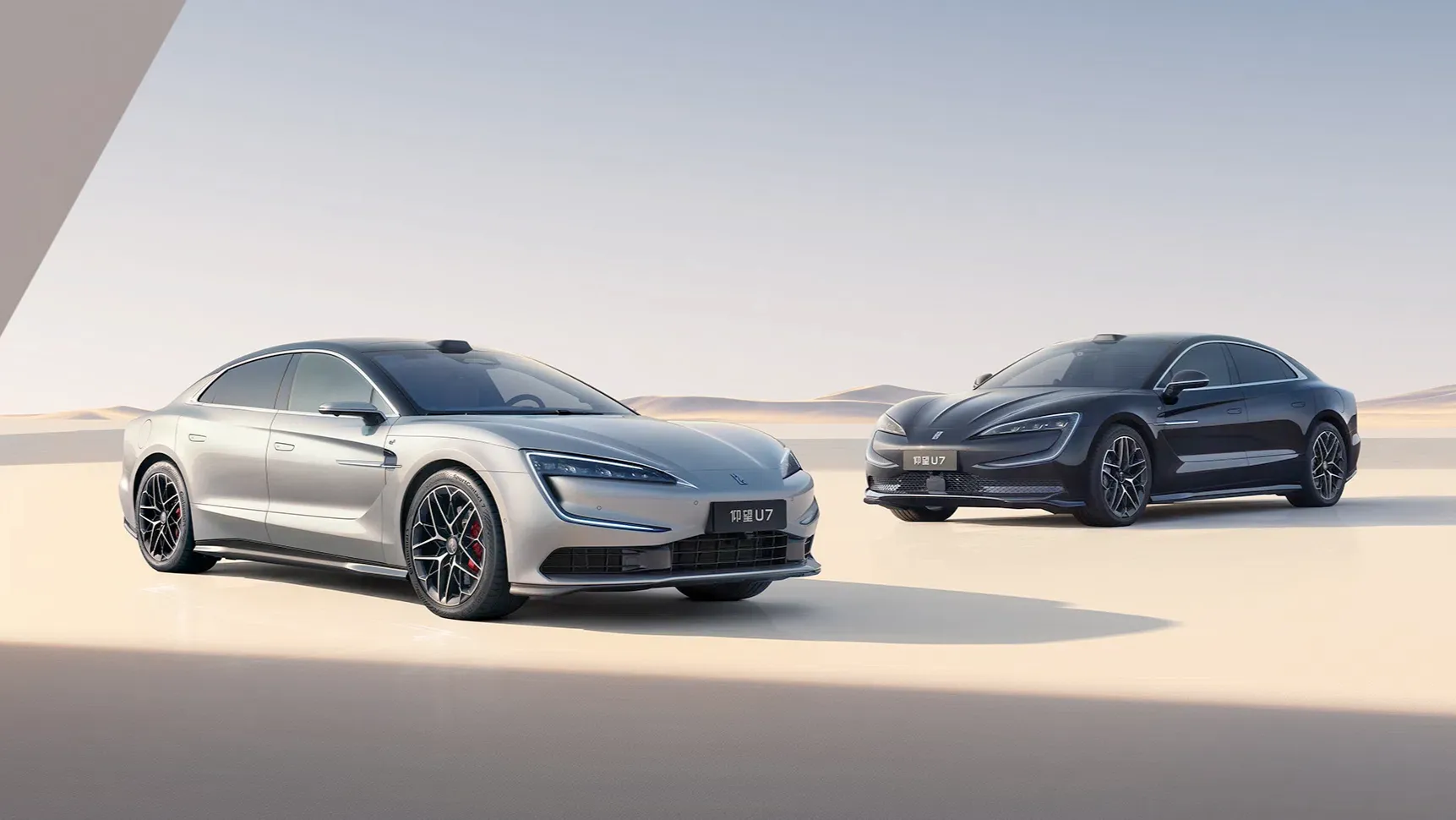
Source: Yangwang
The first model to receive the battery is the 2026 Yangwang U7, the ultra-luxury sedan from BYD's Yangwang sub-brand, starting at 628,000 CNY (c. $91,000). Its 150 kWh pack delivers a CLTC range of 1,006 km (625 miles); CLTC figures typically run around 35% higher than EPA ratings, putting real-world range closer to 650 km (404 miles). The U7 pairs its battery with four permanent-magnet synchronous motors producing a combined 960 kW (1,287 hp), with 0–100 km/h acceleration in 2.9 seconds.
Denza's updated Z9GT shooting brake, also launched on March 5, uses the same battery in a single-motor configuration and claims 1,036 km (644 miles) of CLTC range; its BEV starting price was cut 24% to 269,800 CNY (c. $39,100).
Ten BYD group models in total will receive Blade Battery 2.0 in the first wave, spanning the Dynasty, Ocean, Denza, Fang Cheng Bao, and Yangwang brands.
Advertisement – Continue scrolling for more
Infrastructure is the other half of the strategy. BYD said it completed 4,239 Flash Charging stations in the first two months of 2026, with commissioning beginning the day after the event. The target is 20,000 stations by year-end, of which 18,000 would be built under a "station-within-a-station" model — embedding BYD's 1,500 kW piles inside existing third-party fast-charging sites, with grid-scale batteries absorbing load spikes.
Wang described installation as being about as complex as fitting an air conditioner, and said the highway network would include 2,000 locations, covering one-third of China's motorway service areas and placing a Flash Charging point within every 100 km (62 miles) of highway.
Advertisement – Continue scrolling for more
The grid question is real, and BYD has not fully resolved it. At 1,500 kW per gun, simultaneous use across even a modest number of stalls would place substantial load on local distribution infrastructure. The buffered "station-within-a-station" model defers rather than eliminates that pressure, and build-out speed will depend on grid operator cooperation that has not yet been publicly confirmed at scale.
Deutsche Bank forecasts BYD's total sales will recover to approximately 4.9 million units in 2026, identifying the Blade Battery 2.0 and Flash Charging rollout as the primary catalysts.
Whether the network can scale fast enough to convert that technology promise into showroom traffic is the question BYD will spend the rest of the year answering.
Conversion rate: 1 USD = 6.90 CNY as of March 5, 2026
Advertisement – Continue scrolling for more