Source: BYD
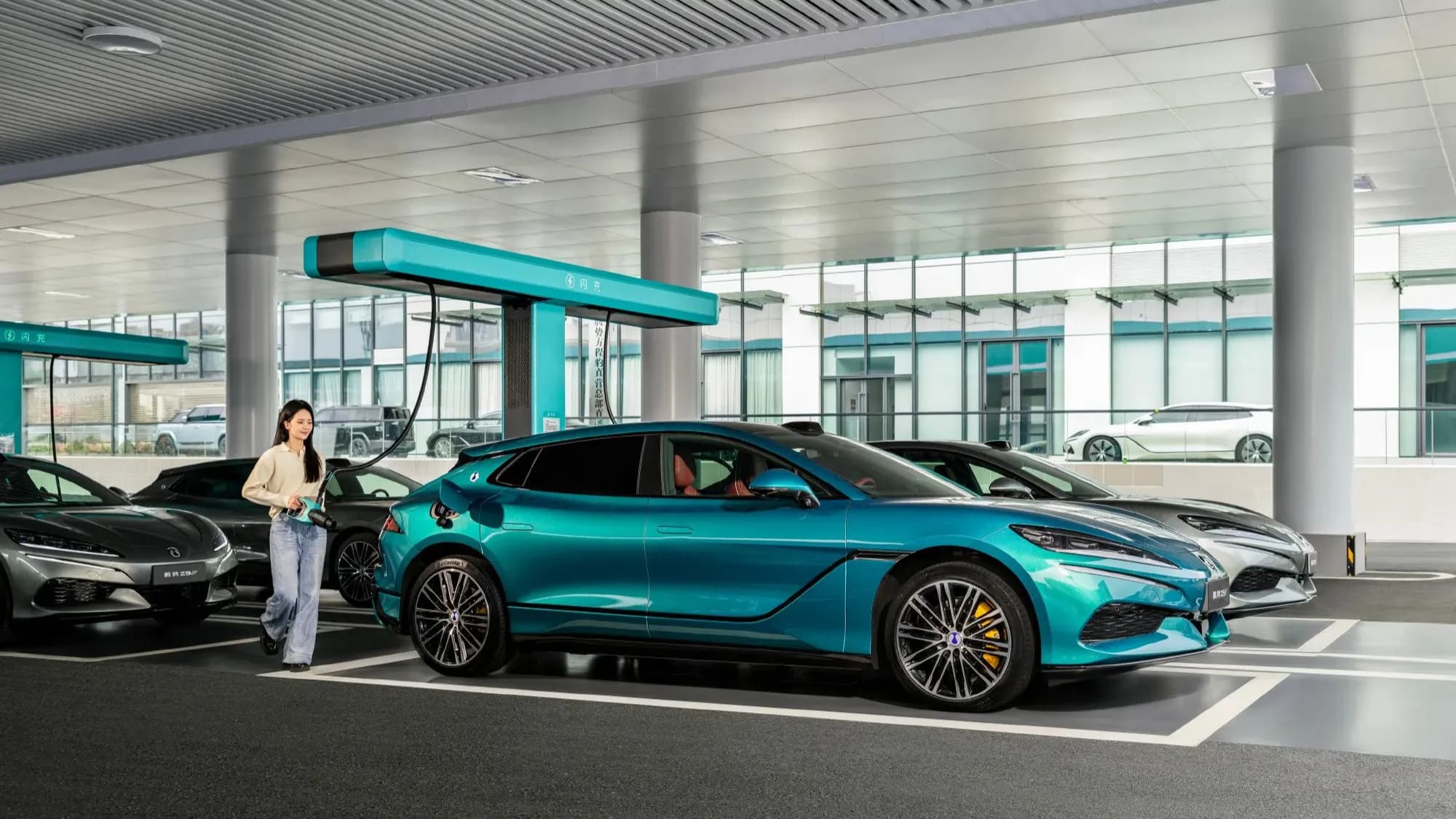
On March 5, 2026, BYD (HKG: 1211) unveiled its second-generation Blade Battery and Flash Charging 2.0 technology at a public event in Shenzhen, demonstrating that ten production models across its brand portfolio can charge from 10% to 97% state of charge in nine minutes or less — a window that now competes directly with, and in several cases beats, a routine fuel stop in the United States.
Source: BYD
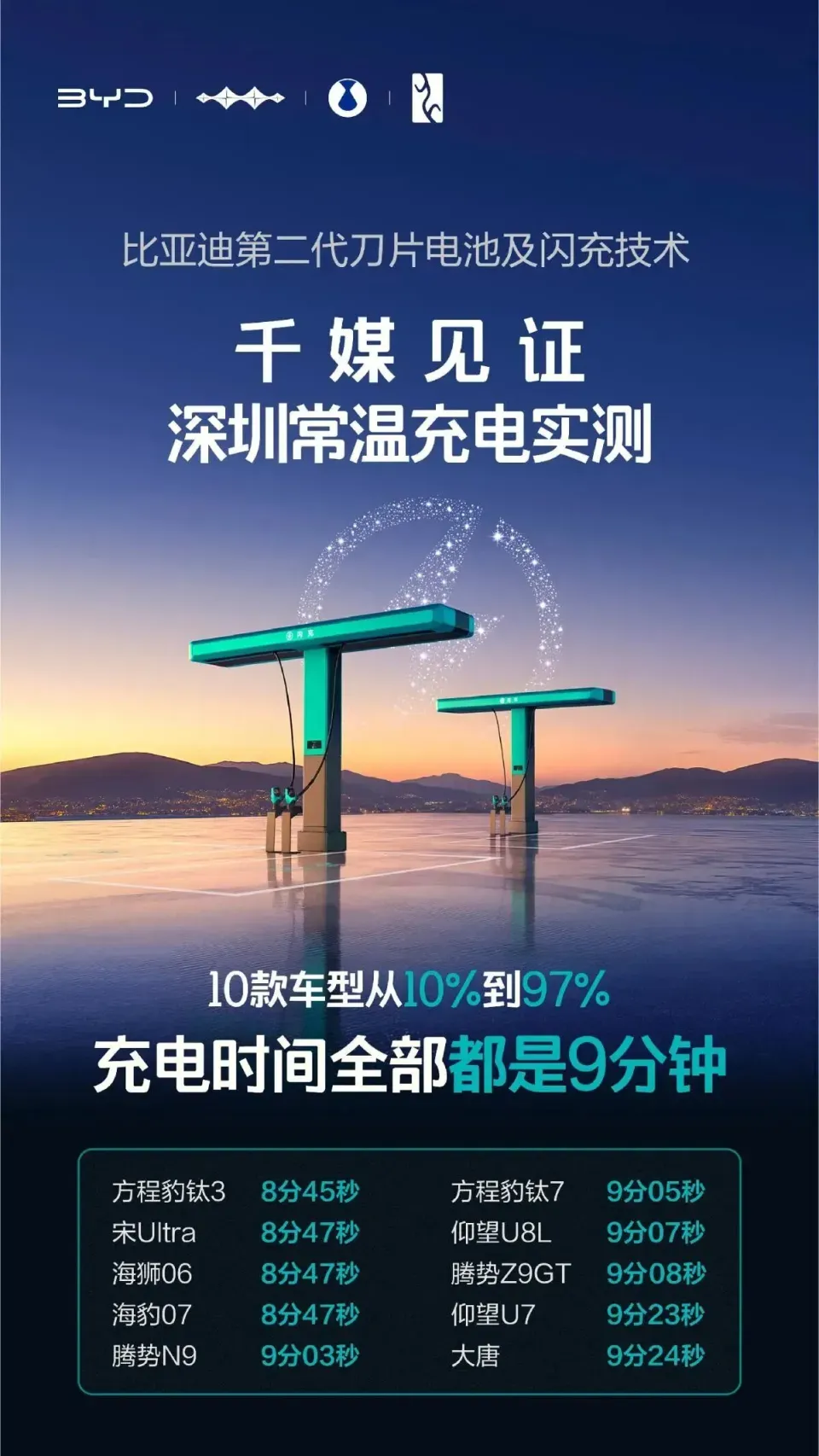
The ten compatible models confirmed at the launch span BYD's Dynasty, Ocean, Yangwang, Denza, and Fang Cheng Bao sub-brands. The fastest to charge was the Fang Cheng Bao Ti3 at 8 minutes 45 seconds, followed by the BYD Song Ultra, Sea Lion 06, and Seal 07 at 8 minutes 47 seconds each.
The Denza N9 completed the same charge window in 9 minutes 3 seconds, the Fang Cheng Bao Ti7 in 9 minutes 5 seconds, the Yangwang U8L in 9 minutes 7 seconds, the Denza Z9GT in 9 minutes 8 seconds, the Yangwang U7 in 9 minutes 23 seconds, and the BYD Datang in 9 minutes 24 seconds. The average across all ten models is roughly 9 minutes 4 seconds, measured in ambient conditions in Shenzhen, witnessed by over 1,000 media representatives.
Advertisement – Continue scrolling for more
Refueling in the US
For American drivers, the most direct comparison is station dwell time — the minutes spent at the pump itself, excluding the drive to get there. Fleet data collected by Geotab across multiple US cities found that drivers spend an average of 8 minutes at a gas station, accounting for payment, nozzle handling, waiting for the auto-shutoff, and exiting.
The pure dispensing time is shorter still — US regulations cap pump flow rates at 10 gallons per minute, and most passenger cars hold between 12 and 16 gallons, meaning liquid fuel can be delivered in roughly 2 minutes.
In other words, the 9-minute flash charging session runs about one minute longer than the average gas station dwell time. The margins narrow further when comparing only the fastest models: the Fang Cheng Bao Ti3's 8 minutes 45 seconds is effectively indistinguishable from a typical pump stop.
Advertisement – Continue scrolling for more
Tesla superchargers
The comparison with Tesla's (NASDAQ: TSLA) Supercharger network reveals a wider gap. Tesla's V1 units, introduced in 2012, deliver 90–120 kW; V2 units peak at 150 kW and require roughly 40 minutes to charge a Model 3 from 10% to 80%. V3 Superchargers, launched in 2019 at 250 kW, reduced that window to approximately 15–20 minutes for most Model 3 and Model Y variants.
BYD's Flash Charging 2.0 operates at 1,500 kW — three times the V4's current deployed output and six times that of the most common V3 stalls — though it requires a BYD-proprietary 1,000V architecture not yet available outside China.
Advertisement – Continue scrolling for more
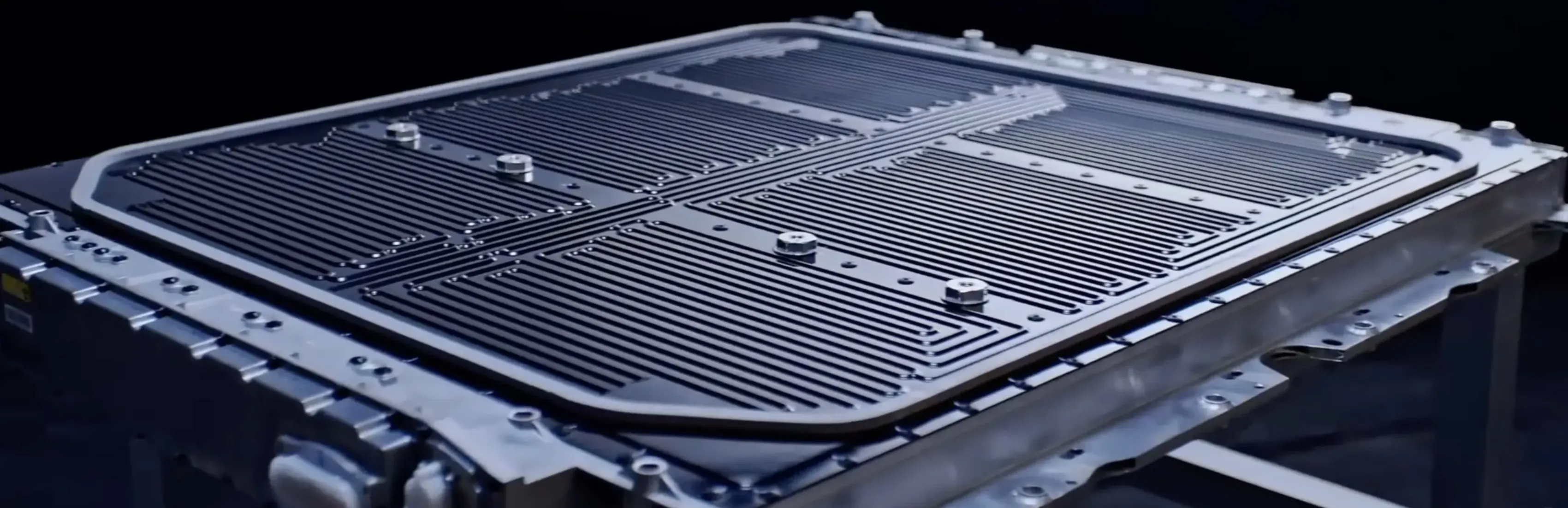
The hardware behind the numbers is the second-generation Blade Battery, which shifts chemistry from standard lithium iron phosphate (LFP) to lithium manganese iron phosphate (LMFP). Energy density at the system level has risen to 190–210 Wh/kg, a roughly 40% gain over the first generation, while internal resistance has been reduced by approximately 20%, enabling an 8C peak charge rate.
Source: BYD
The architecture splits into two cell formats: a Short Blade optimized for charging speed (450–580 mm cells, 800V–1,000V platforms) and a Long Blade prioritizing energy density for flagship range. The Denza Z9GT, fitted with the Long Blade in a 120 kWh pack, achieves a CLTC-rated range of 1,036 km (644 miles), while the Yangwang U7 carries a 150 kWh pack for 1,006 km (625 miles) CLTC. Real-world EPA-equivalent range is typically 30–35% lower than CLTC figures.
Cold-weather performance has historically been a structural weakness for LFP chemistry. BYD claims the second-generation pack completes a 20%–97% charge in 12 minutes at −30°C — only three minutes longer than at ambient temperatures. That claim was presented at BYD's own event and has not yet been independently verified.
Advertisement – Continue scrolling for more
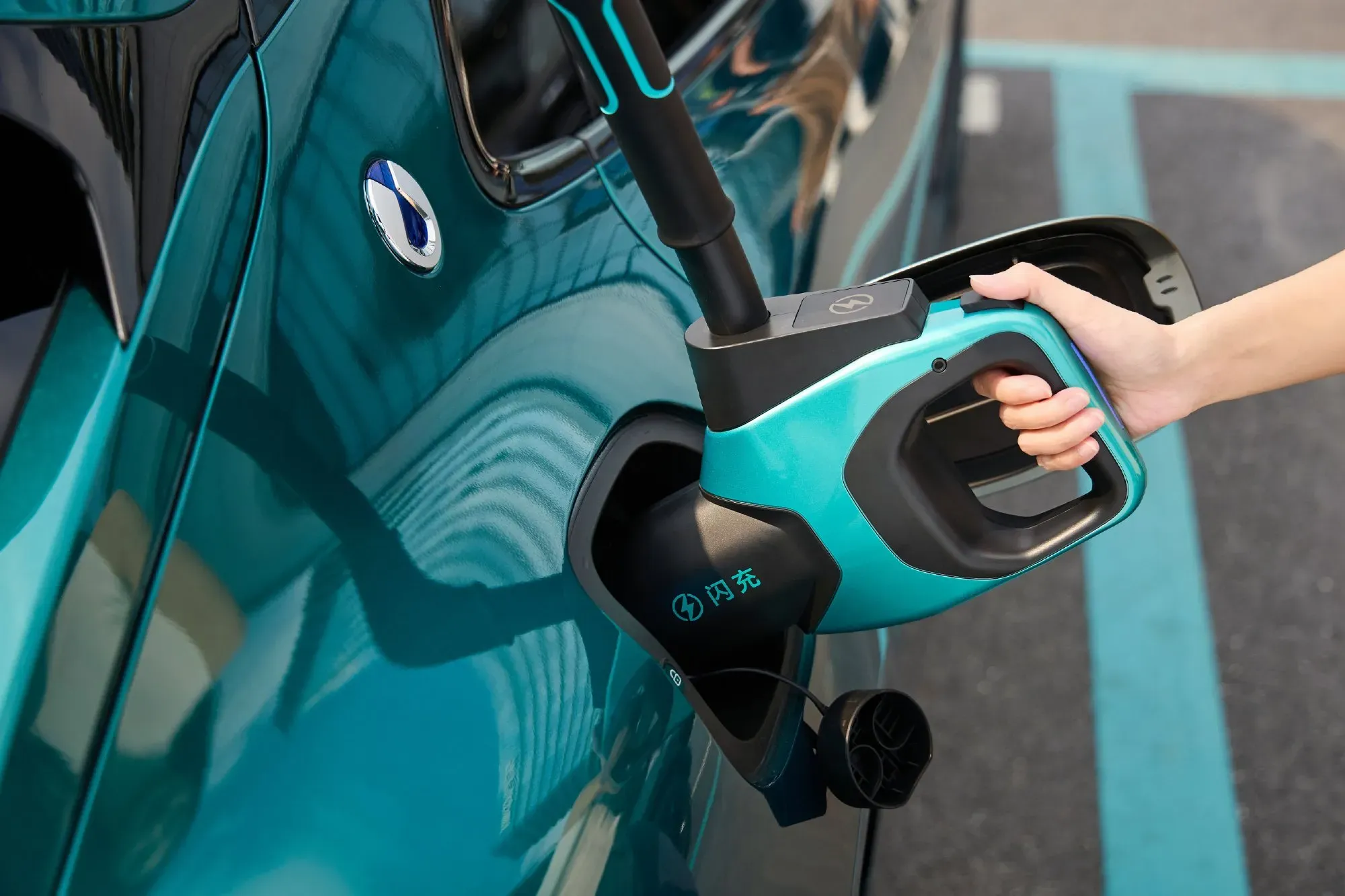
Infrastructure is the binding constraint. BYD completed 4,239 Flash Charging stations in the first two months of 2026 and targets 20,000 by year-end, including 18,000 "station-within-a-station" units embedded inside existing public charging networks and 2,000 dedicated highway stations covering roughly one-third of China's highway service areas.
Source: BYD
Each 1,500 kW charging gun costs approximately 600,000 CNY (c. $87,000), and the total 20,000-station program is estimated to exceed 5 billion CNY (c. $725 million). BYD has confirmed plans to bring Flash Charging to Europe, with the Denza Z9GT as its first European flash-compatible model; North American deployment timelines have not been announced.
Tesla, by contrast, operates roughly 7,900 Supercharger stations with over 75,000 connectors globally as of November 2025, with network coverage across North America, Europe, and Asia-Pacific that BYD's Flash Charging infrastructure will not approach for several years. The tradeoff is power: BYD's 1,500 kW charger delivers energy at approximately 2 km of range per second on its longest-range models, against roughly 0.7–1.0 km per second on a V3 Supercharger.
Advertisement – Continue scrolling for more
The Yangwang U7 is priced from 658,000 CNY (c. $95,400), the Denza Z9GT from 269,800 CNY (c. $39,100), and the entry Song Ultra from 155,000 CNY (c. $22,500). These are Chinese domestic prices; none of the flash-capable models are currently available in North America.
Whether 9 minutes eventually proves sufficient to dissolve the refueling ritual — or whether the charger network required to make it routine will arrive before consumer patience does — remains the open question shaping BYD's next deployment phase.
Conversion rate: 1 USD = 6.90 CNY as of March 13, 2026
Advertisement – Continue scrolling for more