Source: BYD
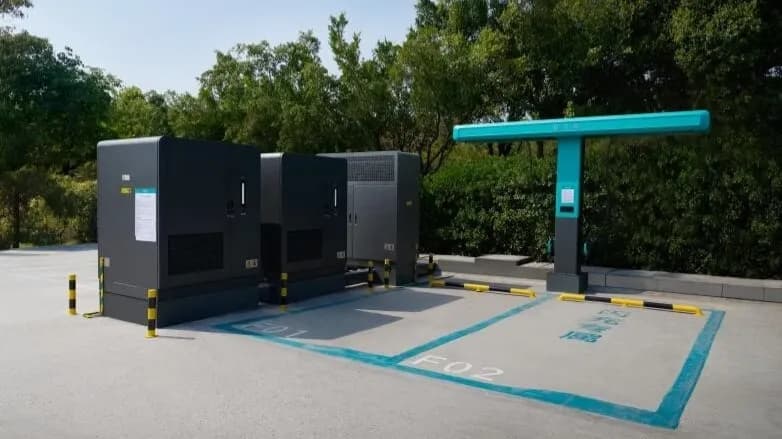
BYD (HKG: 1211) launched its second-generation Blade Battery and Flash Charging system on March 5, 2026, in Shenzhen, igniting a public dispute between the world's largest electric vehicle maker and Nio (HKG: 09866, NYSE: NIO) over which technology will define the industry's replenishment future.
The new lithium iron phosphate battery charges from 10% to 70% in five minutes, and from 10% to 97% in nine minutes. Even at -30°C (-22°F) — temperatures that have historically crippled LFP performance — the same 10% to 97% refill takes just 12 minutes, three minutes longer than at ambient temperature. Energy density has risen 5% over the first-generation Blade Battery, enabling claimed CLTC ranges exceeding 1,000 km (621 miles) in flagship models such as the Yangwang U7 sedan and Denza Z9GT.
Advertisement – Continue scrolling for more
The charging infrastructure strategy is as notable as the chemistry. BYD chairman Wang Chuanfu explained that each 1,500 kW Flash Charging pile is paired with an on-site energy storage buffer, amplifying a standard 100 kW grid connection to 1,000 kW instantaneously without requiring new grid infrastructure.
BYD plans to deploy 20,000 of these stations across China by the end of 2026, with 18,000 embedded within existing charging sites under a cost-light "station-within-a-station" model and the remaining 2,000 positioned along highways, targeting one station per 100 km (62 miles) of motorway. As of March 5, 2026, 4,239 stations were already commissioned.
Source: NIO
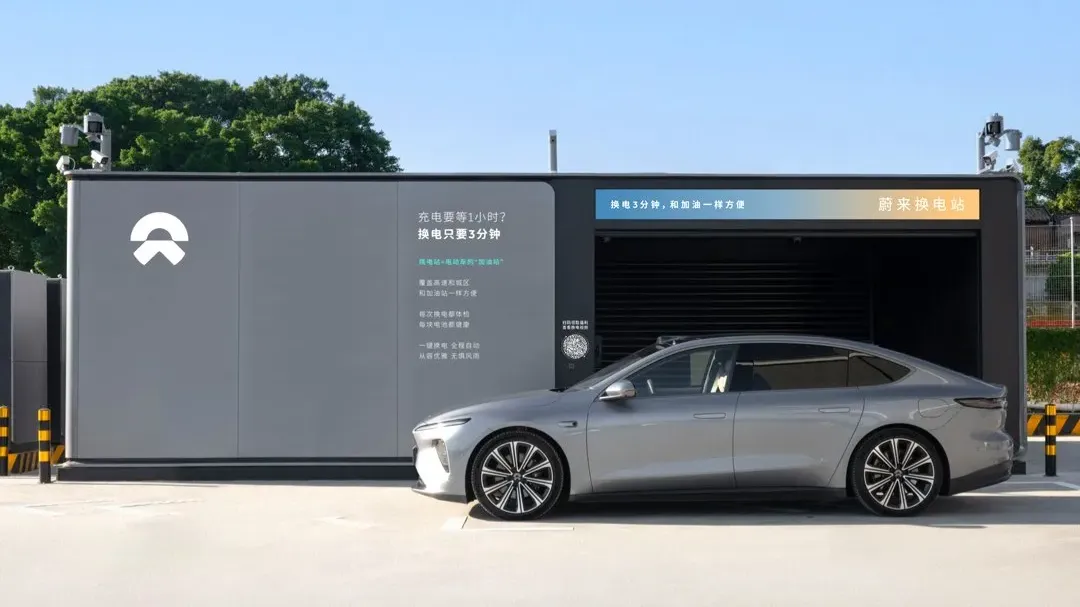
The scale of that rollout places direct competitive pressure on Nio, which opened the world's first battery swap station in Shenzhen in June 2018 and has since built a network of 3,753 stations over eight years at a cumulative investment exceeding 18 billion CNY (c. $2.6 billion). Chinese business publication 36kr described the BYD announcement as placing "BYD's blade is now at Nio's throat."
Nio CEO William Li responded on March 9, 2026, in an appearance on CCTV's financial channel, stating that ultra-fast charging and battery swapping were not fundamentally at odds, but rather addressed different use cases. However, Li maintained that repeated high-rate charging carried a meaningful cost.
Advertisement – Continue scrolling for more
According to Li, frequent use of ultra-fast charging degrades battery lifespan, health, and long-term safety — risks that swap technology sidesteps entirely because batteries are professionally managed, charged slowly overnight, and monitored across their full lifecycle. Li said professionally operated battery packs can achieve service lives exceeding 12 years, closer to parity with the vehicle itself.
Li also quantified the scale of the coming replacement challenge. Under current eight-year, 160,000 km (99,420 miles) warranty standards, he estimated that 41.6 million vehicles will exit battery coverage within the next eight years, with total replacement costs potentially reaching 2.5 trillion CNY (c. $363 billion).
He added that Nio plans to reach 10,000 swap stations by the end of 2030, and is working to open its swap standard to alliance partners. Nio's current fourth-generation stations complete a swap in 2 minutes and 24 seconds, with the full station entry-to-exit process taking approximately five to six minutes.
Advertisement – Continue scrolling for more
BYD responded directly. Li Yunfei, BYD's general manager of brand and public relations, said the potential impact of flash charging on battery longevity and grid load had been considered and resolved at the research and development stage. He added that the two models were "different paths to the same destination," with both focused on accelerating the transition from internal combustion to electric vehicles.
BYD has publicly documented its safety testing: the second-generation Blade Battery passed 500 flash-charging cycles followed by simultaneous nail penetration without thermal runaway, and withstood forced short-circuits in four cells simultaneously without fire or explosion — surpassing China's new national battery safety standard GB 38031-2025.
Source: BYD
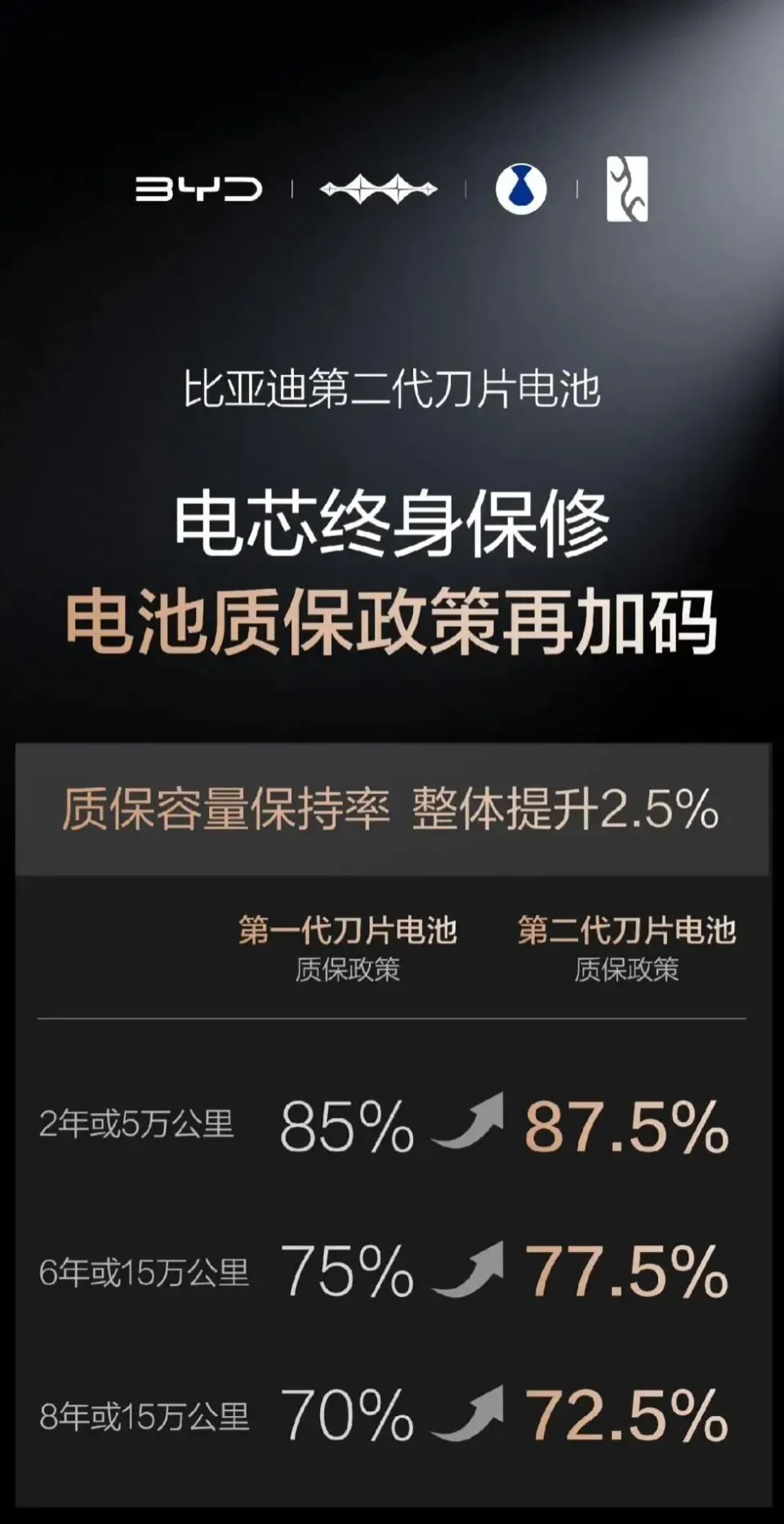
The warranty structure that accompanied the launch provides the most quantifiable statement of BYD's confidence. Across all four BYD sub-brands — BYD, Denza, Fang Cheng Bao, and Yangwang — the second-generation Blade Battery's warranted capacity retention thresholds have been raised by 2.5 percentage points at every tier: at two years or 50,000 km (31,070 miles), the minimum guaranteed retention rises from 85% to 87.5%; at six years or 150,000 km (93,210 miles), from 75% to 77.5%; and at eight years or 150,000 km (93,210 miles), from 70% to 72.5%.
Advertisement – Continue scrolling for more
A higher retention floor is a stricter commitment — it means BYD will replace a pack for free at a lower level of degradation than it previously accepted. The cell itself carries a separate lifetime warranty against manufacturing defects, independent of the capacity tiers. The 8-year threshold is a direct reply to Li Bin's critique: while Nio's CEO argued that vehicles outlast their battery warranties by years, BYD has narrowed the acceptable fade at that coverage boundary from 30% lost capacity to 27.5%.
Chery Automobile (HKG: 09973) chairman Yin Tongyue entered the debate from a different angle, acknowledging BYD's engineering achievement while raising concerns about the grid implications of widespread megawatt-level charging. He said high-power ultra-fast charging poses a significant challenge to the power grid and that the long-term effects on battery life require scrutiny.
Source: CATL
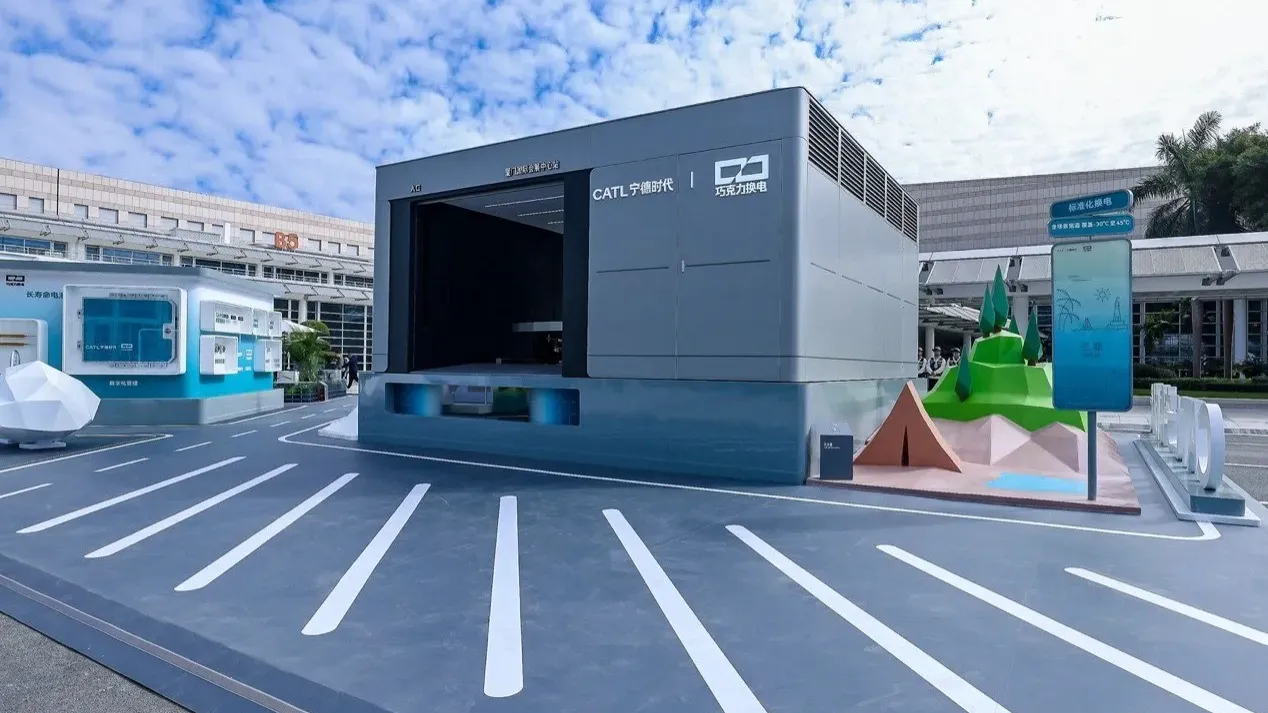
Yin noted that Chery was pursuing its own fast-charging technology but aimed to strike the right balance between convenience, battery longevity, and safety. Chery is hedging across both technologies: in January 2024, the company signed a battery swap alliance agreement with Nio, and in February 2026 it announced that its joint venture with CATL (SHE: 300750), Time Chery New Energy Technology Co., had been established in Hefei with registered capital of 2 billion CNY (c. $291 million).
Separately, Chery's self-developed solid-state battery — the Rhinoceros S system — completed full vehicle-condition validation in February 2026, achieving 6C ultra-fast charging performance with a claimed 500 km (311 miles) of added range in five minutes, and a projected mass production date of early 2027.
Advertisement – Continue scrolling for more
The timing of this confrontation is not coincidental. BYD's combined January–February 2026 NEV sales fell more than 30% year-on-year, a consequence of the Chinese government halving the NEV purchase tax exemption at the start of the year, which pulled purchases forward into late 2025.
The second-generation Blade Battery is BYD's most prominent lever for re-igniting domestic demand, with models equipped with the new battery scheduled to roll out across the full lineup by the end of 2026 — from premium flagships to volume-market vehicles including the Dolphin and Seagull. The estimated total investment in the 20,000-station Flash Charging network exceeds 5 billion CNY (c. $727 million).
Whether flash charging at 1,500 kW actually erodes battery life in real-world long-term use — rather than in controlled test cycles — will be answered by the road, not the lab.
Conversion rate: 1 USD = 6.87 CNY as of March 10, 2026
Advertisement – Continue scrolling for more