Source: BYD
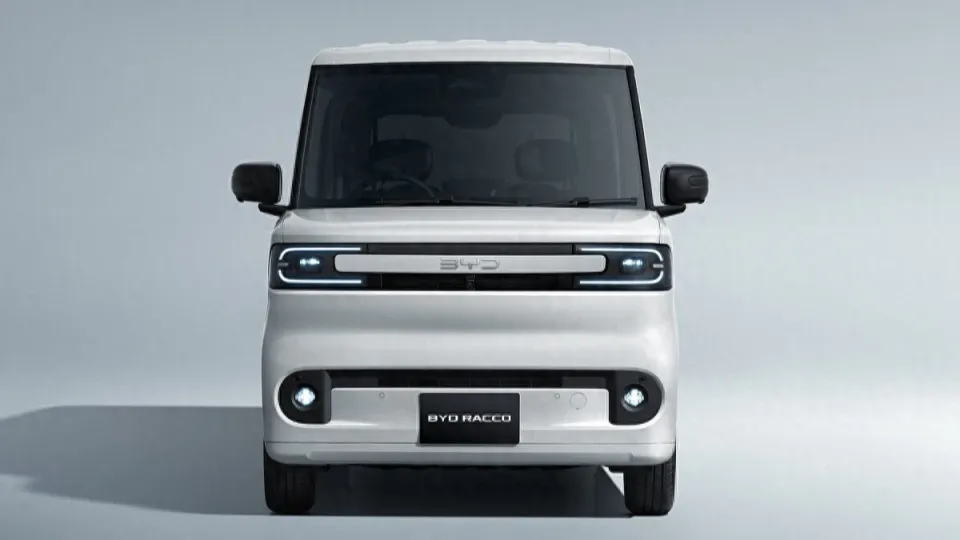
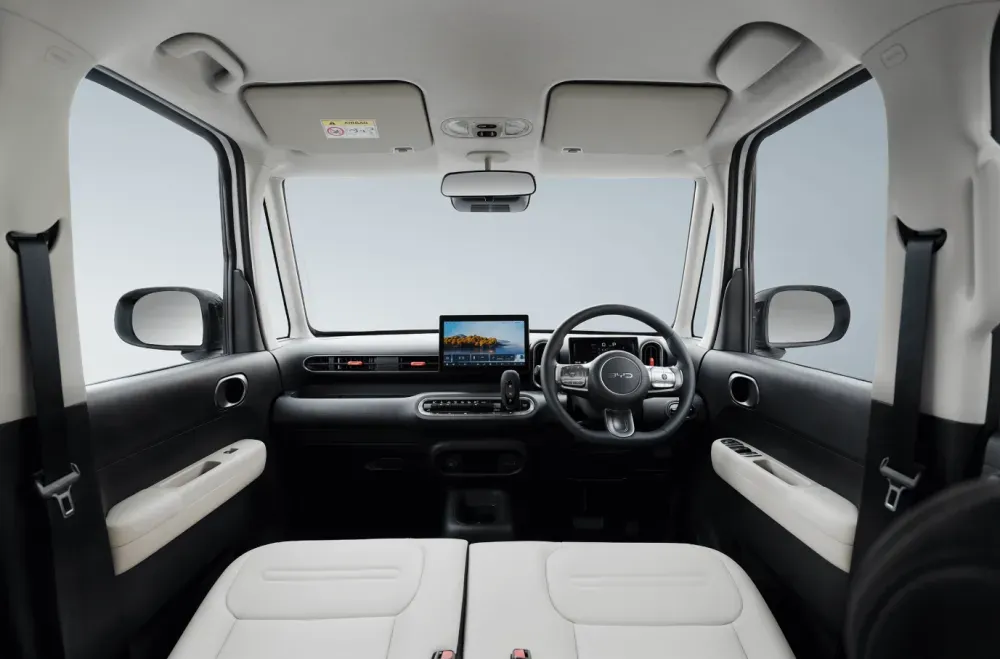
BYD (HKG:1211) released interior imagery of its RACCO electric K-car on February 17, 2026, marking the final design reveal ahead of the vehicle's planned summer 2026 launch in Japan. The automaker first published exterior images in October 2025.
Source: BYD
The RACCO represents BYD's entry into Japan's highly regulated light vehicle segment, which imposes strict dimensional limits. At 3,395mm long, 1,475mm wide, and 1,800mm tall, the four-seat model adheres to Japan's K-car classification requirements. No vehicle currently sold in China matches these specifications.
Source: BYD
BYD designed the cabin around what it calls "Ocean Aesthetics," with rounded surfaces intended to evoke calm water waves. The right-hand drive configuration features an upright electronic gear lever positioned below the floating center display, flanked by physical buttons and rotary controls. This layout deviates from the column-mounted shifters common in BYD's other markets, a concession to Japanese consumer preferences according to company statements.
Advertisement – Continue scrolling for more
Vertical air vents with red accent labels occupy the dashboard. Storage solutions include vertical umbrella space, dedicated slots for cards and smartphones, and cup holders sized for plastic bottles. The front passenger area includes an open storage compartment, while the armrest region uses a pass-through design typical of space-maximized light vehicles.
Source: BYD
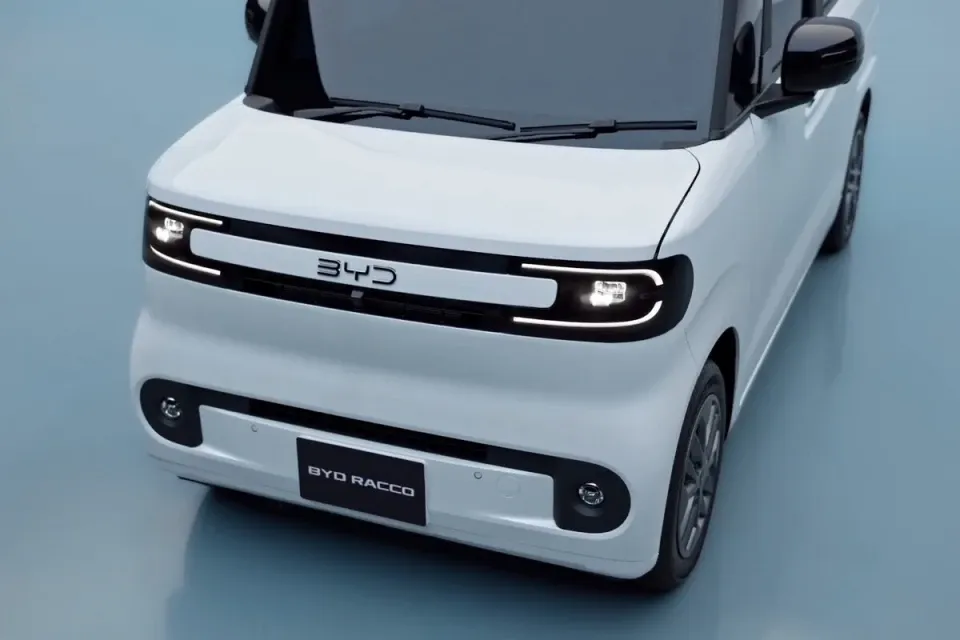
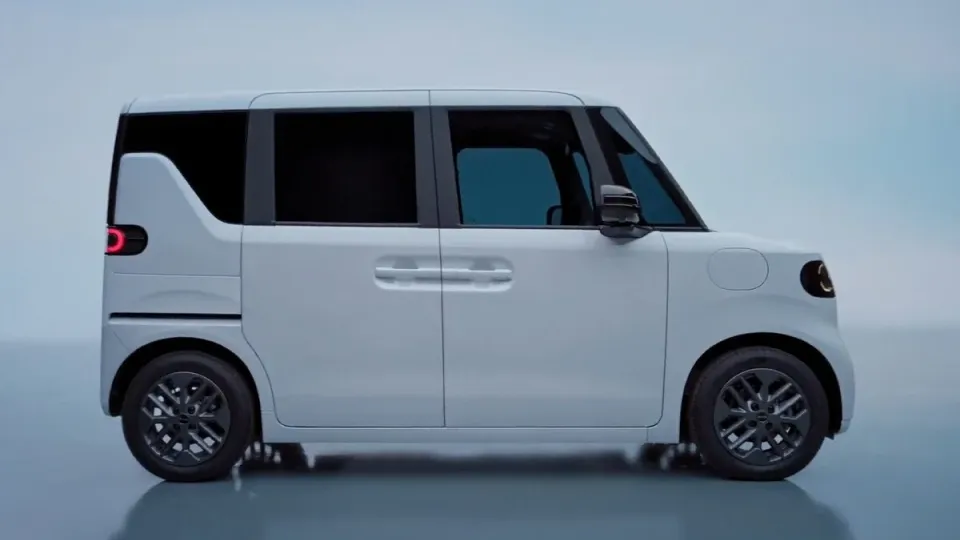
The exterior follows conventional K-car architecture with a prominent nose, flat headlamps connected by a black trim strip embedding the BYD logo, and C-shaped light signatures at both ends. Rear sliding doors facilitate entry in tight parking conditions. The floating roof design incorporates an upturned D-pillar detail, and small-diameter wheels prioritize energy efficiency over aesthetics.
Advertisement – Continue scrolling for more
BYD will equip the RACCO with a front-wheel-drive powertrain and lithium iron phosphate battery cells. Specifications point to a 20kWh pack delivering approximately 180km (112 miles) of WLTC-rated range, with 100kW charging capability. Earlier descriptions suggested a possible 30kWh variant with range exceeding 300km (186 miles), though BYD has not confirmed this configuration.
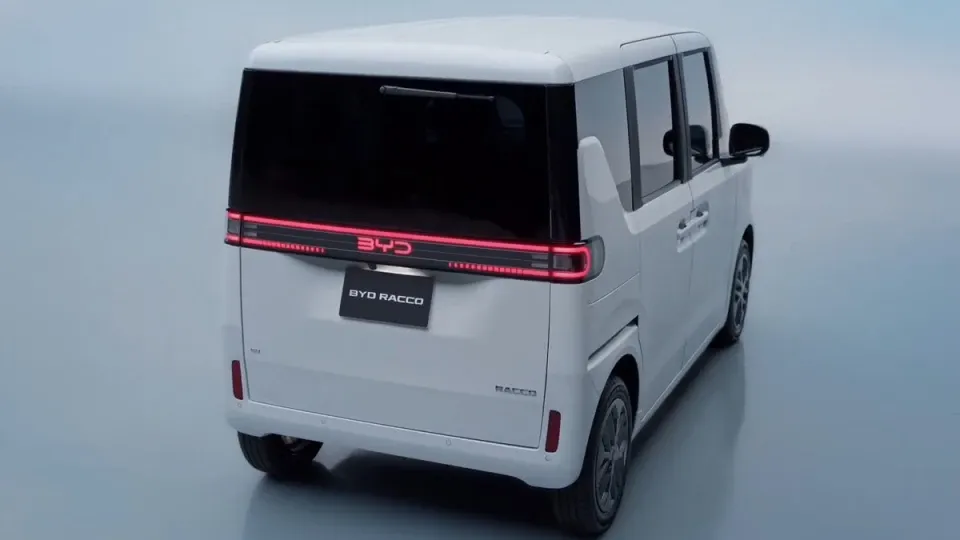
Source: BYD
The RACCO's C-shaped taillights mirror the front fascia, separated by a large rear window. A matrix LED array sits below the main taillight bar. The rear bumper remains unadorned, maintaining visual simplicity.
Advertisement – Continue scrolling for more
Japan's K-car category imposes unique constraints that prevent international sales. The segment prioritizes interior volume within a tightly regulated footprint, using sliding doors and tall rooflines to maximize usability. BYD's approach contrasts with its global strategy, where models like the Seagull and Dolphin target broader compact segments without dimensional restrictions.
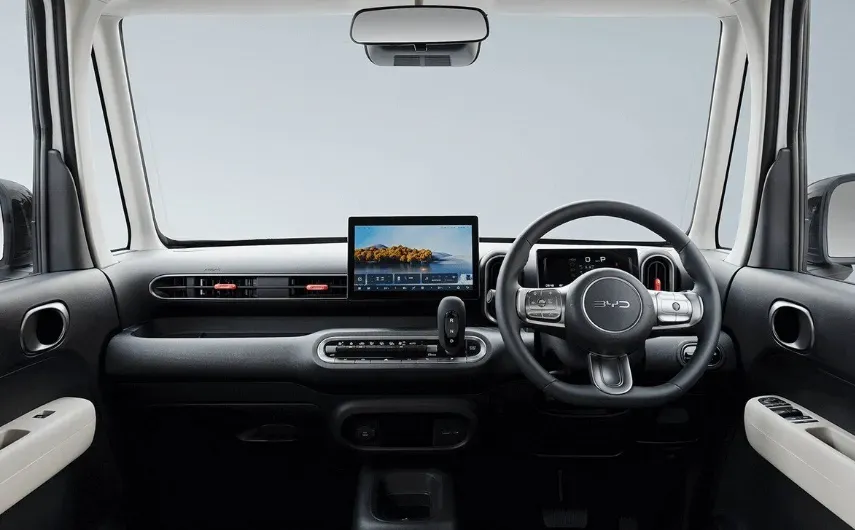
Source: BYD
The floating instrument cluster and center screen configuration delivers a technology advantage over traditional Japanese K-cars, most of which rely on fixed displays or analog gauges. BYD emphasized this digital interface as a core differentiator in a segment where automakers typically prioritize cost control over advanced features.
Can a Chinese EV crack Japan's famously insular K-car market with batteries instead of gasoline?
Advertisement – Continue scrolling for more