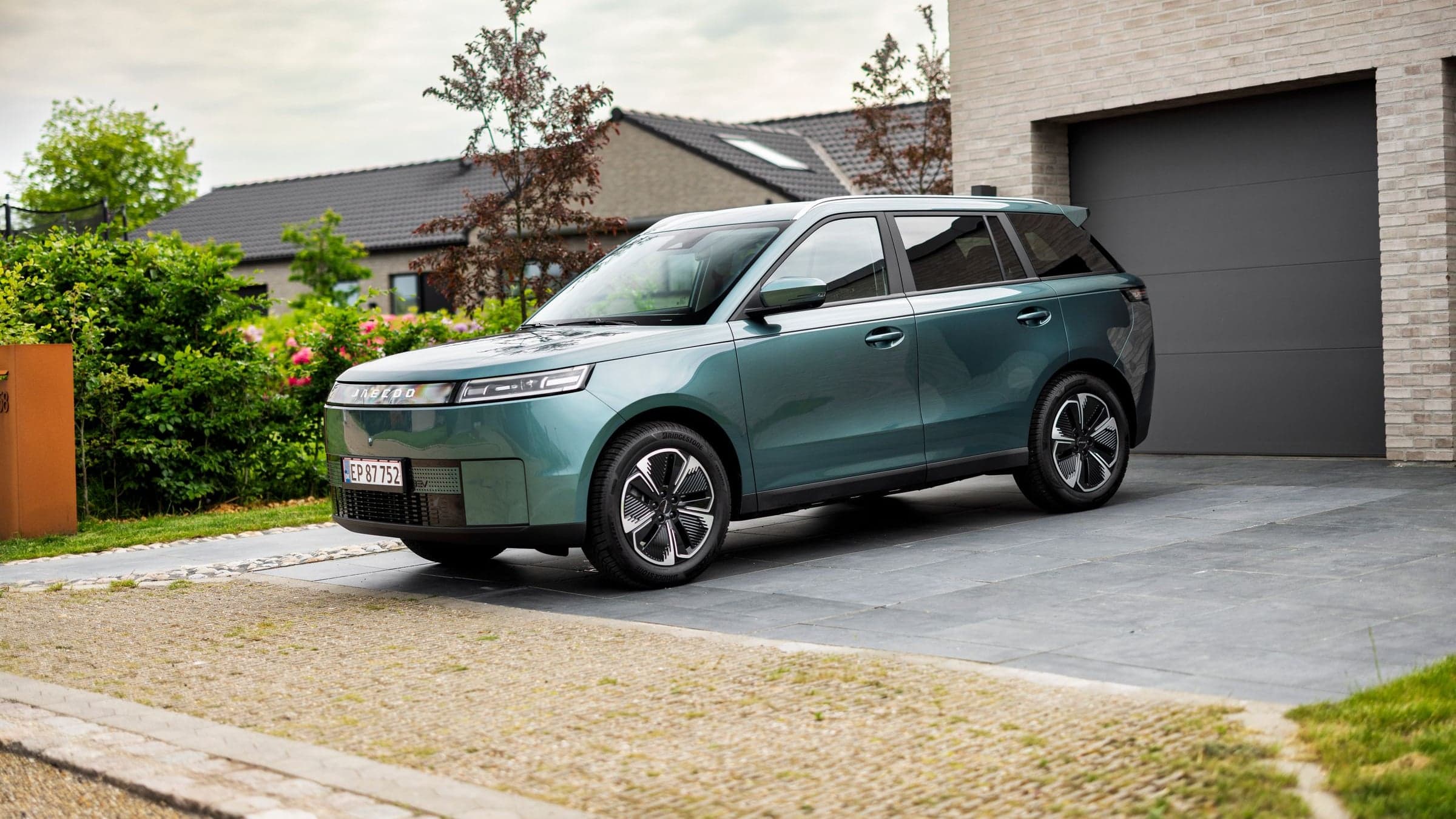
Canada cuts 100% import tariffs to 6.1% and will allow 49,000 Chinese EVs a year

Canada will replace its tariffs on Chinese electric vehicles with an annual import quota of 49,000 units subject to a 6.1% most-favored-nation (MFN) tariff, Prime Minister Mark Carney said on January 16, 2026, during an official visit to Beijing.
The policy reverses a 100% additional duty imposed in 2024 and restores tariff levels that existed before bilateral trade frictions, lowering costs for consumers while reopening the door to industrial cooperation with China.
Speaking at a China–Canada trade event in Beijing, Carney said the quota would expand over time and would deliver tangible benefits to Canadians. He said cooperation with China was essential if Canada wanted to build a competitive domestic electric vehicle industry and secure resilient supply chains.
Advertisement – Continue scrolling for more
The previous tariff regime was introduced in August 2024 under former prime minister Justin Trudeau, when Canada imposed a 100% duty on Chinese EVs and a 25% tariff on Chinese steel and aluminum. Those measures took effect on October 1, 2024, and were closely aligned with U.S. trade policy at the time.
China responded by launching an anti-discrimination investigation and imposing countermeasures on Canadian agricultural products, including canola, contributing to a sharp deterioration in bilateral relations.
Under the revised framework, Chinese EVs imported within the 49,000-unit quota will face a 6.1% MFN tariff. The government did not specify the tariff rate for imports exceeding the quota or the precise implementation date, though the quota is expected to grow annually.
Advertisement – Continue scrolling for more
China exported 41,678 electric vehicles to Canada in 2023, with more than 80% produced at Tesla’s Shanghai plant. Carney said replacing blanket tariffs with a quota system would reduce vehicle purchase costs and allow bilateral cooperation to resume.
He described China as a global leader in electric vehicles, citing cost efficiency, energy performance, and innovation. He said Canada must learn from China’s experience and collaborate on supply chains rather than rely on trade barriers.
During meetings on January 16, leaders from both countries reaffirmed the principles guiding China–Canada relations. Canada reiterated its commitment to the one-China policy, and both sides pledged to provide fair and open business environments for companies.
Advertisement – Continue scrolling for more
The two governments endorsed the China–Canada Economic and Trade Cooperation Roadmap and agreed to advance cooperation through existing trade mechanisms. Energy cooperation featured prominently, with agreements to deepen collaboration in clean energy while expanding ties in oil and natural gas development.
Carney said the revised trade framework could attract large-scale Chinese investment into Canada’s automotive and energy sectors over the next three years, supporting job creation and Canada’s transition toward net-zero emissions.
Agriculture was another focus. Carney said China is expected to reduce tariffs on Canadian canola to about 15% by March 2026 and lift countermeasures on canola meal, lobster, crab, and peas from March through at least year-end. He said the changes could unlock nearly USD 3 billion in export opportunities.
Advertisement – Continue scrolling for more
He also said China would introduce visa-free entry for Canadian citizens, though this had not been formally confirmed by Chinese authorities at the time.
Addressing geopolitical questions, Carney said Canada and China still had differences but had established a more predictable and stable dialogue. He said recent engagement with China had delivered clearer economic outcomes, even as Canada maintained a broader relationship with the United States.
Canadian officials accompanying Carney signed agreements covering oil, natural gas, uranium, and renewable energy technologies, and held discussions with Chinese battery manufacturer CATL, which has already participated in multiple grid-scale energy storage projects in Ontario.
Industry Minister Mélanie Joly said Canada remained open to Chinese investment in renewable energy and battery manufacturing, including the possibility of local EV battery production.
The visit can be described as a political reset that signals intent rather than immediate economic gains, leaving open how quickly trade and investment flows will recover under Canada’s new China policy.
Advertisement – Continue scrolling for more