Source: NIO
China has issued the national certification standard GB17675-2025 “Basic Requirements for Automotive Steering Systems,” which will replace the GB17675-2021 regulation when it takes effect on July 1, 2026.
NIO reported that it served as one of the lead drafting units for the new regulation and highlighted that it is the first Chinese manufacturer to obtain certification and deliver mass-produced vehicles equipped with full steer-by-wire systems.
Advertisement – Continue scrolling for more
The company’s ET9 is among the first models in China to adopt a fully electronic steering configuration without mechanical redundancy. Other vehicles equipped with steer-by-wire systems include the Infiniti Q50, IM L6, and Tesla Cybertruck.
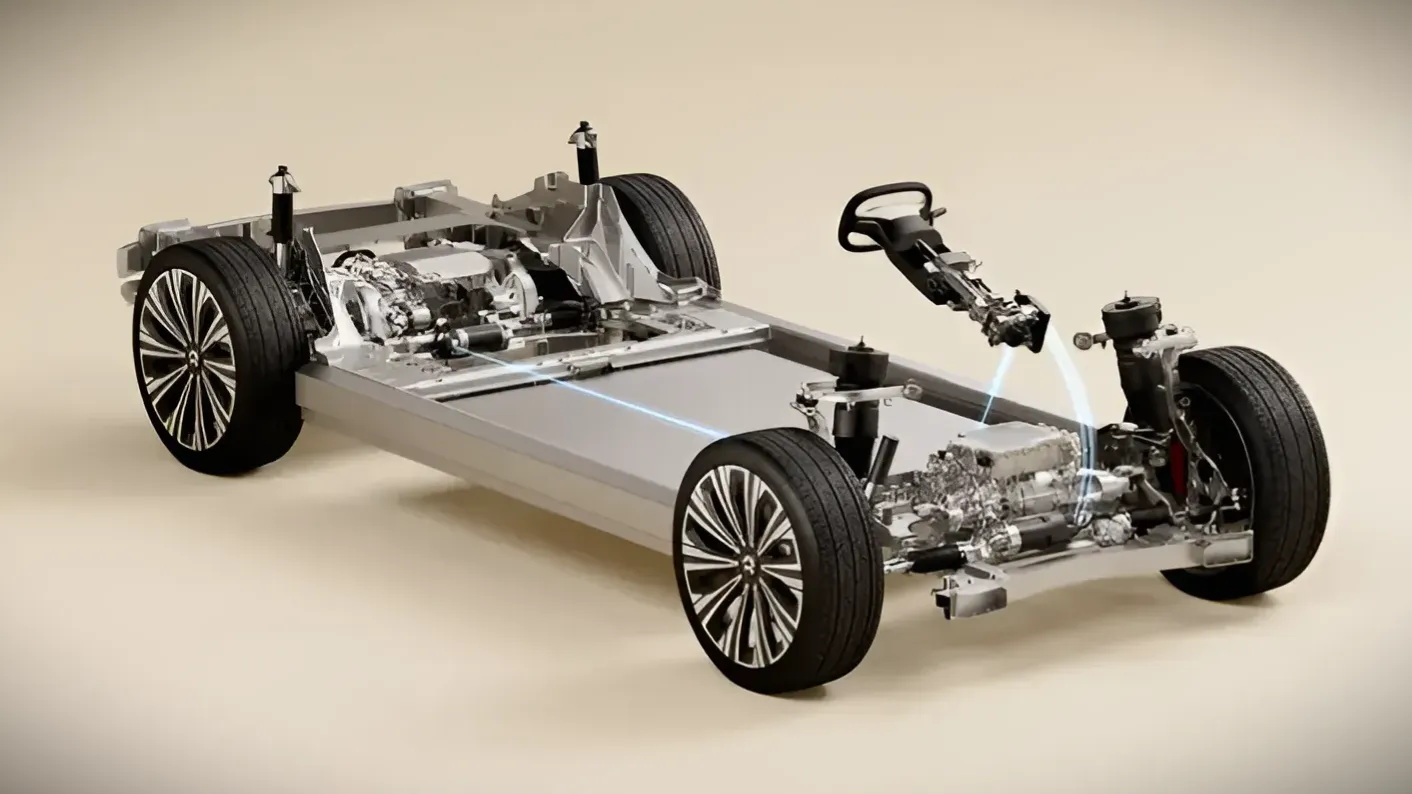
Steer-by-wire systems replace the mechanical link between the steering wheel and the road wheels with electronic signals, allowing the steering angle and feedback torque to be freely calibrated.

Source: NIO
According to NIO, the ET9’s steer-by-wire architecture is 2.2 times more reliable than conventional mechanical power steering. It also filters more than 80 percent of steering-wheel vibration, offers customizable road-feel modes, and enables small-angle steering inputs in low-speed automated scenarios. NIO also stated that the probability of losing steering capability in this configuration is 4.5 FIT, equivalent to one failure in more than 25,000 years
The new standard removes the long-standing requirement for mechanical steering connections, enabling steer-by-wire and electric power steering systems to be certified for use without a physical linkage between the steering wheel and the wheels.
Advertisement – Continue scrolling for more
The Ministry of Industry and Information Technology (MIIT) published the updated standard on December 3, 2025. It establishes a regulatory framework intended to support the growing adoption of fully electronic steering systems in production vehicles. The revision aligns the certification process with the technical realities of modern steering architectures, particularly those that rely exclusively on electrical power and control.
The drafting committee for the updated regulation included a broad group of automakers and suppliers, among them NIO, Li Auto, XPeng, BYD, Geely, Xiaomi, Huawei, Toyota, and Mercedes-Benz. Their participation reflects a shared industry direction toward electronic steering technologies and a need to harmonize safety practices across brands.
Advertisement – Continue scrolling for more
One of the most significant changes in the new standard is the removal of the mandatory mechanical fallback connection. Previous versions required automakers to maintain a physical steering link to ensure vehicle controllability during electronic or power failures. The new regulation allows full steer-by-wire systems as long as they meet strengthened safety and redundancy requirements.
Fully powered steering systems, which do not include mechanical connections, must meet strict criteria relating to degradation modes and the vehicle’s ability to decelerate or stop safely. The regulation also requires systems to provide warnings related to battery aging or reduced electrical performance, since these factors directly affect steering controllability in SBW configurations.
Advertisement – Continue scrolling for more
The standard clarifies how vehicles must respond when facing failures such as loss of primary power supply, faults in electronic controllers, or disruptions in energy transmission. Automakers must ensure that vehicles maintain a minimum level of controllability or transition to a safe state through defined fallback strategies.
The release of GB17675-2025 defines the safety and certification structure for next-generation steering technologies in China and could shape platform decisions as more automakers move toward full steer-by-wire integration.
Advertisement – Continue scrolling for more