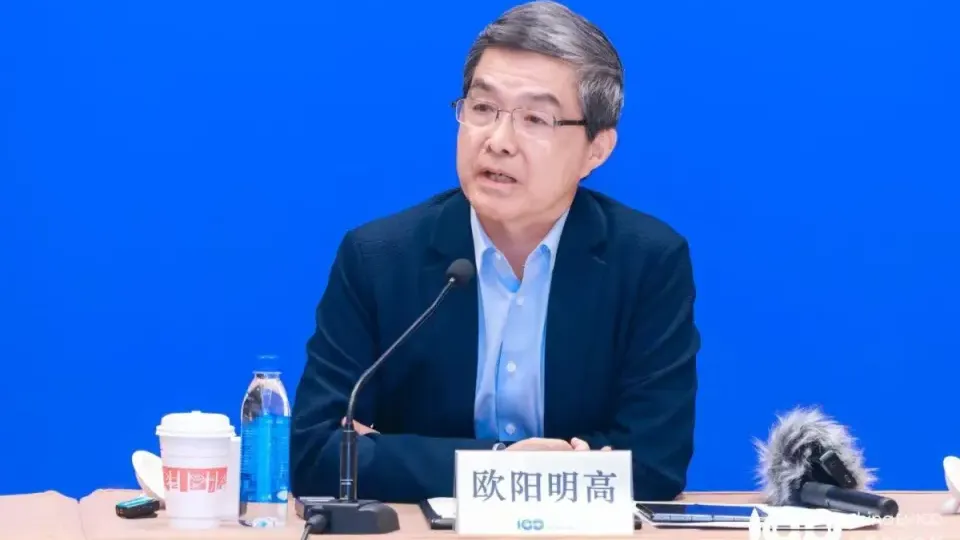
One of China's most senior battery scientists issued a pointed warning to the EV industry on March 13, 2026: no all-solid-state battery vehicle has yet entered genuine commercial production, and rushing one to market within the next two years would be a mistake.
Ouyang Minggao, an academician of the Chinese Academy of Sciences and professor at Tsinghua University, made the remarks at the 2026 Annual China EV 100 Research Institute expert media exchange in Beijing. His comments arrived amid a wave of automaker announcements and capital flows targeting the all-solid-state battery sector, with manufacturers across China and Japan competing to publish commercialization timelines.
Ouyang's standing lends his words particular weight. A longtime leader of China's national EV research programs, he has shaped battery policy at the highest levels and sits on the editorial board of eTransportation, one of the field's leading journals.
Advertisement – Continue scrolling for more
At the Beijing forum, Ouyang said some test vehicles equipped with all-solid-state batteries will likely appear by the end of 2026 or into 2027. But he drew a clear line between prototype demonstration and commercial readiness, stating that genuine large-scale production still requires three to five years. He advised consumers not to defer EV purchases in anticipation of the technology, saying current electric vehicles are already sufficiently capable.
China's patent position in the solid-state battery sector has shifted markedly. Ouyang noted that Chinese companies accounted for 6,312 newly published solid-state battery patents in 2025, representing 44.1% of the global total and surpassing Japan's 3,331 for the first time.
The cost of sulfide solid-state electrolyte — a critical material — has also fallen sharply, from 20 million CNY per tonne to below 1 million CNY per tonne. Yet Ouyang cautioned that patent volume does not equal technological mastery: Japanese and Korean companies, led by Toyota, retain deeper portfolios in foundational materials and sulfide electrolyte chemistry.
Advertisement – Continue scrolling for more
Ouyang outlined a three-generation technology roadmap for all-solid-state batteries. The first generation, targeting 200–300 Wh/kg using graphite or low-silicon anodes with sulfide electrolytes, is the focus of development from 2025 to 2027. The second generation, covering 2027 to 2030, aims for 400 Wh/kg using high-silicon anodes. The third generation, from 2030 to 2035, targets 500 Wh/kg with lithium-metal or anode-free designs — a chemistry he described as presenting the greatest technical difficulty of the three.
He identified four unresolved engineering challenges blocking industrialization: electrolyte stability across electrochemical, thermal, and mechanical dimensions; composite electrode instability at interfaces; the thermal management of large-format cells; and system-level integration across all components simultaneously. Any one of these bottlenecks, Ouyang argued, is sufficient to prevent commercial deployment.
He noted that even BYD (HKG: 1211)'s recently launched second-generation Blade Battery and Flash Charging system — which achieved a 10%-to-97% charge in nine minutes on a mature lithium iron phosphate platform — required years of validation work across the full technology chain before release. The certification burden for all-solid-state batteries, he said, will be proportionally heavier.
Advertisement – Continue scrolling for more
Ouyang's timeline broadly aligns with the industry's own cautious assessments. Contemporary Amperex Technology (CATL, SHE: 300750), the world's largest battery maker by installed volume, targets small-batch production by 2027, rating its own readiness at level four on a nine-point scale in 2024, with a goal of reaching levels seven or eight by 2027.
BYD's battery division has similarly pegged 2027 for batch demonstration installations in high-end vehicles, with large-scale production pushed to 2030. GAC Group and Changan Automobile have announced 2026 vehicle testing targets, though those programs cover limited prototype validation rather than commercial sales.
On the question of what happens to established battery chemistry in the interim, Ouyang was unambiguous. He described lithium iron phosphate (LFP) batteries as one of the most strategically important technologies China has developed, noting that China installed 1.7 billion kWh of LFP capacity in 2025, with 60% year-on-year growth.
Advertisement – Continue scrolling for more
LFP's advantages in safety, cycle life, and cost — particularly in grid storage, where cells can achieve 15,000 cycles and a 20-year service life — make it irreplaceable over the next decade regardless of solid-state progress. He added that adding manganese to LFP formulations, a widely discussed approach to boosting energy density, introduces structural instability via the Jahn-Teller effect and currently has no satisfactory engineering solution.
He also pushed back on the wider pattern of academic discoveries being treated as near-term product announcements. Research papers highlight the best performance a technology can achieve; products are defined by their weakest link. Capital, he noted, has incentives to amplify the former and ignore the latter.
Advertisement – Continue scrolling for more
For the initial wave of commercialization, Ouyang said a practical target energy density of 300–350 Wh/kg is more realistic than the theoretical ceiling figures cited in many corporate roadmaps. He suggested China's strategic rationale for developing all-solid-state batteries is defensive as much as offensive: to ensure the country's dominant liquid-battery industry cannot be disrupted by a technological shift it failed to participate in — not to abandon a battery platform that underpins one of the world's largest industrial ecosystems.
Whether the industry's eagerness to ship solid-state cells before the science is fully settled will prove to be a setback — or a market-creating force that accelerates the remaining engineering work — may be the question that defines the next phase of the global battery race.
Advertisement – Continue scrolling for more