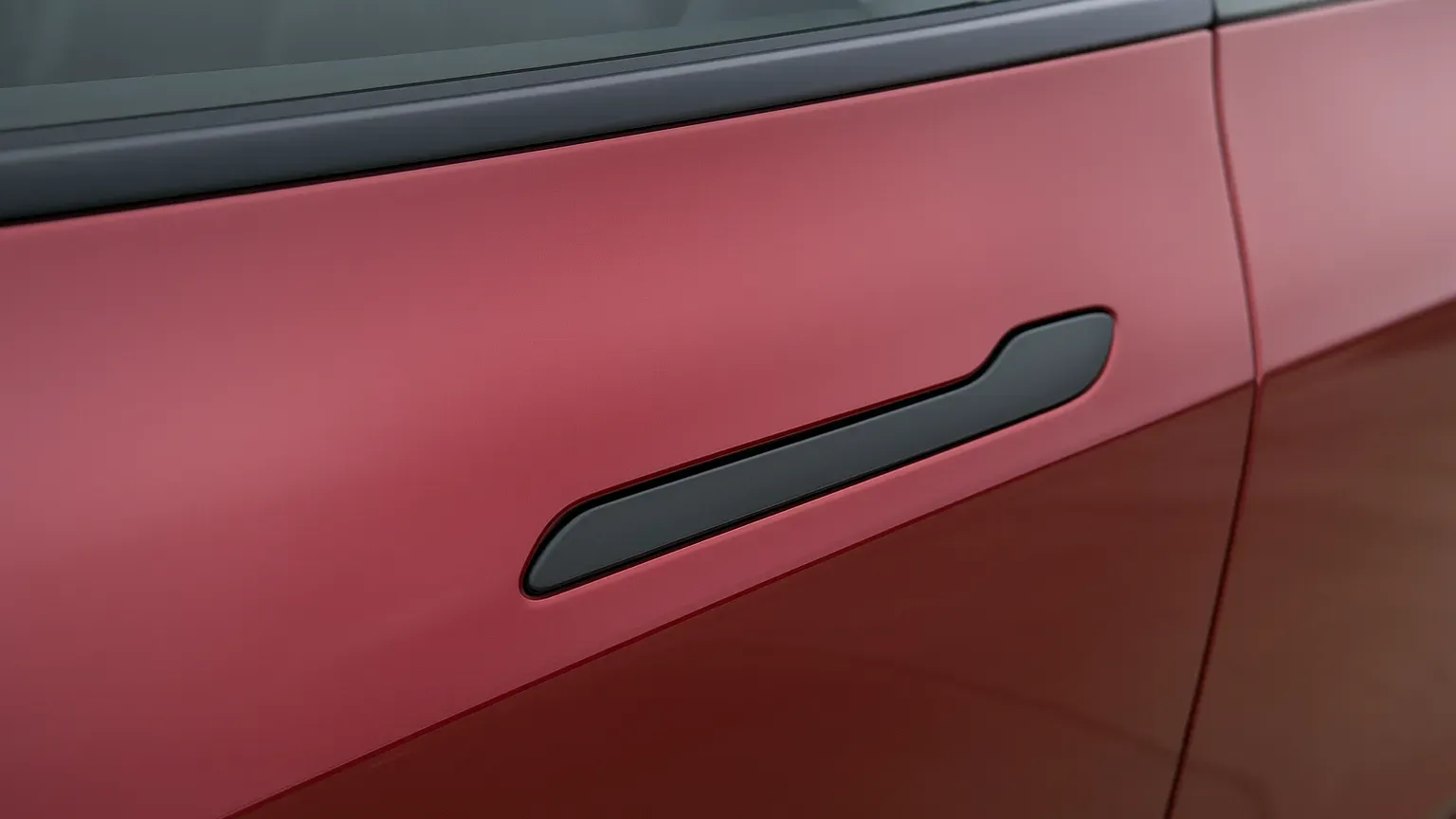
China published a draft mandatory national standard on September 24, 2025, that would require mechanical door-handle redundancy and automatic unlocking of non-impact-side doors after crashes or battery thermal events, a move regulators say follows a string of accidents and safety tests.
The draft, titled “Safety Requirements for Automobile Door Handles,” requires every door except the tailgate to have both mechanical inner and outer handles able to release the door without tools after a collision or battery incident, and mandates that outer handles always provide an operating space of at least 60 mm × 20 mm × 25 mm.
Advertisement – Continue scrolling for more
The draft also requires electronic interior handles to include a visible mechanical emergency release and imposes a five-second lock-suppression interval when irreversible restraints such as airbags or pretensioners deploy.
Regulators accelerated the work after a high-profile Chengdu crash in which bystanders could not open hidden handles on a burning vehicle.
Data cited by the standards team indicate door-handle-related incidents rose 47% in 2024, with hidden handles implicated in 82% of those cases. Data from the National Vehicle In-depth Investigation System (NAIS) showed post-side-collision door-release success rates of 67% for electronic handles versus 98% for mechanical handles.
Advertisement – Continue scrolling for more
MIIT began a technical pre-study in July 2024 and a standards drafting group met in March 2025 to address power-loss redundancy and mechanical emergency opening. The draft sets January 1, 2027 as the suggested implementation baseline, leaving a one-year transition.
New model applications must comply by July 1, 2027; existing approved models have until July 1, 2028 to meet the standard or be removed from the production announcement list.
The standards team surveyed more than 230 models with 100+ participating institutions, reporting that 67% of electronic handles failed to pop after collision tests, 35% of hidden handles had no clear emergency markings and took longer than 10 seconds to recognise, and 22% malfunctioned in extreme weather.
Advertisement – Continue scrolling for more
A reported case in Yuncheng, Shanxi involved a fully hidden handle failing after power loss and delaying rescue by 40 minutes.
The draft’s dimensional and redundancy requirements are widely interpreted as effectively banning full hidden-handle designs for both domestic and imported vehicles.
Automakers impacted by the draft standard include Tesla and major Chinese names such as AITO, Li Auto and NIO, which the material says will need door redesigns if the standard is finalised. The drafting group describes the proposal as the first specialised safety regulation for electrified door-handle systems.
Advertisement – Continue scrolling for more