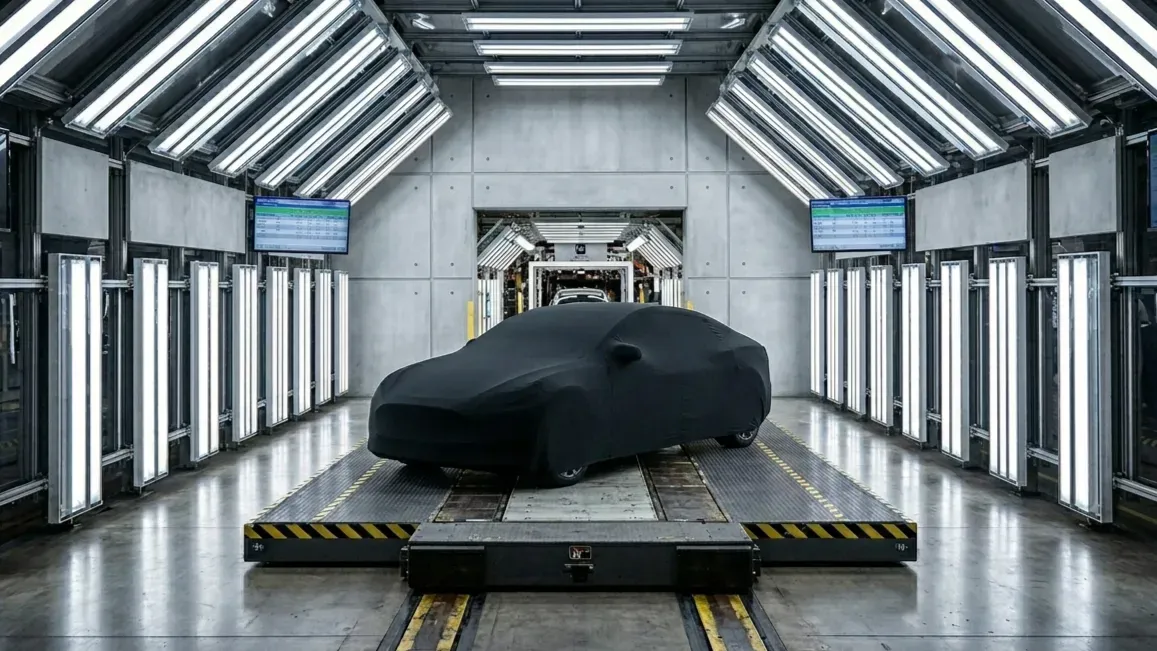
Ford Motor Company (NYSE: F) has confirmed it is developing an affordable all-electric vehicle to compete directly with the Tesla (NASDAQ: TSLA) Model 3 and Model Y, with CEO Jim Farley disclosing the project during an appearance on the Spike's Car Radio podcast published April 1, 2026.
"We'll have an all-electric, affordable vehicle to compete with Model Y and Model 3," Farley said on the podcast, adding that Ford intends to pursue a broad electrification strategy spanning hybrids, extended-range EVs, and fully electric models simultaneously.
The disclosure lands as Ford's existing EV offerings trail Tesla's core models by a wide margin.
The Mustang Mach-E sold 51,620 units in the United States in 2025, according to Kelley Blue Book data, compared to an estimated 357,528 Model Ys and 192,440 Model 3s during the same period. The gap in volume underscores the scale of the task Ford has set itself, even as the Mach-E ranked fourth among all U.S. EVs in 2025.
Advertisement – Continue scrolling for more
The new vehicle will almost certainly be built on Ford's Universal Electric Vehicle platform, or UEV, a clean-sheet architecture developed by a California-based skunkworks team that Ford assembled roughly four years ago. The unit operates out of a 250,000-square-foot Advanced Electric Vehicle Development Center in Long Beach and is led by Alan Clarke, who spent 12 years at Tesla overseeing vehicle programs from the Model S through to the Cybertruck. The team also draws on alumni from Rivian, Lucid, Apple, and Formula 1 motorsport.
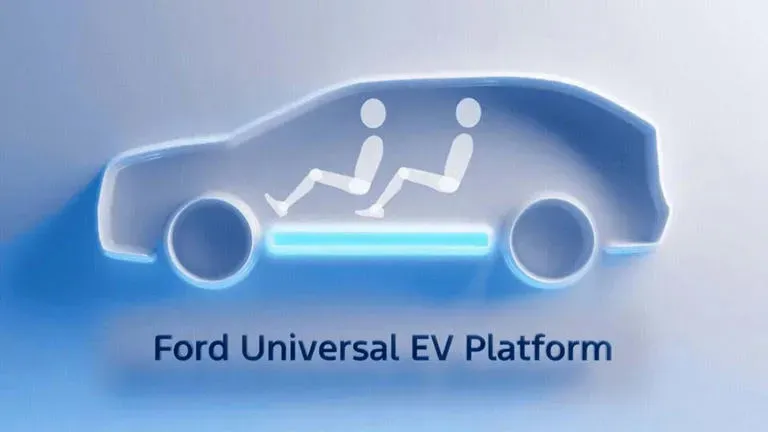
Ford Universal EV Platform (Ford)
Farley described the platform work as "radically different engineering," saying his own badge did not grant access to the building where the team was working. He indicated a public reveal could happen later in 2026, with a market launch expected in 2027.
The first UEV-based product will be a midsize four-door electric pickup priced around $30,000, slated to be assembled at Ford's Louisville Assembly Plant in Kentucky. According to Carscoops, the Model 3 and Model Y rival would follow, potentially debuting later in 2027 or in 2028. Whether that means one vehicle or two distinct body styles remains unconfirmed.
The UEV platform is engineered around efficiency rather than large battery packs. It uses 20 percent fewer parts than a typical Ford vehicle, 25 percent fewer fasteners, and features a wiring harness that is 4,000 feet shorter and 22 pounds lighter than first-generation Ford EVs, according to TechCrunch. The architecture also consolidates electronics into just five main control modules, a dramatic reduction from the roughly 70 ECUs found in the F-150 Lightning. Ford has adopted aluminum unicastings — equivalent to Tesla's gigacasting process — for the front and rear sections, alongside a structural battery pack integration.
Advertisement – Continue scrolling for more
Battery cells will use lithium-iron-phosphate chemistry, manufactured domestically at the $3 billion BlueOval Battery Park Michigan in Marshall, under a technology license from China's CATL. That facility, which began producing LFP cells in 2026, will have annual production capacity of approximately 20 gigawatt hours. The CATL licensing arrangement has drawn scrutiny from U.S. lawmakers, though Ford maintains it owns the plant, employs American workers, and that CATL's role is limited to technology transfer and worker training.
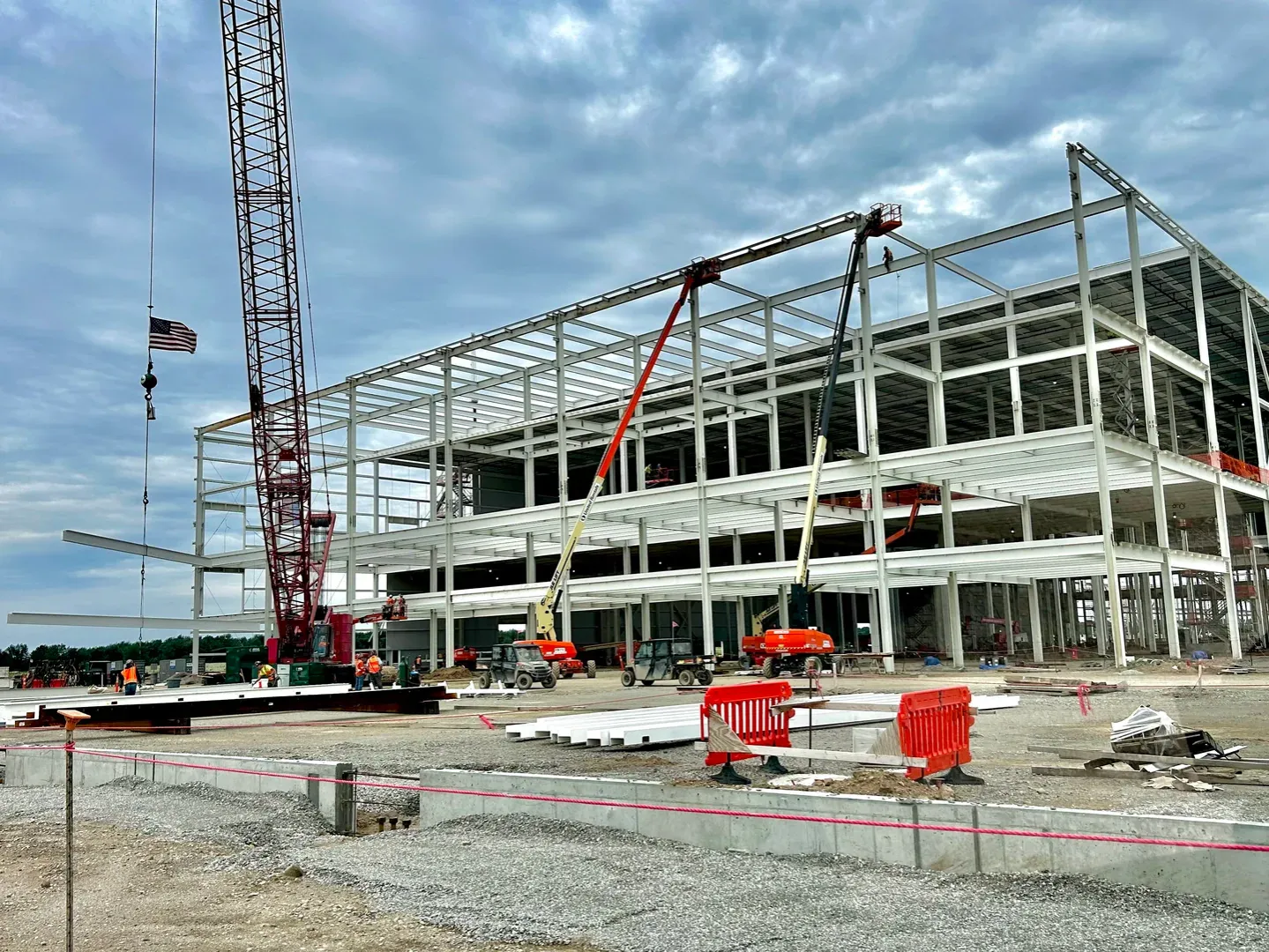
BlueOval Battery Park Michigan (Ford)
The announcement comes after a difficult stretch for Ford's EV operations. The Model e division posted a $4.8 billion operating loss in 2025, and Ford sold approximately 178,000 EVs that year at an effective loss of nearly $27,000 per unit, according to company filings. Ford's CFO Sherry House has said the division is not expected to reach breakeven until approximately 2029, with further losses of between $4 billion and $4.5 billion projected for 2026. The F-150 Lightning was pulled from the market in the second half of 2025 amid insufficient demand, and plans for a second-generation electric Transit van were also abandoned.
Farley has framed the UEV program as a strategic reset, calling it a "Model T moment" for the brand. The platform is designed to support up to eight body styles, including compact crossovers, sedans, larger SUVs, and vans, giving Ford the option to follow the truck with a broader family of affordable EVs. Ford stated at the platform's August 2025 reveal that it is investing approximately $5 billion and creating or securing nearly 4,000 jobs between the Louisville plant and the Michigan battery facility.
Advertisement – Continue scrolling for more
The market Ford is re-entering looks different from when the Mach-E launched in 2021. Tesla's combined U.S. EV market share stood at 58.9 percent in 2025, even as overall U.S. EV sales slipped approximately 2 percent year over year. Ford's EV sales fell 37.7 percent in February 2026 compared to a year earlier, reflecting broader demand headwinds following the Trump administration's rollback of federal purchase incentives. Ford shares fell more than 2 percent in the week following Farley's podcast comments.
Whether a $30,000 electric sedan or crossover, built on a platform still debuting via a midsize truck in 2027, can close a seven-to-one sales gap with Tesla in a market that has retreated from EV subsidies may be the defining question of Ford's next chapter.
Advertisement – Continue scrolling for more