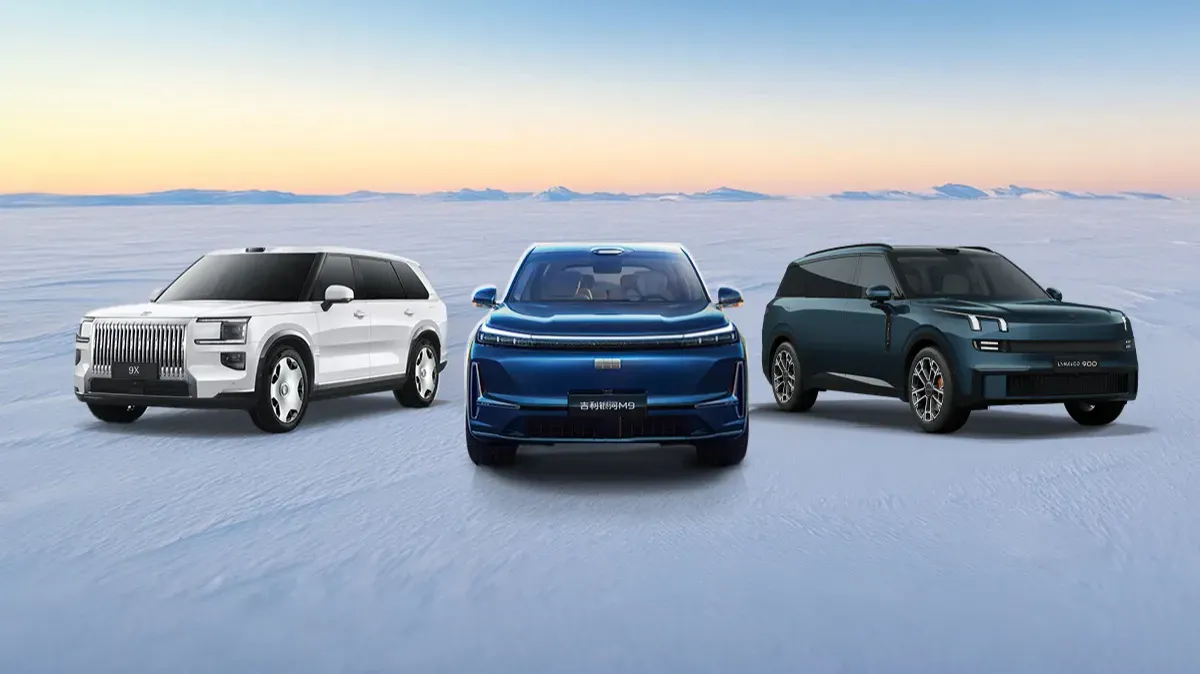
Source: Geely
Geely Automobile Holdings (HKEX: 0175) sold 270,167 vehicles in January 2026, surpassing BYD (HKEX: 1211) to claim the top spot in China's domestic passenger car market for the first time in years — a result that reflects structural shifts in demand as much as a single month's swing.
The reversal arrived in one of the most compressed months the Chinese market has seen recently. The expiry of a full purchase tax exemption on new energy vehicles at end-2025, replaced from January 2026 by a halved reduction, triggered a year-end buying surge that pulled demand sharply forward.
Advertisement – Continue scrolling for more
Chinese auto media reported BYD's January NEV sales fell to 210,051 units — down 30.1% year-on-year and 50% month-on-month, among the steepest declines the company has recorded in recent years. Geely, by contrast, posted year-on-year and month-on-month growth simultaneously, a feat almost no other major automaker managed.
Geely's resilience is partly structural. The group's "dual-fuel" strategy — running ICE and electric models in parallel — cushioned the drop in EV demand. ICE sales within the Geely group reached 134,400 units in January, surging 86% month-on-month as consumers returned to petrol in the winter months.
The bigger story within Geely is the Galaxy sub-brand. Galaxy delivered 82,990 units in January, more than doubling year-on-year, and now accounts for over 35% of the group's total volume — up from roughly 19% a year earlier.
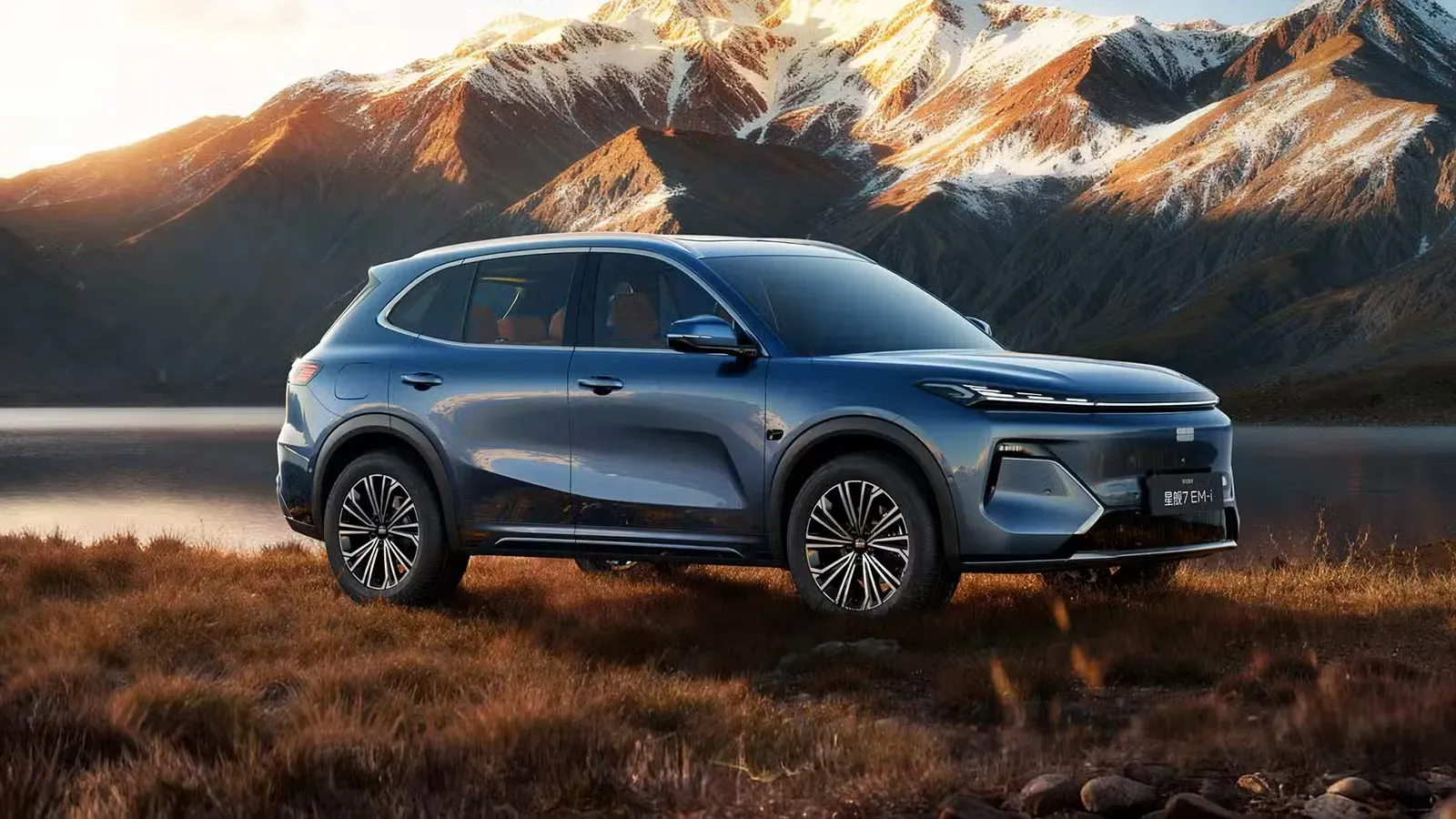
Source: Geely Galaxy
The Galaxy Starship 7, a compact SUV priced in the 100,000–150,000 CNY (c. $14,500–$21,700) range, has been a standout performer. The model runs Geely's in-house Raytheon EM-i hybrid system, which the company says achieves 46.5% thermal efficiency, ahead of BYD's fifth-generation DM-i system. Its DC fast-charging peak of 36 kW on the long-range variant allows a 30%-to-80% charge in approximately 20 minutes.
Zeekr, Geely's premium EV marque — which completed a merger back into Geely Automobile Holdings in December 2025 — delivered 23,852 units, nearly double its year-ago figure, though down 21.2% month-on-month. Geely's exports were also a highlight: 60,506 units left the country in January, up 121% year-on-year and 50% month-on-month.
Advertisement – Continue scrolling for more
Across the wider market, the NEV retail penetration rate dropped to 44.4% in January from 60.4% the month before, reopening significant floor space for petrol vehicles. The Toyota Camry sold 17,400 units, up 17% year-on-year. The SAIC-Volkswagen Passat moved approximately 21,000 units.
The Toyota Sienna sold 9,133 units — up 35% — outselling several NEV MPVs including the Denza D9. The pattern was consistent enough that Kaiyuan Securities described ICE as providing a short-term volume buffer for traditional automakers amid NEV winter range anxiety and a narrowed cost differential.
The cost calculus itself is shifting. With the purchase tax gap between ICE and NEV narrowing, the primary remaining usage-cost advantage for EVs lies in per-kilometer fuel savings. Great Wall Motor's founder Wei Jianjun framed the question directly: if electricity faced the same 45% tax burden embedded in gasoline, would EVs retain their price edge?
Advertisement – Continue scrolling for more
BYD's exports, however, told a different story. The company shipped 100,482 vehicles overseas in January — 43.3% more than a year earlier and roughly 47.6% of its total monthly output. Full-year 2025 exports reached approximately 1.05 million units, the first time BYD has crossed the one-million-unit threshold internationally.
Li Yunfei, BYD's head of brand and public relations, said the 2026 overseas target is 1.3 million units, a 24% increase that would approach Chery Automobile's (HKEX: 9973) current annual export scale — a company that has led China's auto exports for over two decades.
Among new-force brands, Xiaomi Automobile (HKEX: 1810) delivered more than 39,000 units in January, topping the monthly new-force brand ranking for the first time. Lei Jun noted that results reflected existing order depth; the YU7 was the primary delivery model while the SU7 is in a model-transition period ahead of a new version due in April 2026.
Advertisement – Continue scrolling for more
NIO (NYSE: NIO) reported 27,182 deliveries, up 96.1% year-on-year, driven largely by the new ES8, which alone accounted for 17,646 units. NIO announced on February 5, 2026 that adjusted operating profit for Q4 2025 came in at 700 million to 1.2 billion CNY (c. $101–174 million) — its first quarter in the black. Li Auto and Xpeng (NYSE: XPEV) both saw year-on-year and month-on-month declines.
SAIC Motor (SSE: 600104) was January's volume leader overall at 327,000 units, up 23.9% year-on-year, with petrol cars making up 73.9% of the mix. Chery Group sold 200,269 units, with exports of 119,605 — maintaining its ninth consecutive month above 100,000 export units and retaining its position as China's top automotive exporter.
Advertisement – Continue scrolling for more
The broader competitive dynamic is also shifting upmarket. Local government subsidy programs introduced in early 2026 have generally set a threshold of around 200,000 CNY (c. $29,000) for full trade-in benefits, steering buyers toward higher-priced vehicles. CPCA secretary-general Cui Dongshu wrote in late January that pure price competition is losing efficacy and that 2026 will mark an entry into a premiumization cycle — where the competitive question shifts from who is cheapest to who offers the most substantive technology at mainstream price points.
Whether January's ICE resurgence proves structural or seasonal — and whether subsidy processing bottlenecks ease in time to restore EV momentum — may well define which manufacturers hold their ground when the spring selling season arrives.
Conversion rate: 1 USD = 6.90 CNY as of February 20, 2026
Advertisement – Continue scrolling for more