Huawei's Qiankun ADS autopilot system closes in on 10 billion km in China
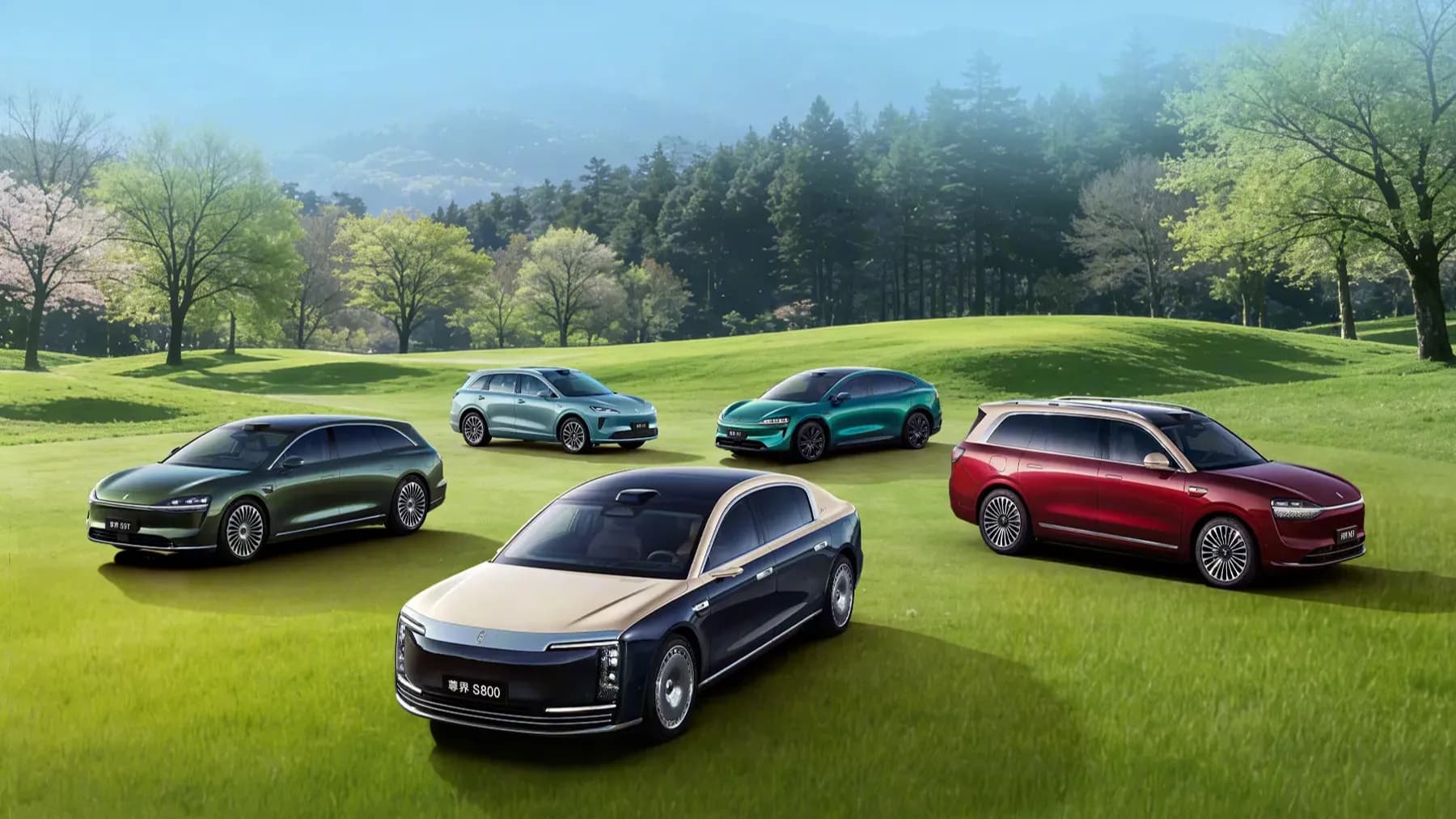
Huawei's Qiankun intelligent driving platform has accumulated 8.76 billion kilometers of assisted driving mileage — approaching the 10 billion kilometer threshold that would mark a significant data-scale milestone for any autonomous driving programme outside the United States. The figure, which crossed 7.283 billion kilometers as of January 2026, underscores the pace at which Chinese drivers are adopting advanced driver assistance on a daily basis.
The milestone carries strategic weight. In the assisted and autonomous driving industry, real-world mileage functions as both a training resource and a trust signal: every kilometer logged feeds algorithmic refinement and validates safety claims in ways that simulation alone cannot replicate.
Advertisement – Continue scrolling for more
By comparison, Tesla (NASDAQ: TSLA) has cited over 10 billion real-world miles in global training data, while XPeng (NYSE: XPEV) has not disclosed equivalent cumulative figures for its XNGP system. Huawei's ability to accumulate mileage at this speed reflects both the scale of its installed base and the rate at which Qiankun-equipped vehicles are driven with assistance engaged.

Huawei Qiankun 10 billion km ADAS milestone (HIMA)
The installed fleet reached 1.4 million vehicles as of December 31, 2025, with Huawei targeting 3 million cumulative installations and coverage across more than 80 vehicle models by the end of 2026. The system now spans sedans, SUVs, MPVs and off-road vehicles from brands including AITO, Avatr, Stelato, Luxeed, Maextro, Shangjie, Dongfeng Mengshi, Deepal, Voyah, GAC Trumpchi, and — as the only foreign partner — FAW-Audi, whose A6L e-tron integrates a dual-LiDAR and visual fusion solution.
Huawei unveiled ADS 4 on April 22, 2025, at the Shanghai Qiankun Intelligent Technology Conference. Jin Yuzhi, CEO of Huawei's Intelligent Automotive Solution Business Unit, introduced the system alongside a full architectural overhaul centred on the WEWA framework — a two-part stack combining a cloud-based World Engine (WE) and an on-vehicle World Action Model (WA).
Advertisement – Continue scrolling for more
The cloud layer uses a diffusion generation model to synthesise extreme edge cases, producing difficult scenarios at 1,000 times the density of real-world collection and completing 600 million kilometres of highway Level 3 simulation. The on-vehicle layer uses a Mixture of Experts (MoE) architecture for full-modal perception and scene management. Compared to ADS 3, the new architecture cuts end-to-end latency by 50%, improves traffic efficiency by 20%, and reduces harsh braking rates by 30%.
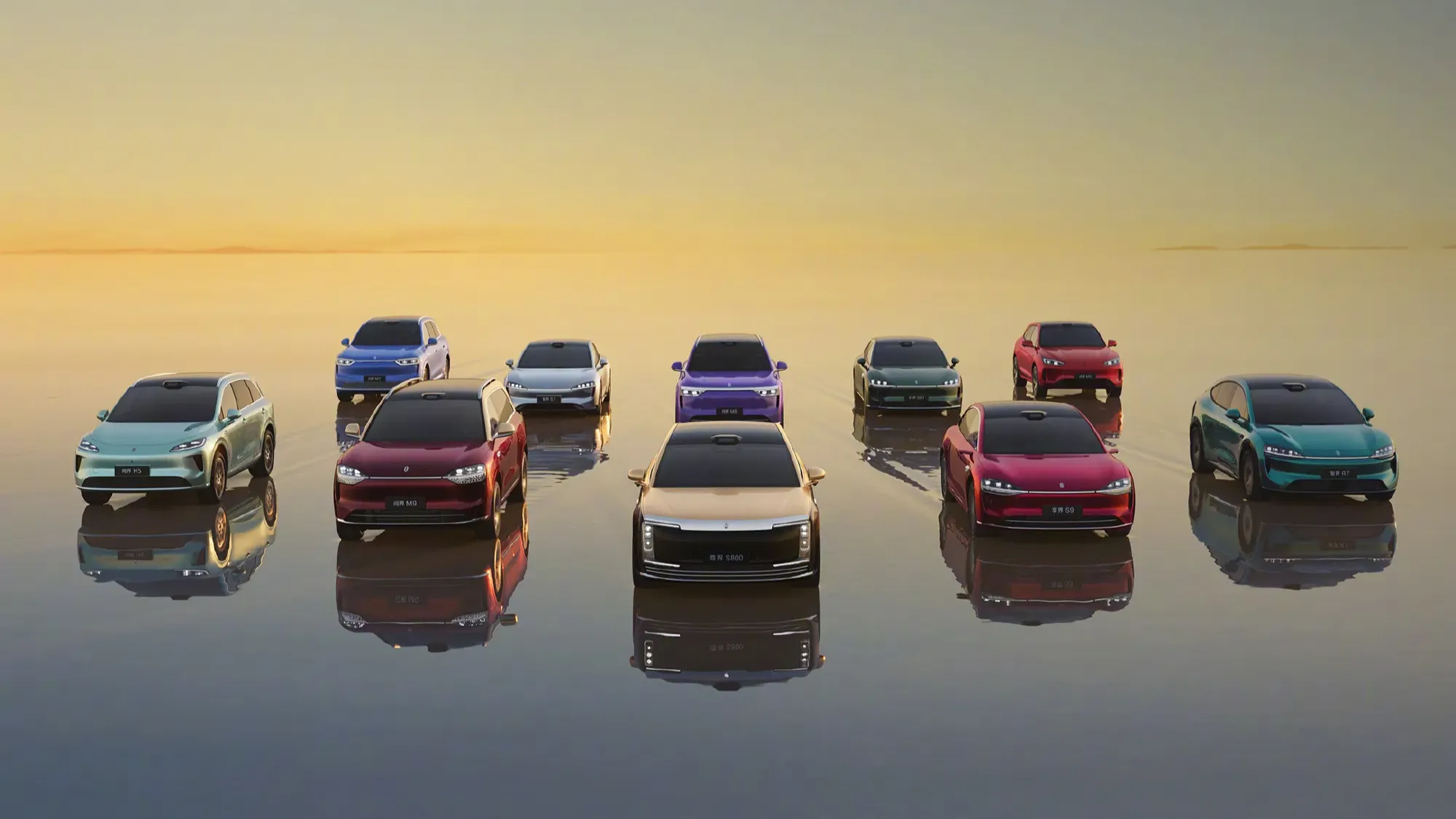
Huawei alliance car models (HIMA)
The hardware suite is equally upgraded. ADS 4 deploys a 192-line LiDAR at the front alongside three distributed 4D millimeter-wave radar matrices, two high-precision cameras, six ultrasonic radars, and a surround-view camera. Side sensors add two solid-state LiDARs and four side-view cameras. The result is a 250-metre detection range with performance maintained in rain, snow and fog. Four commercial variants — SE, Pro, Max and Ultra — cover vehicles priced from 150,000 CNY (c. $22,000) through the luxury segment, with the Ultra Flagship Edition supporting the commercial rollout of highway Level 3 autonomous capability.
The safety case is maturing. According to Huawei, vehicles equipped with Qiankun ADS in assisted driving mode experience one serious collision event every 4.9 million kilometers — compared to the Chinese national average of one per 1.8 million kilometers, a 3.58-times improvement.
Advertisement – Continue scrolling for more
The system had cumulatively prevented 2.54 million potential collisions by the end of July 2025. In a 2025 evaluation by the China Automotive Engineering Research Institute (CATARC), the Shangjie H5 — equipped with ADS 4 — passed seven standard scenarios and voluntarily completed additional extreme-condition tests, the only model in the evaluation cohort to do so.
ADS 4 has received iterative updates via OTA since launch. The September 2025 update introduced Parking-to-Parking 2.0, enabling seamless navigation from one parking lot exit to another with automatic highway ETC payment. The more recent ADS 4.1 rollout adds eAES anti-sandwich protection against rear-end collisions, tire blowout stability control rated to 130 km/h (81 mph), driver incapacitation auto-pullover, and real-time hands-off monitoring with an automatic safe-stop trigger. Huawei notes safety improved by 50% between ADS 3.3 and ADS 4, with urban area usage rates rising alongside.
The competitive context in China is intensifying. XPeng's XNGP now covers 243 cities and the company has pivoted aggressively toward a vision-only, end-to-end neural network approach — a direction Huawei has explicitly rejected. Jin Yuzhi has said Huawei will not follow the Vision Language Action (VLA) route, arguing that its World Action model architecture offers superior real-world adaptability for the full range of Chinese road conditions.
Advertisement – Continue scrolling for more
Tesla's FSD, available in China at 64,000 CNY (c. $9,400) — more than double the price of Huawei's advanced package — has yet to demonstrate Qiankun-level city NOA coverage in mainland China. Cumulative R&D investment in Qiankun Intelligent Driving has reached 50 billion CNY (c. $7.3 billion), a figure that reflects both the depth of the full-stack approach and the financial commitment required to sustain it.
Looking ahead, Huawei plans to debut ADS 5, HarmonySpace 6, and a next-generation XMC digital chassis engine at the 2026 Beijing Auto Show, which opens on April 24. Two new OEM brands — Yijing (Dongfeng-Huawei) and Qijing (GAC-Huawei) — will debut their first vehicles at the same event, expanding the Qiankun ecosystem further. The company targets large-scale Level 3 highway deployment by 2027 and the commencement of Level 4 urban pilot programmes in the same year, subject to regulatory clearance.
Whether ADS 5 can sustain Huawei's technology lead over a rapidly converging field — particularly as end-to-end architectures narrow the gap with lower hardware costs — may define which intelligent driving brand Chinese consumers reach for as the decade matures.
Advertisement – Continue scrolling for more