Source: Leapmotor
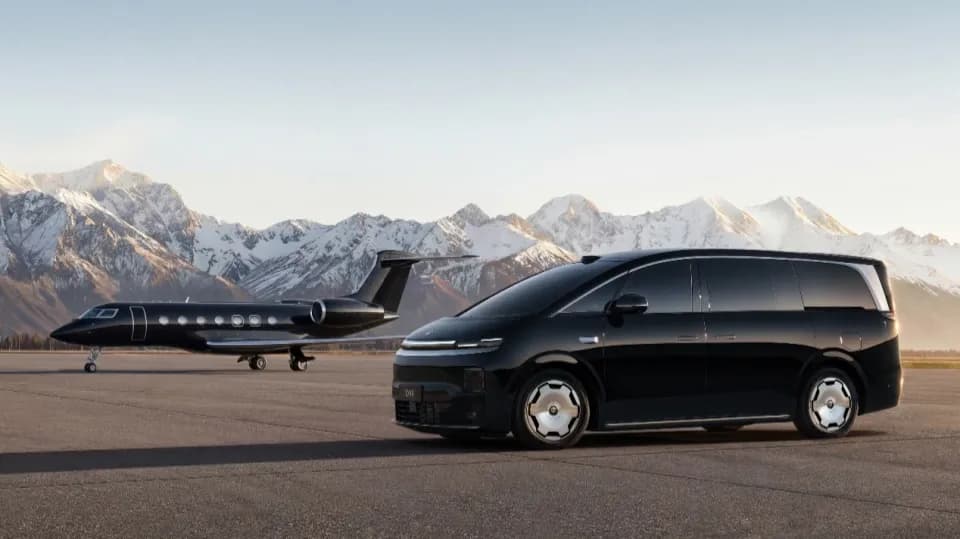
Leapmotor unveiled its first MPV, the D99, on December 28, 2025, during its 10th-anniversary event in Hangzhou. The model enters China’s large MPV segment and becomes the second vehicle in the company’s D-series after the D19 SUV.
Advertisement – Continue scrolling for more
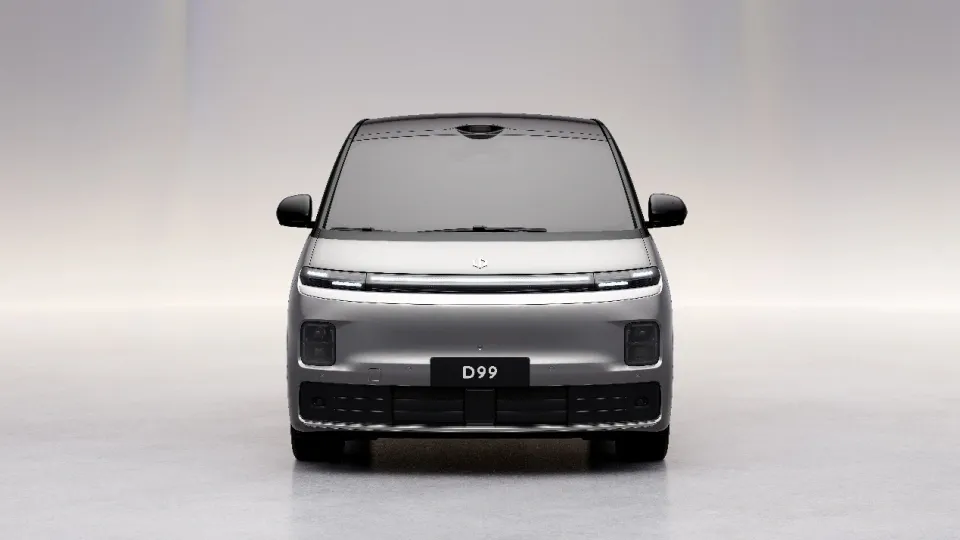
The D99 adopts the brand’s “Tech-Nature 2.0” design language shared with the D19, featuring a three-section front lighting bar, an active air intake grille, and million-pixel DLP headlights capable of projecting patterns.
Source: Leapmotor
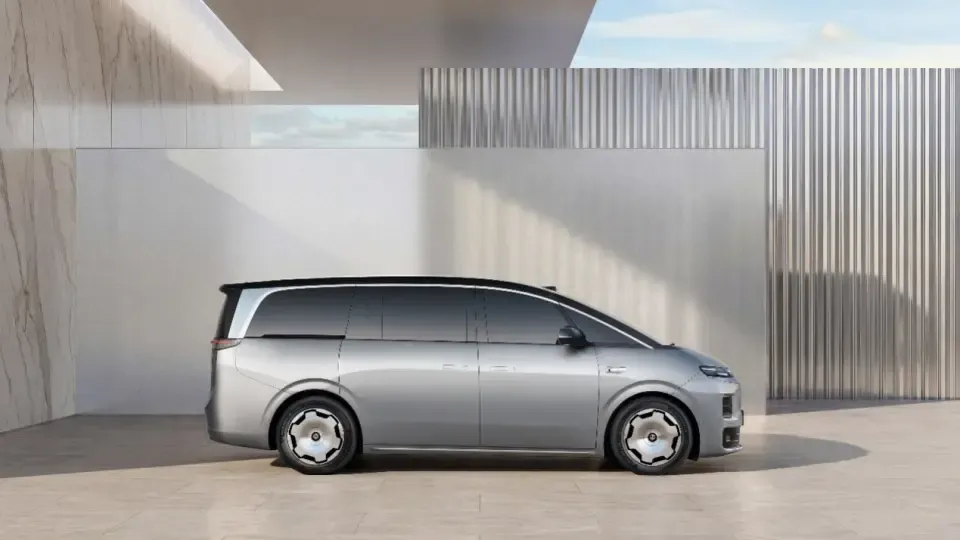
The vehicle measures more than 5.2 meters in length and nearly 2 meters in width, with a wheelbase exceeding 3.1 meters. A square, upright rear section maximizes cabin volume, supported by an ISD rear light panel containing 8,260 LEDs.
Leapmotor positions the D99 in China’s crowded premium MPV field, where domestic automakers have expanded rapidly as multi-row EVs become a profitable niche. Competitors include the Li Auto MEGA, the DENZA D9, XPeng X9 and the Voyah Dreamer.
Advertisement – Continue scrolling for more
Unlike established players targeting higher price brackets, Leapmotor typically emphasizes value and high integration of in-house technology, a strategy it applies to the D99 by giving it both range-extended and full-electric architectures.
The company did not disclose pricing, delivery dates, or pre-order timelines during the event. The five exterior colors include Photonic White, Liquid Silver, Morning Blue, Skyline Grey, and Metallic Black. The model’s panoramic roof has a 1.46-square-meter light area with 99.9% UV filtration.
Source: Leapmotor
The D99 offers two powertrain choices. The range-extended version uses an 80.3 kWh battery with an 800V architecture and a range-extended CTC structural pack. Leapmotor says the configuration provides electric-only driving capability that surpasses many pure battery models in its class. A four-wheel-drive range-extended system is available.
The fully electric version adopts a 1000V architecture paired with a 115 kWh battery supplied by CATL using a super-hybrid cell design. The platform supports high charging power, although exact charging times and range figures were not provided.
Advertisement – Continue scrolling for more
The chassis uses a dual-chamber closed-type air suspension system with continuously variable damping. Structural rigidity reaches 46,682 N·m per degree, and the vehicle includes stability support for dual-wheel blowout scenarios. Braking hardware consists of front four-piston fixed calipers.
The cabin uses semi-aniline top-grain leather and includes zero-gravity second-row seats. Window alignment is flush with the body to reduce step height between glass and metal surfaces. Leapmotor also equips the MPV with what it calls a vehicle-grade oxygen cabin system, a feature not common among domestic MPVs.

Source: Leapmotor
The D99 carries two Qualcomm Snapdragon 8797 chips providing up to 1,280 TOPS of computing power. A roof-mounted lidar enables the company’s VLA large-model-based assisted driving stack. Leapmotor also integrates an on-device large-model cockpit that supports voice-operated driving functions, including lane changes and overtaking.
Active safety systems include AEB functional from 4 to 150 km/h (2 to 93 mph) and emergency evasive steering that operates between 80 and 130 km/h (50 to 81 mph). Battery safety uses a ten-layer aerospace-grade protection design, supplementing the MPV’s structural rigidity.
Leapmotor’s decision to launch a large MPV alongside its expanding D-series indicates a push toward higher-end, higher-margin segments.
Advertisement – Continue scrolling for more