China's Ministry of Industry and Information Technology (MIIT) has put its first mandatory national standard for higher-level autonomous driving out for public comment, with a proposed effective date of July 1, 2027. Contrary to claims circulating online, the draft does not require lidar for L4 systems.
The standard, titled Intelligent Connected Vehicles – Safety Requirements for Autonomous Driving Systems, is China's first compulsory rule covering both L3 conditional automation and L4 high automation. The approval draft was published on June 16 and is open for comment from June 17 to 24, 2026.
It upgrades the recommended 2024 standard GB/T 44721—2024 to a mandatory one, meaning non-compliant vehicles cannot be produced, sold, or imported. A widely shared claim that the rules force L3 systems to carry camera plus millimeter-wave radar redundancy and L4 systems to add lidar, banning pure-vision approaches, is false.
Advertisement – Continue scrolling for more
XPeng (NYSE: XPEV) vice president Yu Tao publicly rejected the claim on June 20, saying the published text does not mention lidar at all. According to Yu, the standard is results-oriented: it defines the safety level a system must reach, while leaving the engineering approach to manufacturers.
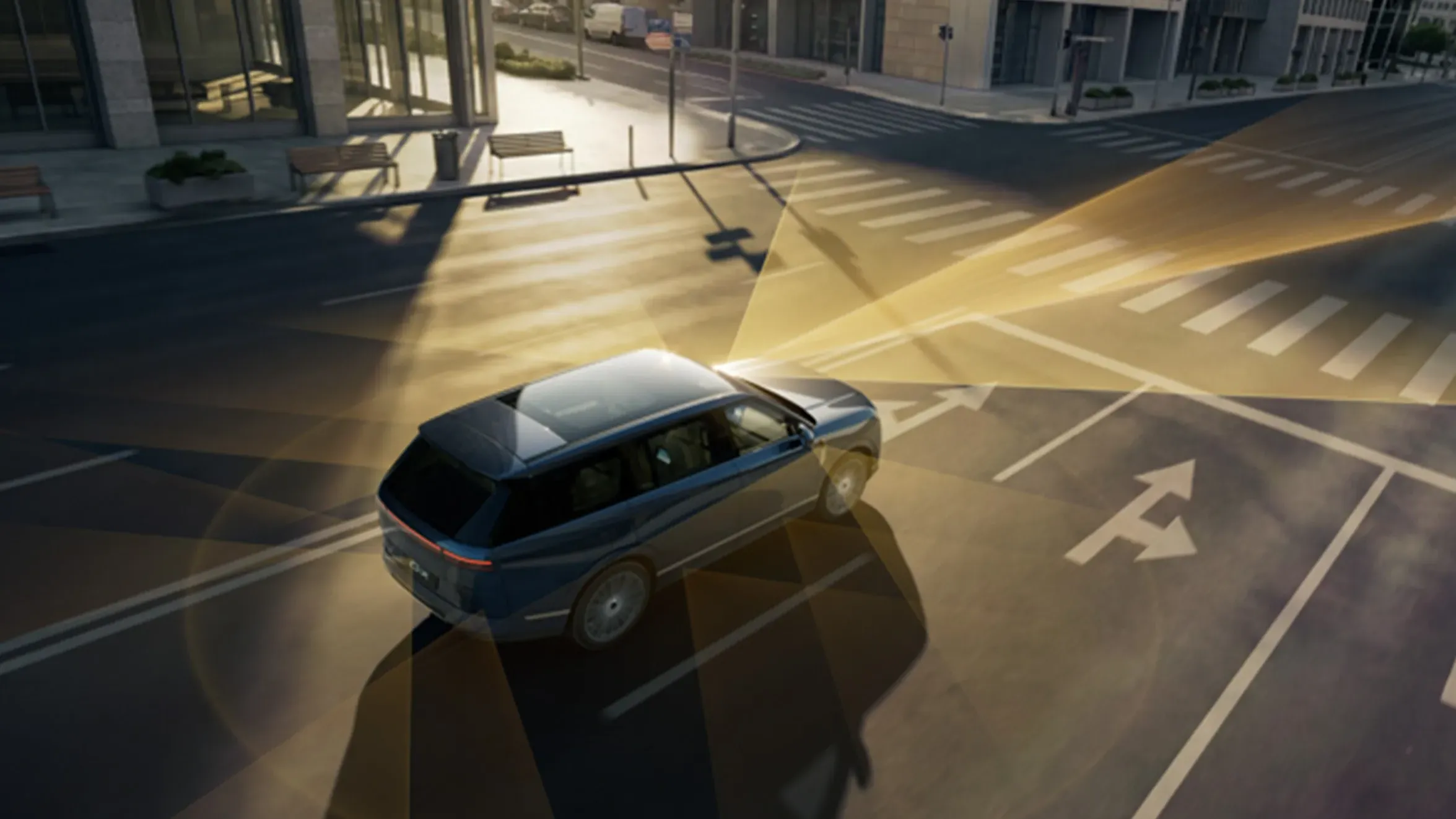
The draft does not specify any sensor hardware. A vehicle using pure vision, vision fused with radar, or a multi-sensor stack can be certified as long as it passes the full set of simulation, closed-course, and road-test validations.
The substance of the standard lies elsewhere. It requires an autonomous driving system to reach a safety level at least equal to a "competent and attentive driver" and to pose no unreasonable risk to users or other road users. It also introduces a Safety Case mechanism, requiring companies to argue a system's safety through a structured claim-argument-evidence framework rather than citing test mileage or the number of cities covered.
Advertisement – Continue scrolling for more
The rules draw a line between the two levels. For L3, the focus is human-machine handover: if the backup driver fails to take over, the system must execute a minimal-risk maneuver and bring the vehicle to a safe stop. For L4, oversight shifts to the system's own risk-handling capability, and the system may not rely on remote assistance to perform the dynamic driving task.
The scope covers passenger (M-category) and cargo (N-category) vehicles fitted with L3 or L4 systems, while automated parking is excluded. The draft replaces a voluntary standard that took effect in September 2024, with newly type-approved models complying from the effective date and already-approved models getting a transition period that takes effect in the 13th month after implementation.
The shift carries real commercial weight. Pangoal Institution senior researcher Jiang Han told National Business Daily that the era of winning market share through vague marketing has ended, with competition moving toward demonstrable safety. Jiang added that the standard will raise spending on redundancy systems, higher-compute chips, and lifecycle safety documentation, though scale effects should erode those costs over time.
Advertisement – Continue scrolling for more
Momenta global solutions chief architect Rao Qing said the draft marks China's autonomous driving industry entering a new phase of large-scale deployment built on a safety baseline. As of May 2026, China had opened more than 57,000 km (35,418 miles) of test roads for intelligent connected vehicles and issued 237 national and industry standards.
The standard reflects a regulatory pivot from proving capability to proving safety, prompted in part by high-profile robotaxi incidents at home and abroad. Whether a performance-based, technology-neutral rulebook can settle the long-running industry argument between lidar and pure vision, or simply move it into the test lab, remains to be seen.
Advertisement – Continue scrolling for more