
Source: BMW
BMW has accelerated development of its Neue Klasse program as the next-generation iX3 enters global testing and the 2027 i3 sedan proceeds through final validation in northern Europe. The two models represent BMW’s first major product wave on the dedicated electric platform, following years of reliance on multi-energy architectures.
The next-generation i3 sedan has been undergoing winter evaluations in northern Sweden, where lighter camouflage and revised headlight designs were observed. BMW is using this phase to fine-tune driver-assistance functions and cabin comfort. The i3 is built on the Neue Klasse architecture, internally coded NA0, separating it fully from the gasoline 3 Series, which continues on the CLAR-based G50 platform. The decision ends BMW’s practice of using shared platforms for combustion and electric variants of the same nameplate.
Advertisement – Continue scrolling for more
In the redesign, the combustion model keeps a longer hood to package inline-six engines, while the electric i3 adopts shorter overhangs and a flatter roofline. Prototypes feature aerodynamic wheels and a closed-off interpretation of the brand’s kidney grille. The company has not disclosed performance figures, but internal estimates suggest use of 46-mm cylindrical cells, sixth-generation eDrive motors, an 800-V electrical system and silicon-carbide power electronics. Based on current testing and efficiency assumptions, the i3 could exceed an estimated 400 miles (644 km) of EPA range.
Source: BMW
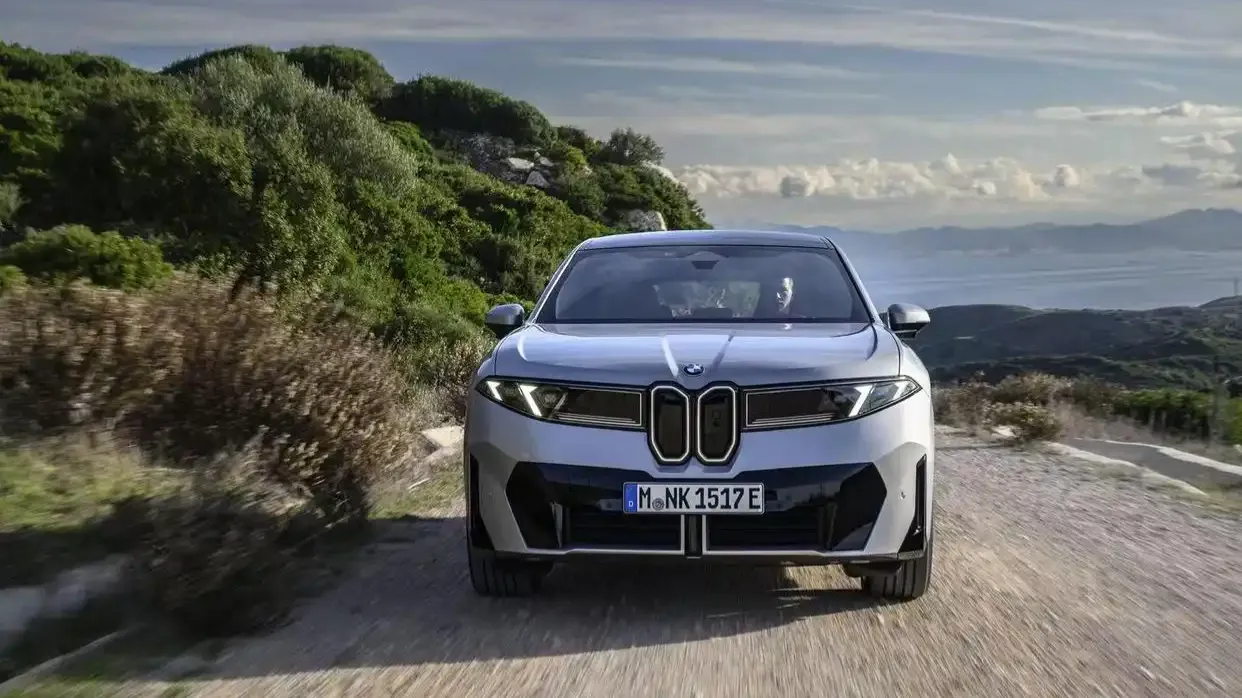
The iX3, the first Neue Klasse model to reach production, has undergone media trials in Málaga, Spain. BMW demonstrated its sixth-generation eDrive, new large-format cylindrical battery cells and fully integrated 800-V platform. The model has posted a CLTC range above 900 km (559 miles). In an earlier long-range trial from Debrecen, Hungary to Munich, Germany, the vehicle covered more than 1,007 km (626 miles) on a single charge with 2% battery remaining.
Dynamic tests at the Ascari circuit highlighted the vehicle’s central domain controller—branded Heart of Joy—which manages steering, damping and power distribution. According to BMW’s engineering team, steering inputs and body response are synchronized to reduce latency in rapid transitions. In urban use, the regenerative braking performs 98% of braking, limiting friction-brake intervention and smoothing out low-speed deceleration.
Advertisement – Continue scrolling for more
China will receive a long-wheelbase iX3 in the second half of 2026 with over 100 mm of added wheelbase and seats developed by BMW’s Shanghai engineering group. The variant integrates China-focused software, including the Neue Klasse Operating System X with major local apps, a voice assistant using Alibaba and DeepSeek language models, and highway-to-city pilot-assisted driving developed with Momenta.
BMW has also outlined early customization plans. The iX3 will initially offer six colors, with three additional options—Fire Red, Frozen Space Silver and Eucalyptus Green—becoming available from March 2026. Additional Individual colors will follow once the Hungary plant completes certification.
An M Performance parts package will be released in July 2026, with black trim, decals and a roof spoiler. The iX3 M60 is expected to enter production around the same time, while a full M version is scheduled for late 2027.
Advertisement – Continue scrolling for more
Interior options will expand in 2026, including a white steering wheel tied to the Digital White interior. Accessories include roof racks, aerodynamic cargo boxes and rear-mounted bicycle carriers for up to three bikes.
As BMW moves toward volume production of its Neue Klasse architecture, the iX3 and i3 will determine how quickly the brand transitions from legacy platforms and how customers assess the balance of range, efficiency and software-led features across global markets.
Advertisement – Continue scrolling for more