NVIDIA Director calls Tesla FSD v14 first AI to pass the “Physical Turing Test”
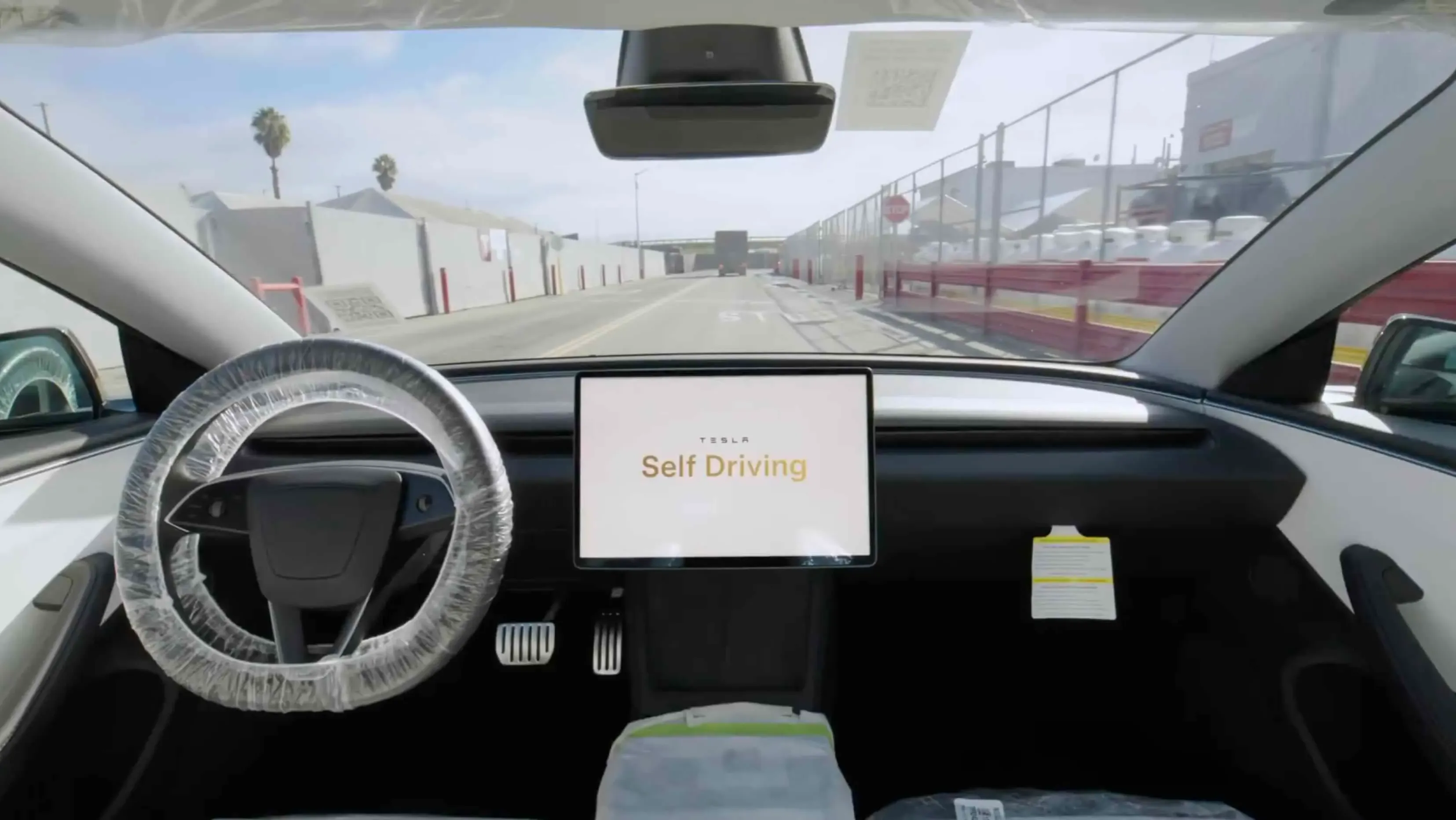
NVIDIA Director of Robotics Jim Fan has publicly stated that Tesla’s Full Self-Driving (Supervised) system version 14 is the first artificial intelligence to pass what he termed the “Physical Turing Test.” His comments came in late December 2025, following hands-on experience with Tesla’s FSD v14.
Advertisement – Continue scrolling for more
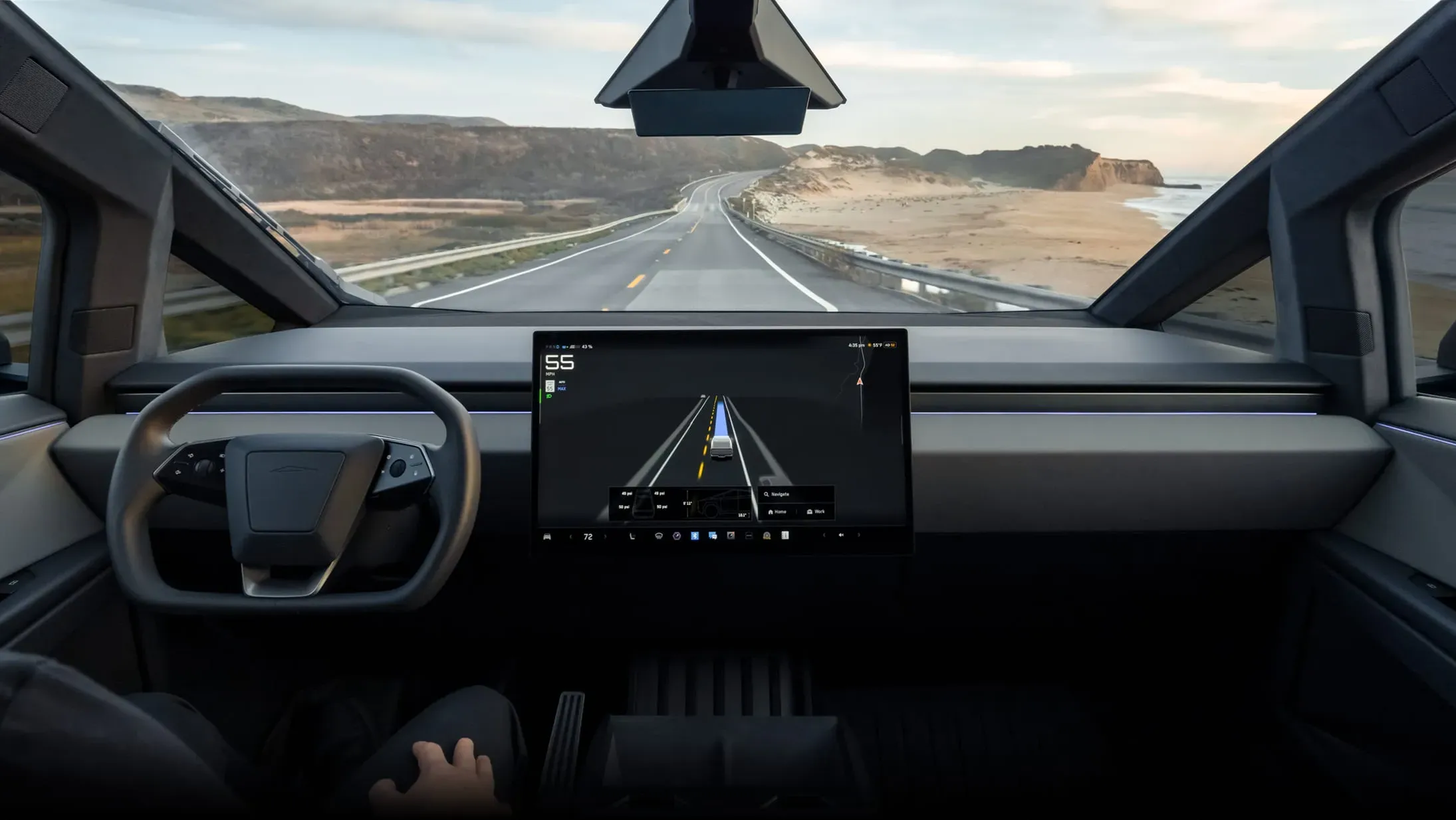
Fan, a leading researcher in embodied AI at NVIDIA, described his initial reaction as “magical,” watching the steering wheel autonomously navigate complex driving environments. He added that the system quickly became a routine part of his daily life, comparing the experience to modern smartphone dependency. “Removing it now would actively hurt,” he said, underscoring the deep integration of such AI in everyday routines.
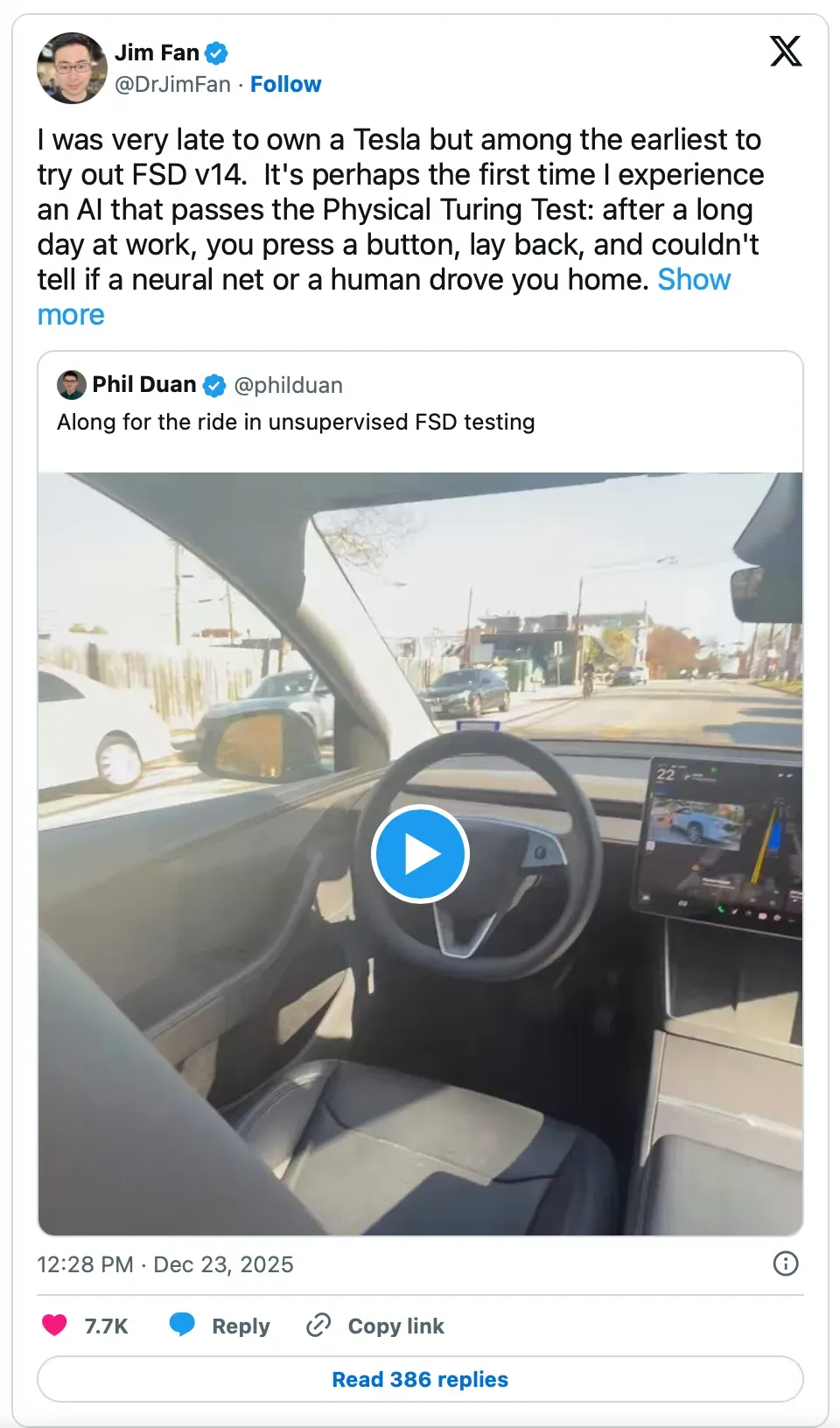
Source: X @DrJimFan
The Physical Turing Test, a concept Fan proposed as an extension of Alan Turing’s original test, shifts focus from conversational intelligence to practical, physical interaction. While traditional Turing tests evaluate an AI’s ability to mimic human conversation, Fan’s Physical Turing Test demands real-world physical task performance indistinguishable from a human’s.
Advertisement – Continue scrolling for more
Fan wrote on social media platform X that after a long day at work, he could relax and press a button, unable to discern whether a human or a neural network was driving him home. He emphasized that despite understanding the underlying robotic learning algorithms, witnessing the AI’s autonomous control remained a surreal experience.
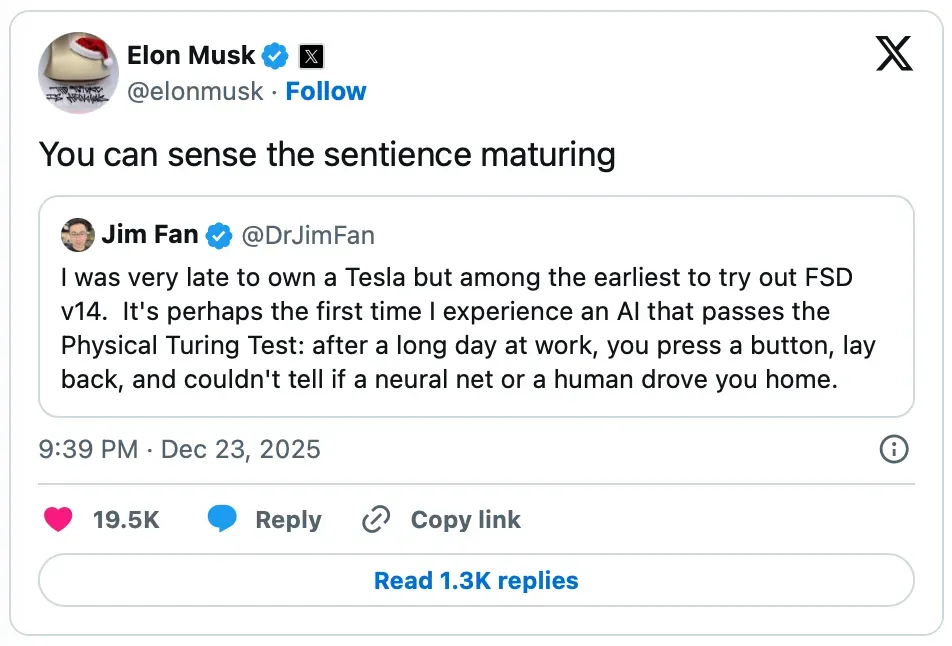
Source: X @elonmusk
Elon Musk, CEO of Tesla Inc. (NASDAQ:TSLA), echoed Fan’s assessment, stating that with FSD v14, “you can sense the sentience maturing.” Musk described Tesla’s AI as the leading “real-world AI” currently available.
Tesla’s FSD v14.2.2 update, rolled out in December 2025, further enhanced the system’s neural network vision encoder. It improved recognition of emergency vehicles, road obstacles, and human gestures, and introduced dynamic navigation capable of responding to real-time traffic changes.
Additional features included an “Arrival Option” for personalized parking preferences and new driving styles—“SLOTH” for cautious driving and “MADMAX” for more aggressive maneuvers—tailored to user driving history.
Advertisement – Continue scrolling for more
Tesla’s Robotaxi service, while expanding, remains smaller than competitor Waymo’s fleet. As of December 2025, Tesla operates about 30 autonomous vehicles in Austin, Texas, versus Waymo’s nearly 200 there and a total fleet exceeding 2,500 across multiple cities. Regulatory and licensing challenges have slowed Tesla’s commercial Robotaxi expansion.
The contrast between Tesla’s end-to-end neural network software and Waymo’s sensor and high-definition map-reliant approach highlights divergent strategies in autonomous driving. Musk and Tesla’s former AI director Andrej Karpathy have argued that Tesla’s software-centric model offers greater adaptability but requires more complex modeling.
Advertisement – Continue scrolling for more