Tesla "almost done" with AI5 chip design with 10x the computing power of HW4
Source: X @elonmusk
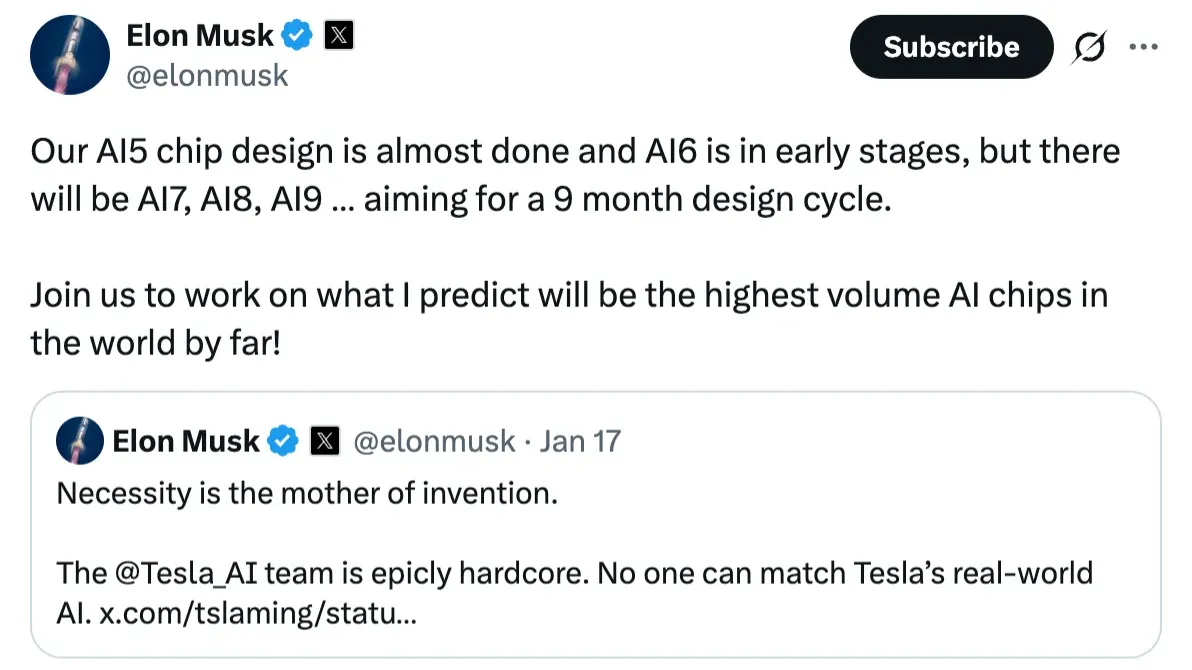
Tesla (NASDAQ:TSLA) Chief Executive Elon Musk said on January 19, 2026, that the design of the company’s next-generation AI5 chip is nearing completion and that Tesla will restart development of its Dojo 3 supercomputer, reversing an earlier decision to halt the project.
Musk made the announcement in a post on X, linking the progress of the AI5 chip directly to the resumption of Dojo 3, a supercomputing system intended to support Tesla’s artificial intelligence training workloads. He also used the post as a recruitment message, inviting engineers interested in building what he described as the world’s highest-volume AI chip to apply.
Advertisement – Continue scrolling for more
The update follows reports from August 2025 that Tesla had shut down the Dojo program entirely and that the project’s leader was set to leave the company. At the time, sources said the decision came directly from Musk, who later explained that running two fundamentally different AI chip strategies in parallel was an inefficient use of resources. Musk said Tesla would instead focus its efforts on AI5, AI6, and subsequent generations, which he said would perform strongly in inference and adequately in training.
On January 18, 2026, Musk stated that the AI5 chip design was “almost done,” while confirming that early-stage development of the AI6 chip had already begun. He also outlined an aggressive roadmap for future chips, saying Tesla aims to release AI7, AI8, AI9, and later iterations on a nine-month design cycle.
Musk repeated his claim that Tesla’s in-house chips could become the highest-volume mass-produced artificial intelligence processors globally. The announcement was again framed as a hiring effort for Tesla’s AI and semiconductor engineering teams.
Source: X @herbertong
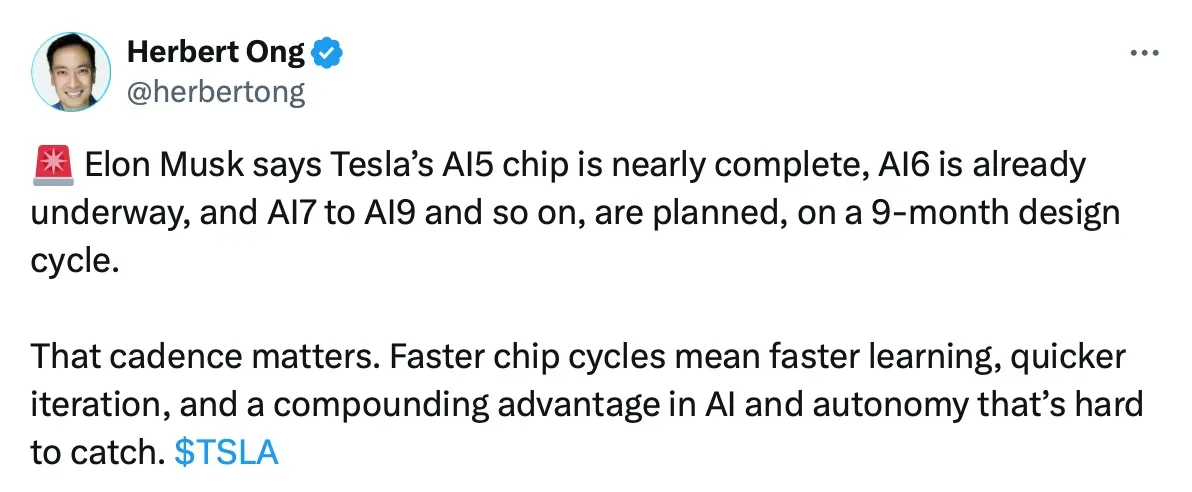
Tesla community member Herbert Ong said the shortened design cycle could allow faster technical iteration and quicker accumulation of engineering experience, potentially giving Tesla a compounding advantage in artificial intelligence and autonomous driving.
The statements are consistent with earlier reporting on AI5 manufacturing plans. In December 2025, reports said Samsung Electronics was preparing to manufacture Tesla’s AI5 chip and had accelerated recruitment of senior engineers to support chip production in the United States. Samsung is one of two foundry partners selected by Tesla, alongside Taiwan Semiconductor Manufacturing Co. (TSMC).
Advertisement – Continue scrolling for more
According to those reports, TSMC will produce one version of the AI5 chip using a 3-nanometer process, while Samsung will manufacture another version using a 2-nanometer process. Musk previously said that although the two foundries may use different production approaches, Tesla’s objective is to ensure identical performance across both versions.
The AI5 chip is designed to replace Tesla’s current AI4 hardware, formerly known as Hardware 4.0 for autonomous driving. It is intended to power Tesla’s Full Self-Driving system as well as other AI-driven projects, including the Optimus humanoid robot.
However, Musk’s latest comments highlight a contradiction in Tesla’s chip timeline. In July 2025, Musk said the AI5 design was “finished.” Six months later, he now describes the design as “almost done.” In the semiconductor industry, a completed design still requires months for tape-out, sample production, validation, and testing before volume manufacturing can begin.
Advertisement – Continue scrolling for more
Earlier reporting indicated that Tesla has delayed AI5 volume production until mid-2027. Musk previously confirmed that while samples may be available earlier, the several hundred thousand units needed for vehicle production would not be ready until that timeframe.
The production delay has implications for Tesla’s upcoming vehicle lineup. If AI5 does not reach volume manufacturing until mid-2027, the Cybercab vehicle planned for a 2026 launch would likely ship with the current-generation AI4 hardware.
Source: Tesla
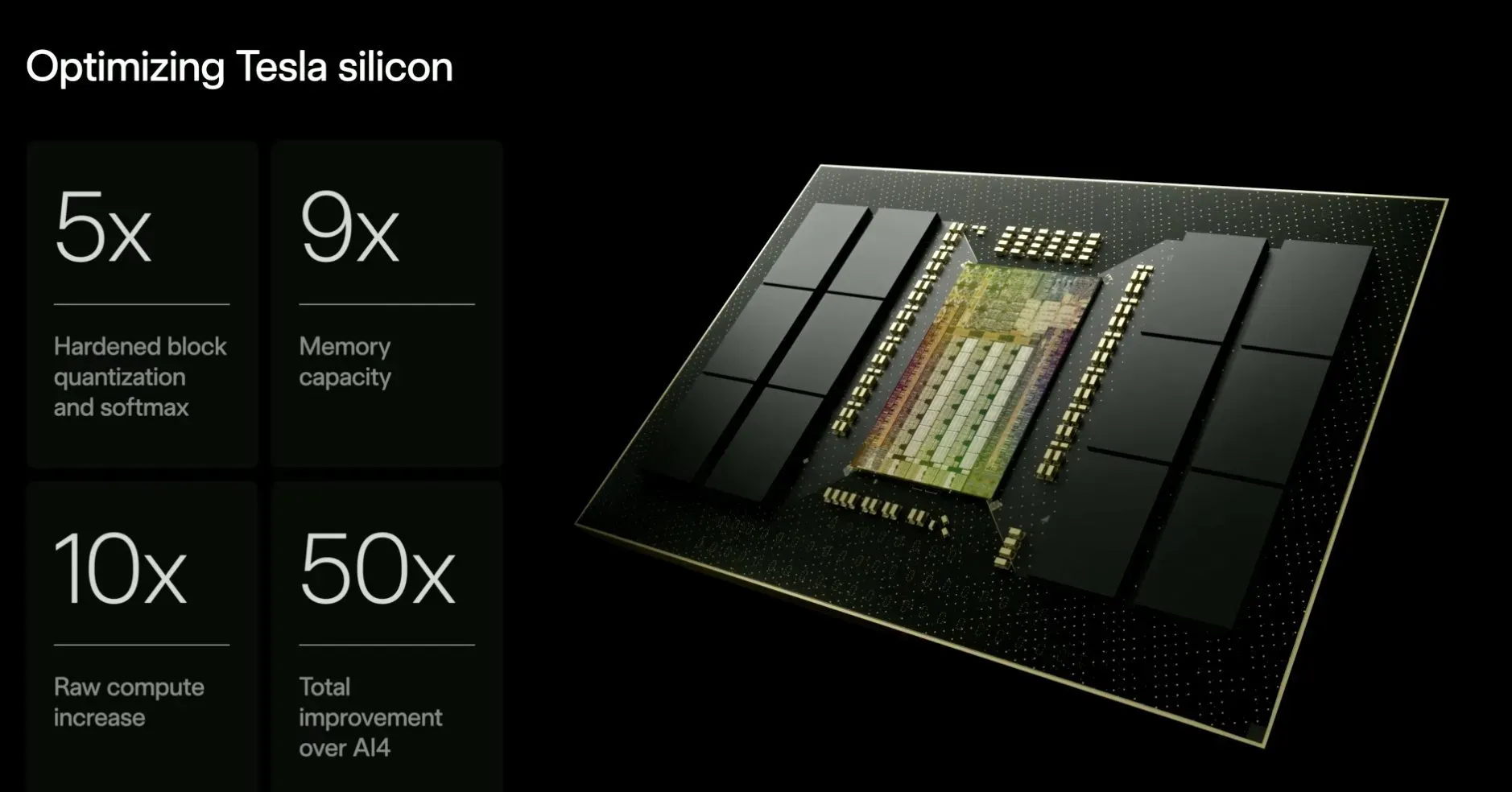
Musk has previously said AI5 could deliver up to 10 times the computing power of AI4, which itself marked a significant improvement over HW3.
The nine-month design cycle Musk has proposed for AI6 and later chips has drawn skepticism. Major semiconductor architecture changes typically take far longer, even at companies that operate on annual release schedules planned years in advance.
Advertisement – Continue scrolling for more
Tesla’s hardware roadmap also intersects with ongoing concerns from existing owners. Musk previously said HW3 was sufficient for full self-driving, yet millions of vehicles equipped with HW3 and HW4 remain unable to operate in fully unsupervised mode.
Whether faster chip development can address Tesla’s autonomy challenges may depend less on silicon cadence and more on whether the software can finally keep pace.
Advertisement – Continue scrolling for more