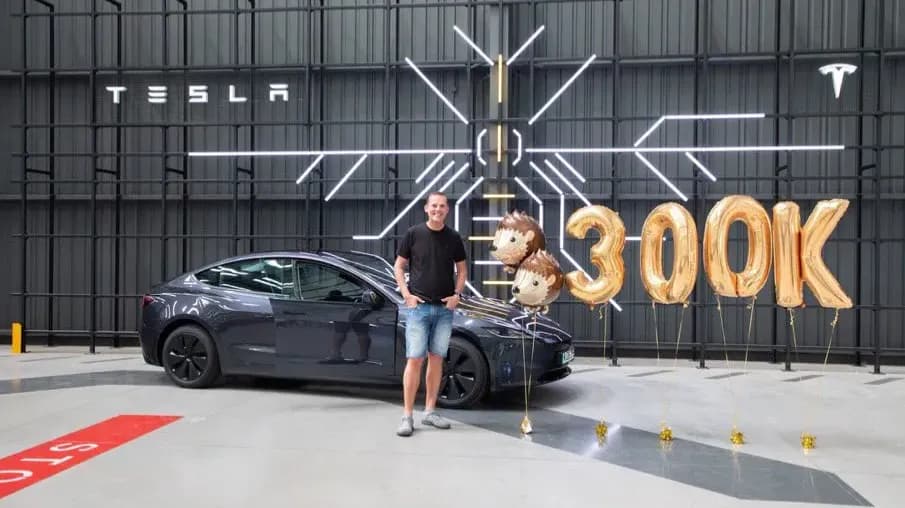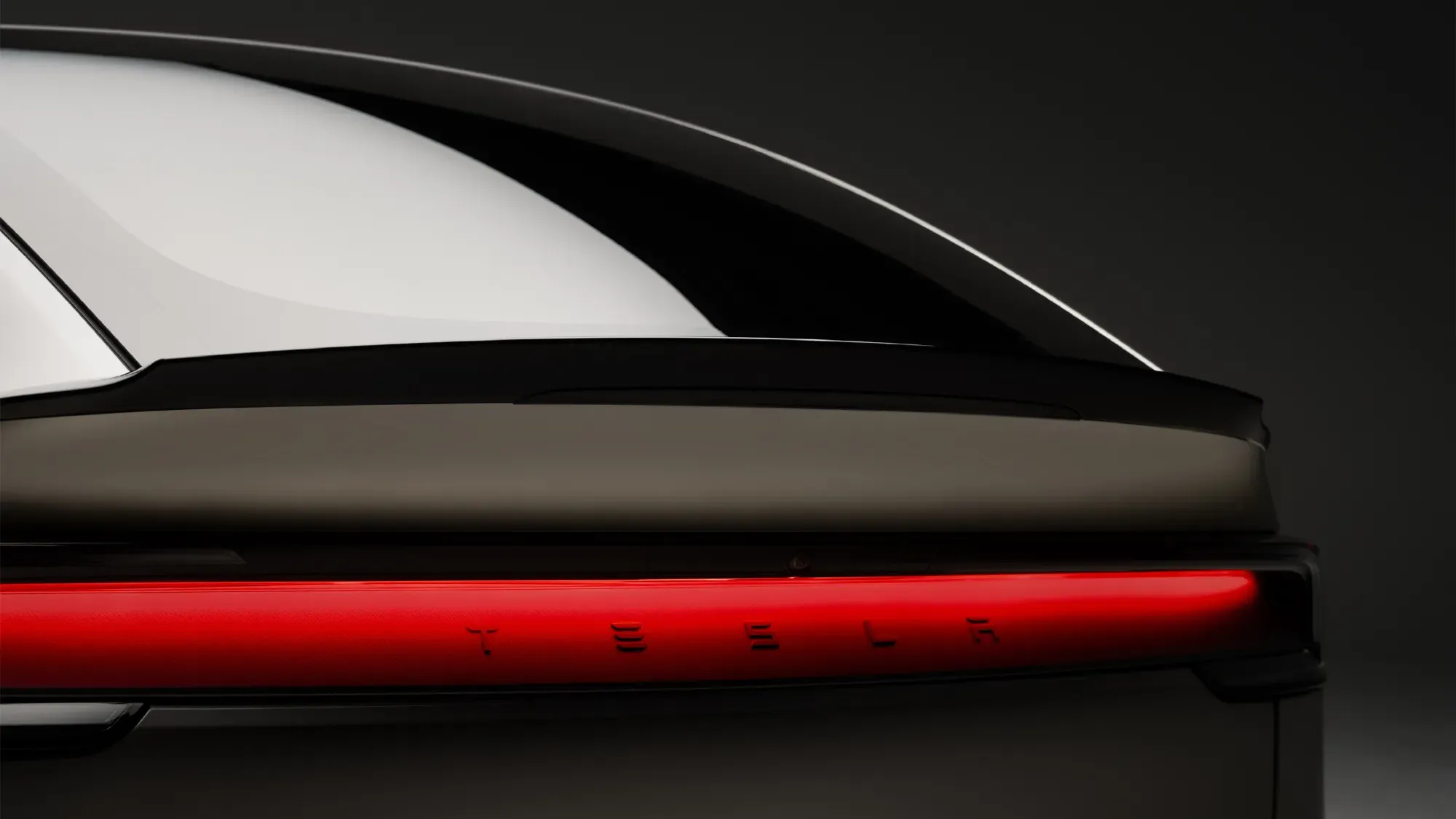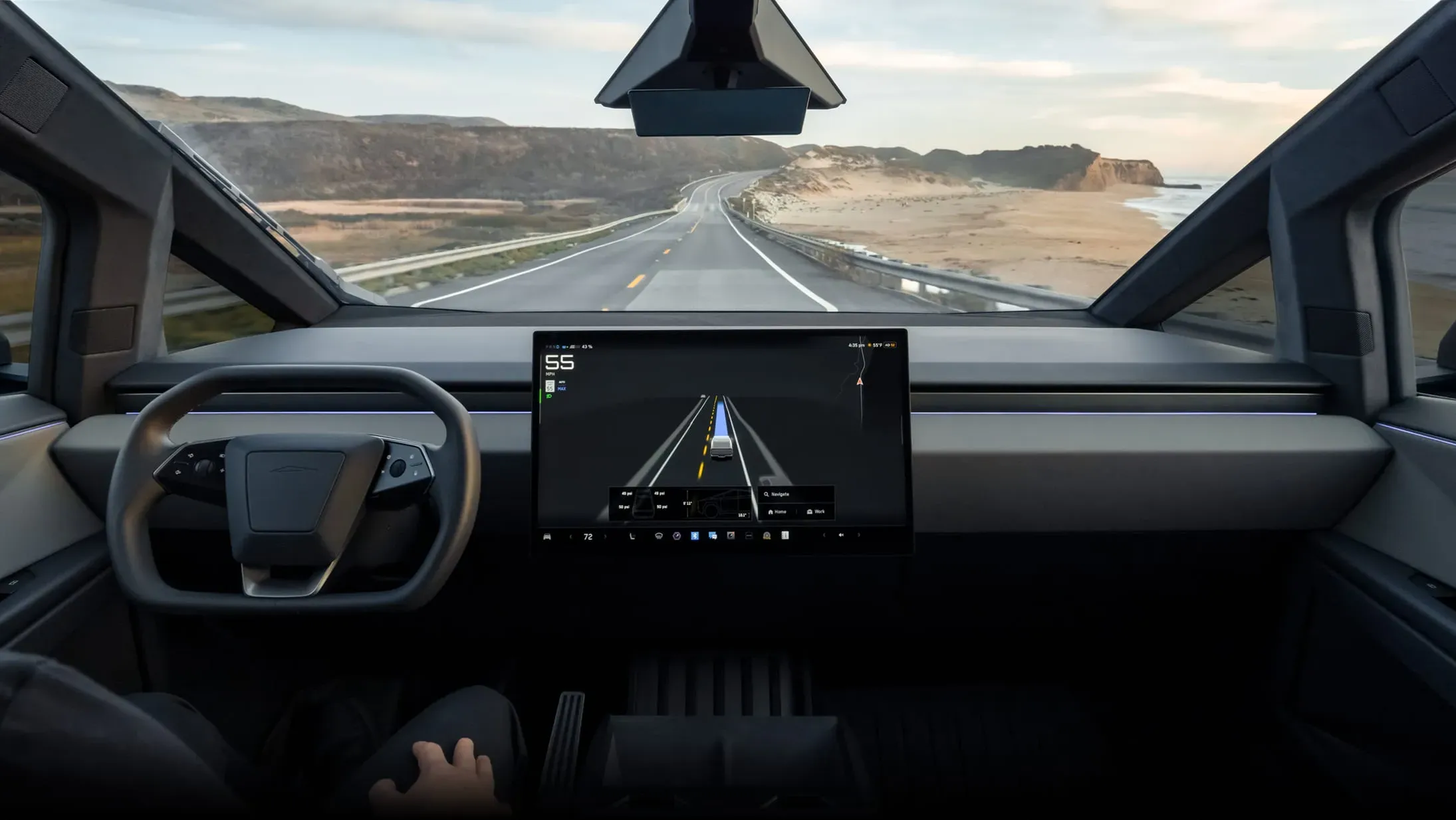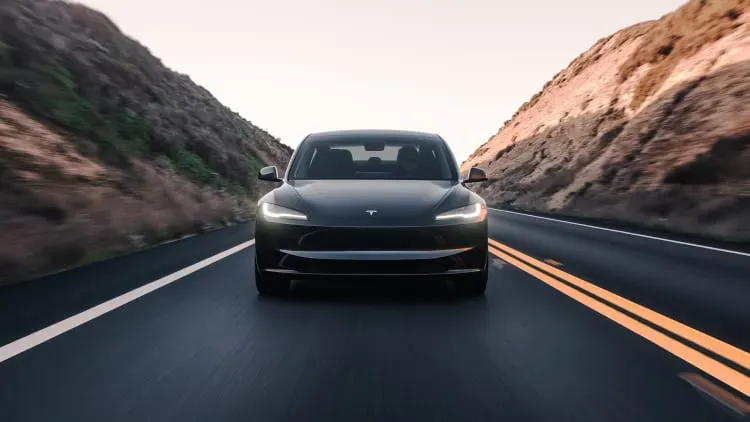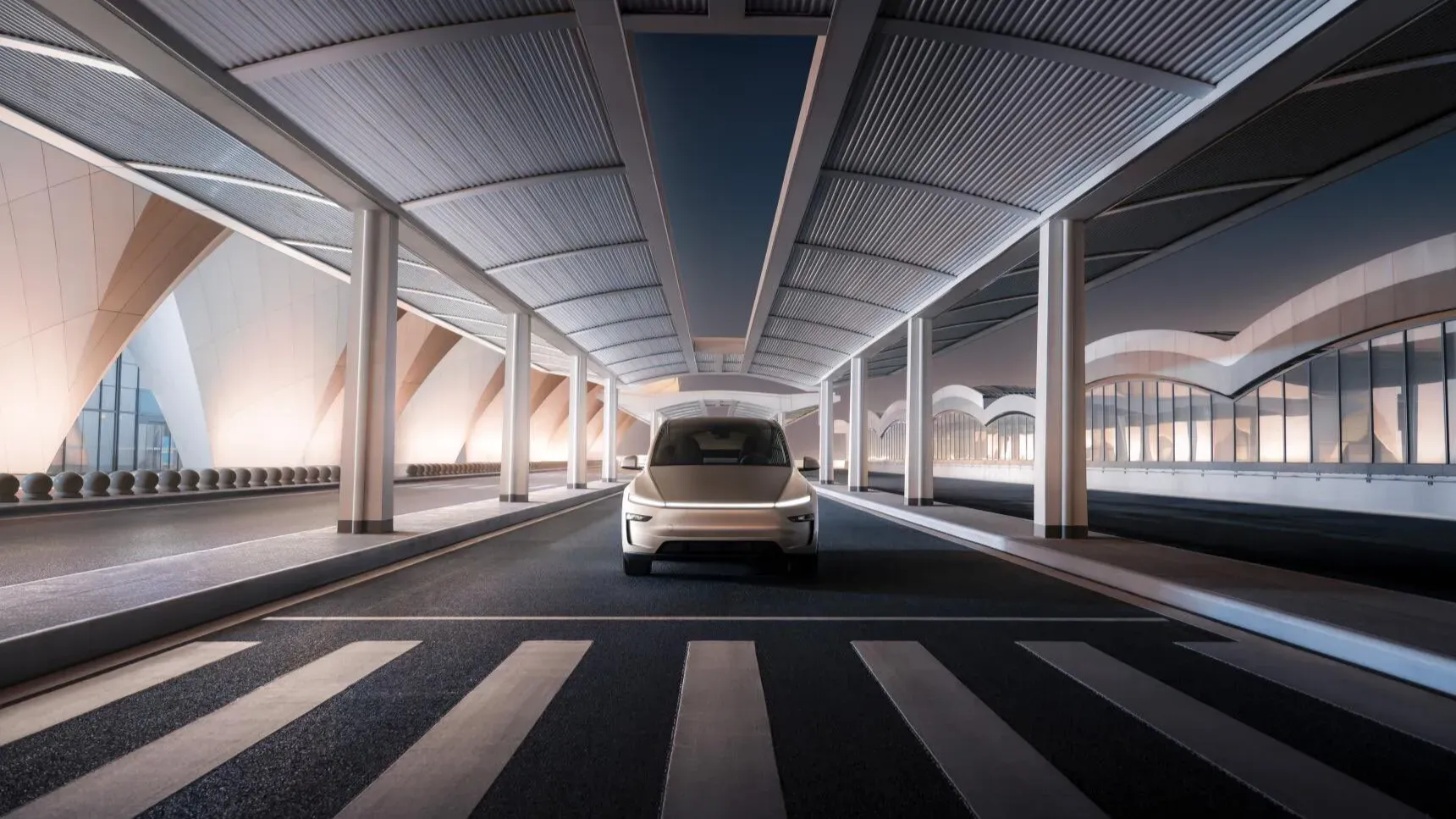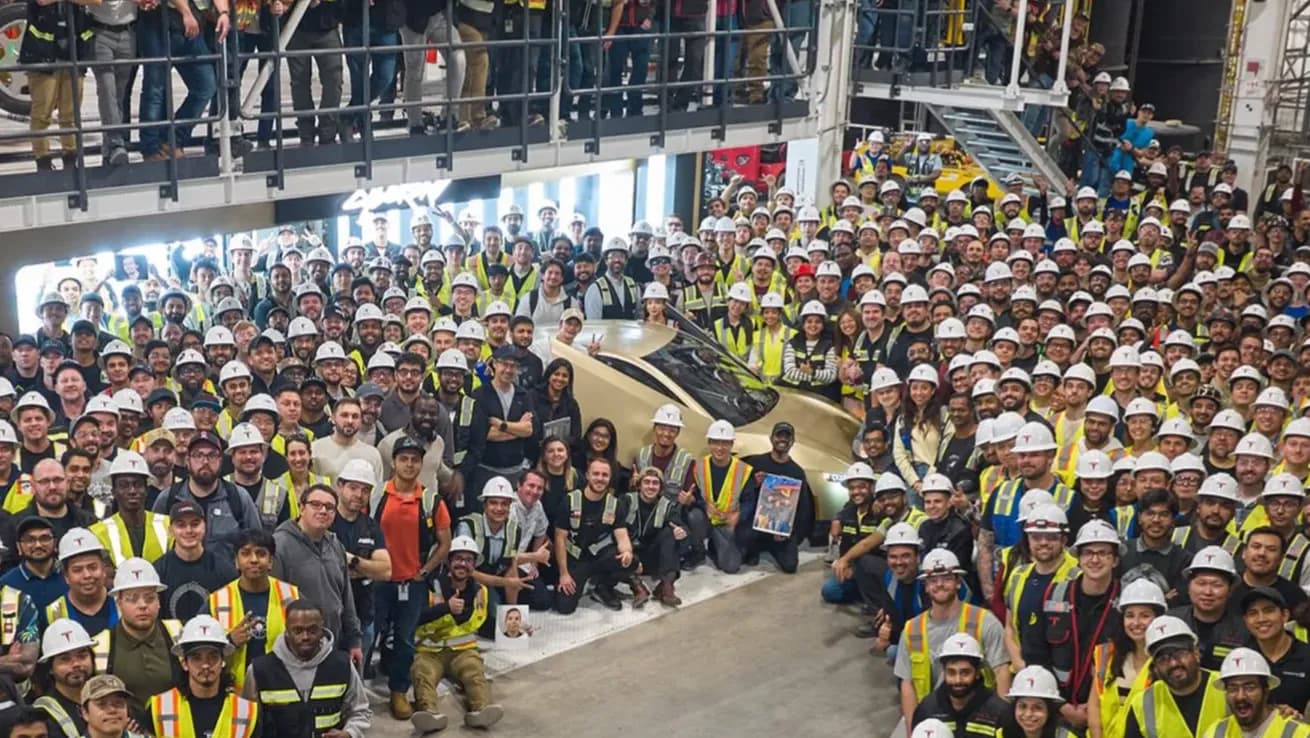
Tesla (NASDAQ: TSLA) rolled the first production unit of its Cybercab off the line at its Gigafactory in Austin, Texas on February 18, 2026, ahead of the company's previously stated April 2026 production start.
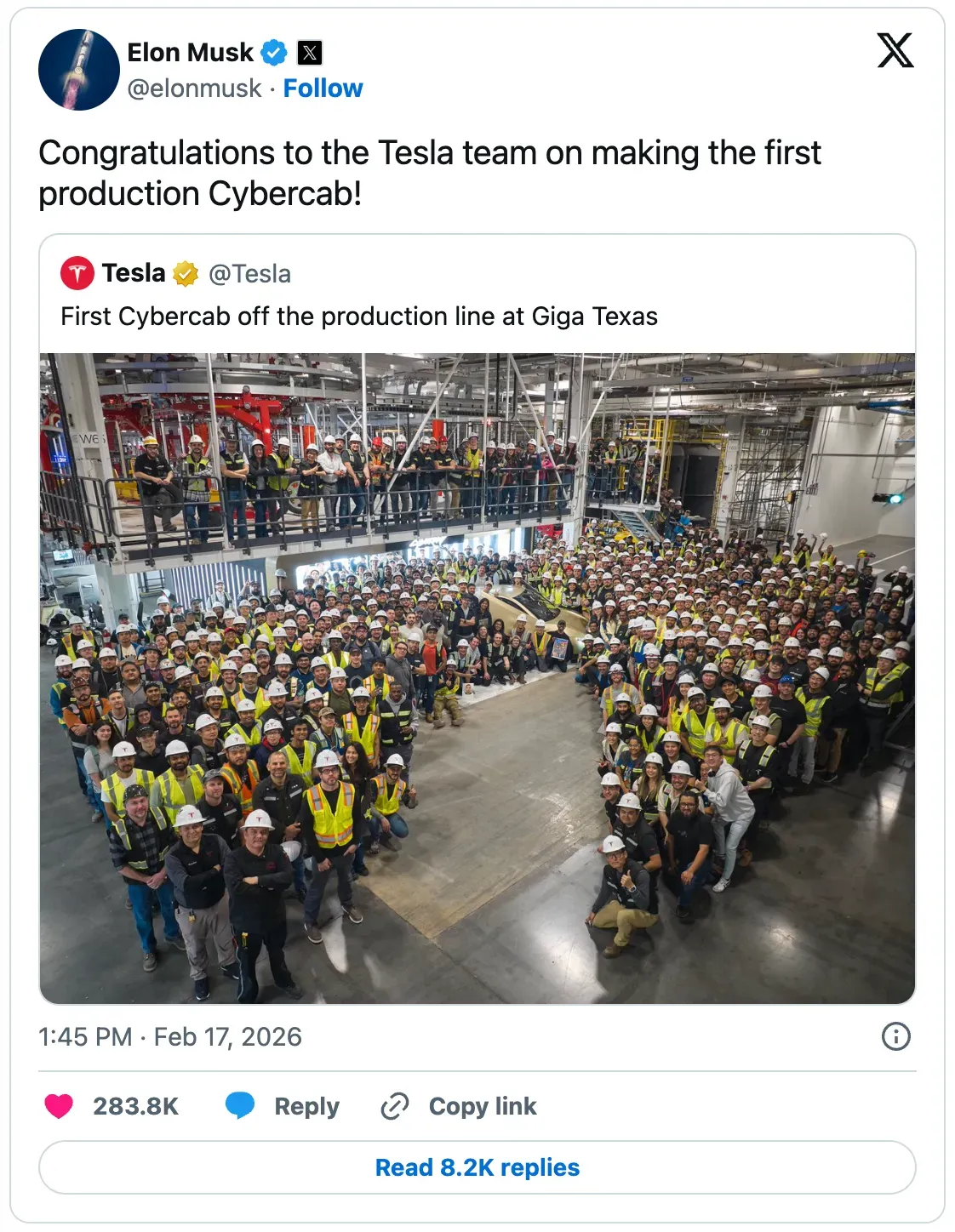
Source: X @Elon Musk
CEO Elon Musk confirmed the milestone on X: "Congratulations to the Tesla team on making the first production Cybercab."
The Cybercab is a two-door vehicle with no steering wheel and no pedals, designed exclusively for fully autonomous operation. It marks a clear departure from Tesla's current robotaxi fleet, which uses 2025 Model Y units — conventional vehicles retrofitted into a supervised ride-hailing role, with human safety monitors overseeing most trips. Tesla only began offering a limited number of unsupervised rides to the public in January 2026.
Advertisement – Continue scrolling for more
The Cybercab is engineered to minimize cost-per-mile across its operational lifetime, with a target utilization rate of roughly 50 to 60 hours per week — approximately five times that of a standard passenger car. Tesla has indicated that long-term Cybercab production volume is intended to exceed the combined output of all other Tesla models, following an S-curve ramp.
The company plans to use a novel "Unboxed" manufacturing process — assembling large sub-sections in parallel before joining them — which Musk has acknowledged will initially proceed "agonizingly slowly."
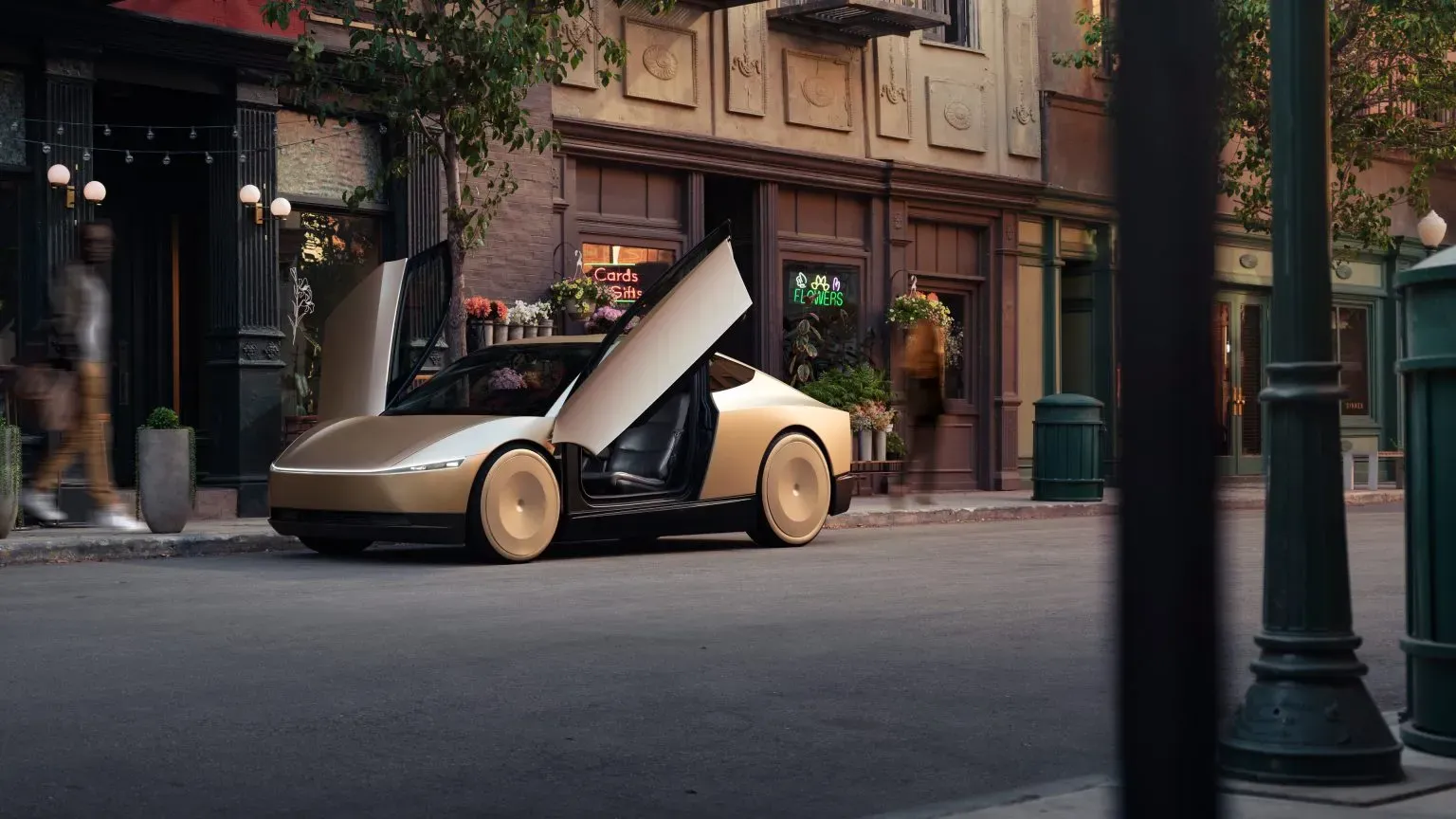
Musk has pegged the vehicle's price at under $30,000, with consumers able to purchase one privately. At Tesla's October 2024 "We, Robot" event, Musk stated the Cybercab would cost "sub $30K" and confirmed on X following the production announcement that a consumer delivery below $30,000 before 2027 would "happen." During Tesla's Q3 2024 earnings call, he also described the vehicle as costing "roughly $25K" — though those statements were contradictory, and the confirmed public figure remains under $30,000.
Reaching that consumer market is far from straightforward. U.S. federal motor vehicle safety standards are built around human-controlled systems, meaning Tesla will need to secure regulatory exemptions to put the Cybercab on public roads. The timeline for full road approval remains undefined.
Advertisement – Continue scrolling for more
Amazon-owned Zoox, which builds a comparable dedicated autonomous vehicle for passenger transport, received a federal exemption from NHTSA on August 6, 2025 under the expanded Automated Vehicle Exemption Program, and launched public robotaxi service in Las Vegas in September 2025 before expanding to San Francisco. State-level regulations on vehicle registration, insurance, and autonomous operation add another layer of complexity for Tesla.
On the same day, the California DMV confirmed that Tesla had avoided a 30-day suspension of its dealer and manufacturer licenses. The case stemmed from a December 2025 administrative ruling that Tesla's use of "Autopilot" in marketing violated state law by misleading consumers about the actual level of autonomy.
Advertisement – Continue scrolling for more
Tesla complied by dropping "Autopilot" from its California marketing entirely and discontinuing the feature as a standalone product in the U.S. and Canada in January 2026, while renaming the premium tier "Full Self-Driving (Supervised)." DMV Director Steve Gordon stated the department was "pleased that Tesla took the required action to remain in compliance."
As Tesla produces its first purpose-built driverless vehicle, the central question is no longer whether the hardware is ready — but whether regulators will move fast enough to let it actually drive.
Advertisement – Continue scrolling for more