Source: XPeng
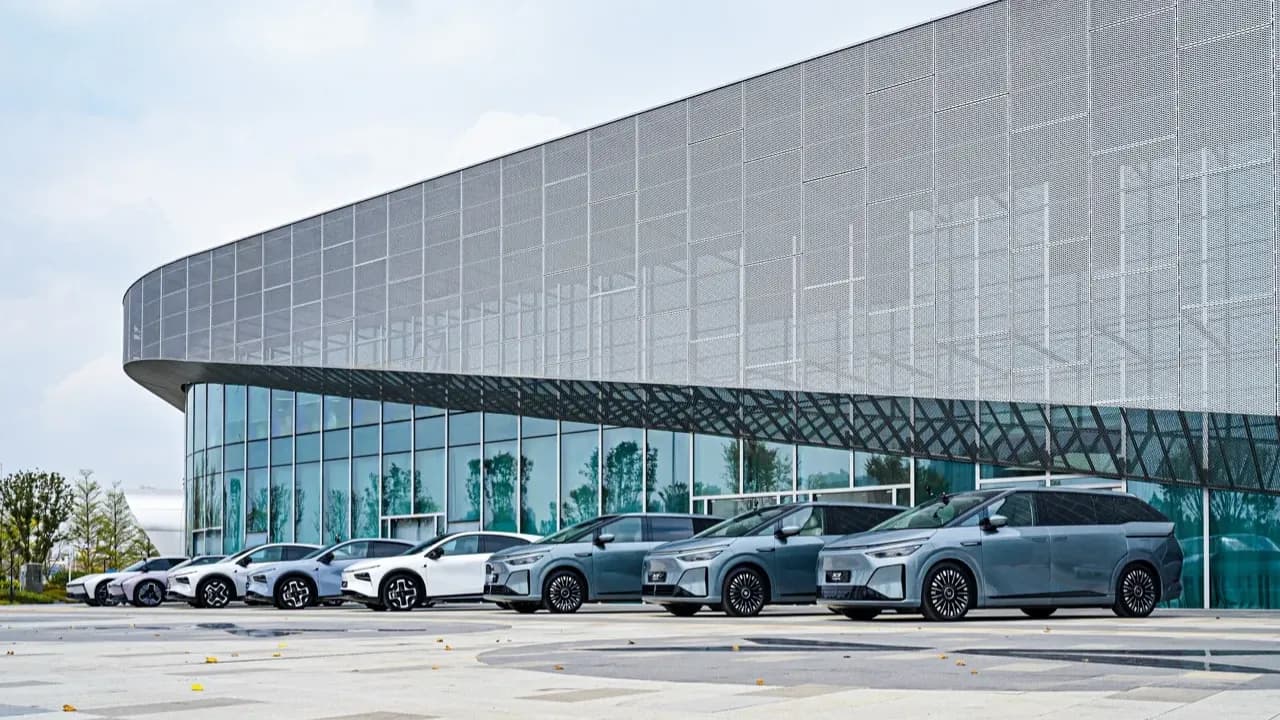
XPeng Inc. (NYSE: XPEV and HKEX: 9868) delivered 15,256 vehicles in February 2026, the Guangzhou-based automaker announced on March 1. The figure reflects a seasonal slowdown from January's 20,011 units, itself down 34% year-over-year as Chinese automakers broadly saw softer demand following the withdrawal of end-of-year purchase incentives.
February's total narrows the year-to-date gap XPeng must close to reach its internal target of 550,000–600,000 deliveries in 2026, a goal representing 28–40% growth over the 429,445 units delivered across the full year 2025 — a result that was itself a 126% increase on 2024.
Advertisement – Continue scrolling for more
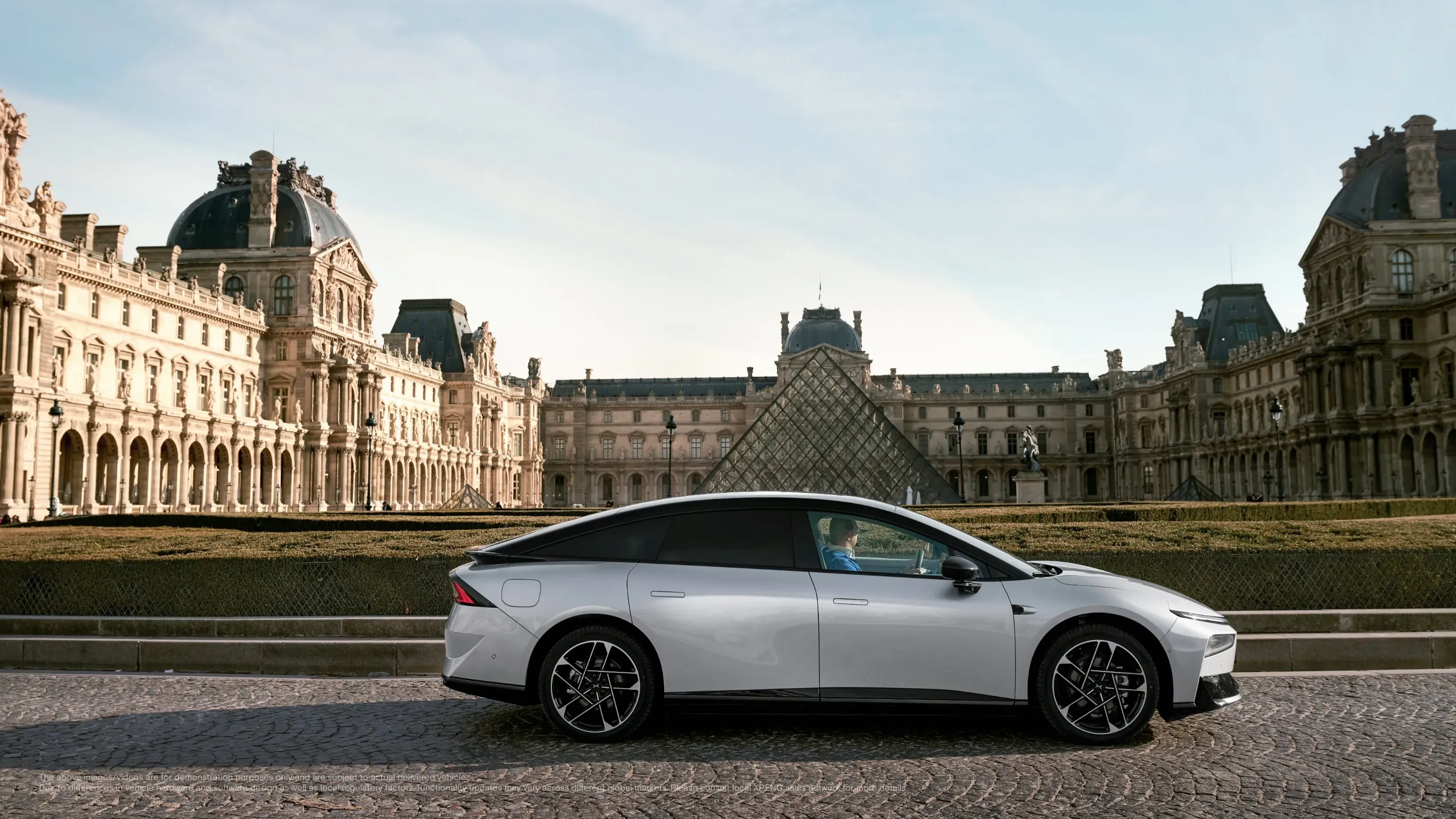
The month brought a notable international milestone alongside the headline number. XPeng began global deliveries of the updated P7+ liftback sedan to 18 countries, following a January launch across 36 markets that included a European debut at the 2026 Brussels Motor Show. The company targets young families as the primary audience for the model abroad.
The P7+ has been one of XPeng's biggest commercial success in China. Since its domestic launch in November 2024, the sedan has sold more than 88,000 units and held the top sales position in the 150,000–200,000 CNY (c. $21,900–$29,200) mid-to-large electric sedan segment for 12 consecutive months. The 2026 model year update introduced a refreshed exterior, 104 reported experience upgrades, and a new extended-range variant.
Source: XPeng
The updated P7+ is built on an 800-volt electrical architecture with 5C fast-charging capability, enabling a claimed 10–80% charge in 12 minutes. The battery-electric variant offers up to 725 km (450 miles) of range under the CLTC cycle, while the new extended-range version pairs a 1.5-litre turbocharged engine with a 49.2 kWh lithium iron phosphate battery for 430 km (267 miles) of electric-only range and a combined 1,550 km (963 miles).
The sedan measures 5,071 mm in length with a 3,000 mm wheelbase. In China, the lineup is priced from 186,800 to 198,800 CNY (c. $27,200–$29,000).
Advertisement – Continue scrolling for more
The standard driver-assistance hardware consists of two Nvidia Drive Orin chips delivering 508 TOPS. Customers can optionally equip the vehicle with XPeng's proprietary Turing AI chip-based systems, scaling up to 2,250 TOPS for the top Ultra configuration. It is on this higher-tier hardware that XPeng's next autonomous driving architecture will run.
On February 26, XPeng chairman He Xiaopeng confirmed that Volkswagen would become the launch commercial customer for the second-generation VLA (Vision-Language-Action) system, marking the first time a major Western automaker has formally adopted Chinese-developed autonomous driving software.
XPeng is scheduled to formally unveil the system at a media event in Guangzhou on March 2, ahead of a broader vehicle rollout later in March. The first production models to receive VLA 2.0 will be the Ultra versions of the new P7, the fully electric G7, and the X9 EREV.
Advertisement – Continue scrolling for more
The second-generation VLA represents a structural departure from conventional ADAS pipelines. Traditional systems translate visual input into language instructions before generating an action command; XPeng's architecture bypasses that translation step entirely, producing driving commands directly from visual signals.
The system is powered by XPeng's in-house Turing chip, trained on nearly 100 million driving video clips. The company describes it as the first mass-produced "physical world large model" — an architecture it intends to extend to robotaxi platforms and humanoid robots.
Advertisement – Continue scrolling for more
That Volkswagen has elected to license the system rather than develop an equivalent in-house underlines the commercial value XPeng is extracting from its R&D outlays. Technology licensing is becoming a revenue pillar alongside vehicle sales at a moment when XPeng's 2025 overseas deliveries reached 45,008 units, up 96% year-over-year across 60 markets — and the company has stated its ambition to double that overseas share in 2026.
Whether the P7+'s global shipment cadence can keep pace with those ambitions — and how VLA 2.0 performs under the scrutiny of regulators and the editorial lens of European reviewers — will shape XPeng's credibility beyond China more than any single monthly delivery figure.
Conversion rate: 1 USD = 6.86 CNY as of March 2, 2026
Advertisement – Continue scrolling for more