Source: Xiaomi
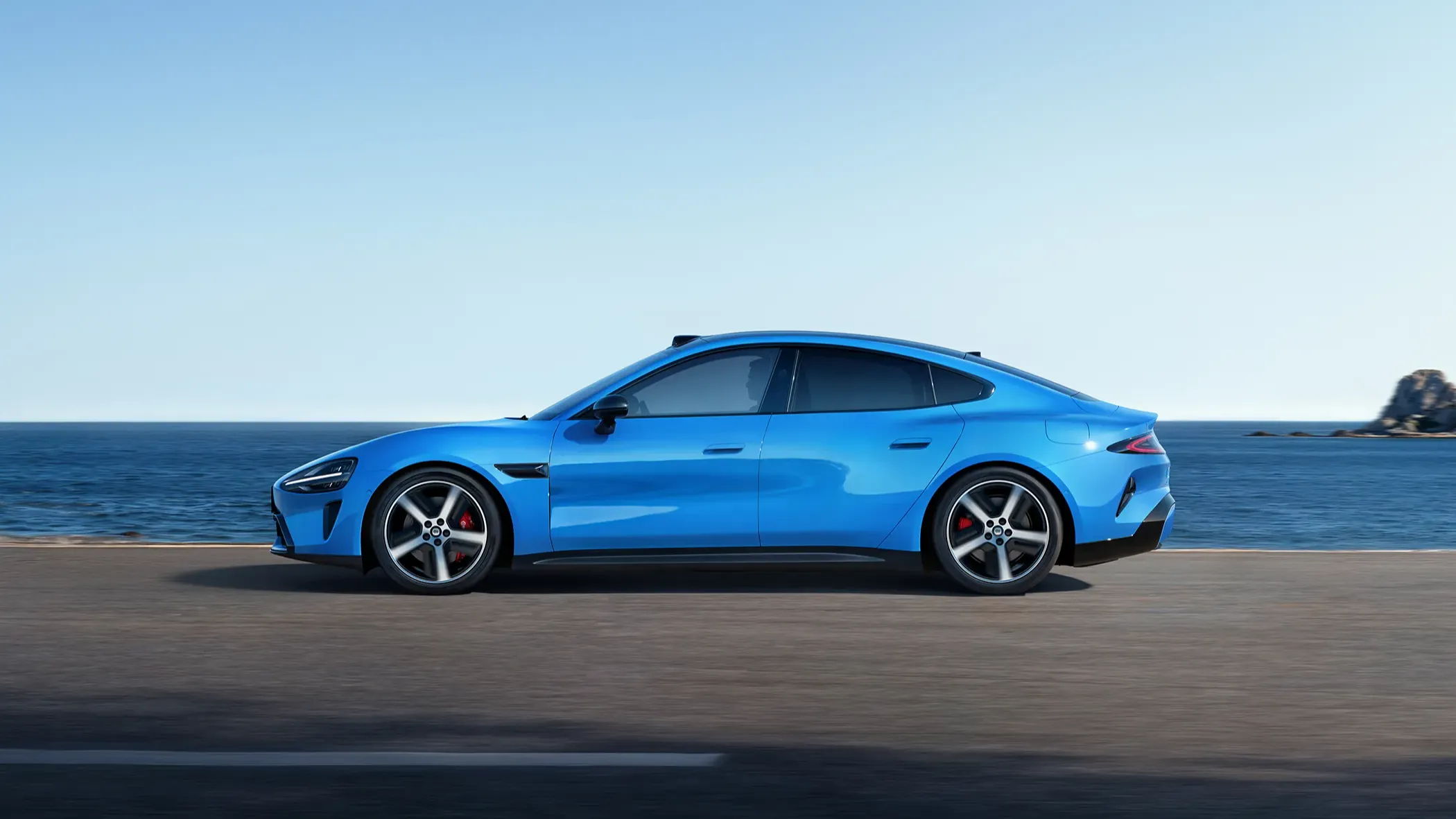
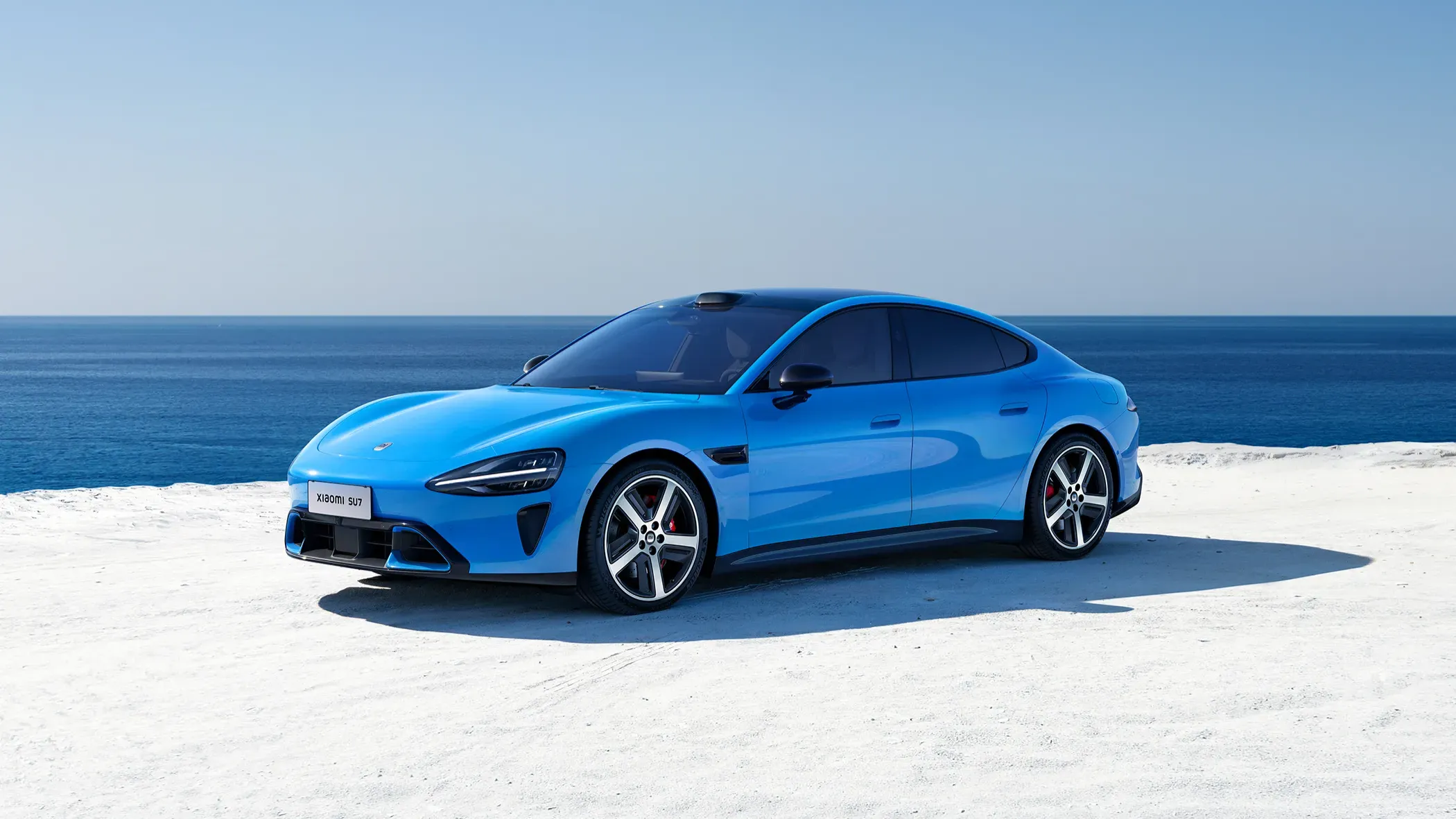
Xiaomi (HKG: 1810) officially launched its next-generation SU7 electric sedan on March 19, 2026, pricing the updated model from 219,900 CNY (c. $31,900) and drawing 15,000 non-refundable locked orders within the first 34 minutes of sales opening.
Lei Jun, Xiaomi's founder, chairman, and CEO, announced the order figure on Weibo shortly after the launch event concluded. Unlike the deposit-based figures Xiaomi reported for the first-generation SU7, these represent non-refundable commitments — a distinction the company made central to its announcement.
Advertisement – Continue scrolling for more
The three-variant lineup is priced at 219,900 CNY (c. $31,900) for the Standard, 249,900 CNY (c. $36,200) for the Pro, and 303,900 CNY (c. $44,000) for the Max. The final launch prices came in 10,000 CNY below the pre-sale prices announced in January, in line with standard practice in China's EV market.
The base model remains 15,600 CNY cheaper than the Tesla (NASDAQ: TSLA) Model 3's starting price of 235,500 CNY (c. $34,100) in China, despite a 4,000 CNY increase over the outgoing first-generation model.
Source: Xiaomi
The launch follows a period of deliberate production transition. Xiaomi ended first-generation SU7 manufacturing in February 2026, with cumulative deliveries of that model exceeding 381,000 units since its April 2024 debut. The model transition caused a 47.66% drop in February deliveries to 20,414 units — a trough the company had signalled in advance.
Pre-orders for the updated model opened on January 7, 2026, and approached 100,000 units within two weeks, with Xiaomi managing early demand carefully to avoid the delivery backlogs that plagued the original launch.
Advertisement – Continue scrolling for more
The platform upgrade is the most substantial change. Standard and Pro trims move from a 400V architecture to a 752V silicon carbide system, while the Max advances from 871V to 897V, approaching a true 900V platform.
The Max can now replenish 670 km (416 miles) of CLTC range in 15 minutes — up from 510 km on the outgoing version — with a claimed 10%-to-80% charge time of approximately 11 minutes via 5C supercharging.
Source: Xiaomi
Range improves across all variants on the CLTC cycle. The Standard carries a 73-kWh battery for 720 km (447 miles); the Pro uses a 96.3-kWh pack for 902 km (560 miles); the Max packs 101.7 kWh for 835 km (519 miles). The Pro's 902 km figure is the headline number, though CLTC ratings typically translate to roughly 400–420 real-world miles.
Acceleration figures are 5.28 seconds for the Standard and 5.7 seconds for the Pro (both rear-wheel drive), and 3.08 seconds for the dual-motor, all-wheel-drive Max, all measured 0–100 km/h.
Advertisement – Continue scrolling for more
The most operationally significant upgrade may be the standardisation of ADAS hardware. The outgoing SU7 reserved LiDAR for the top trim; the next-generation model includes LiDAR, a 4D millimeter-wave radar, and an Nvidia Thor chip delivering 700 TOPS of computing power across all three variants.
The accompanying HAD (Hyper Autonomous Driving) system is now powered by Xiaomi's new XLA cognitive large language model, which the company says integrates assisted driving and embodied robotics decision-making for the first time. All models also carry Xiaomi's HAD highway autonomous driving system as standard.
Safety received particular attention, following two fatal accidents involving the original SU7 in 2025 that prompted public scrutiny. The body structure now uses 2,200 MPa ultra-high-strength steel in critical areas, up from 2,000 MPa, and airbag count increases from 7 to 9 across all variants, with new rear-passenger side airbags added.
Advertisement – Continue scrolling for more
Door handles now feature a triple-redundant system drawing from three independent power sources, with a mechanical cable backup functional without any electrical power — a direct response to concerns raised after one of the 2025 incidents.
The updated sedan measures 4,997 mm in length, 1,963 mm in width, and features a 3,000 mm wheelbase. Exterior changes are incremental: a new Capri Blue paint option, revised headlight graphics, and redesigned 20-inch wheels.
All variants now ride on staggered 245 mm front and 265 mm rear tires. The Pro model gains dual-chamber air suspension with Continuous Damping Control, previously exclusive to the Max. All trims receive four-piston fixed front brake calipers; the Max upgrades to Brembo units with drilled, vented discs.
Source: Xiaomi
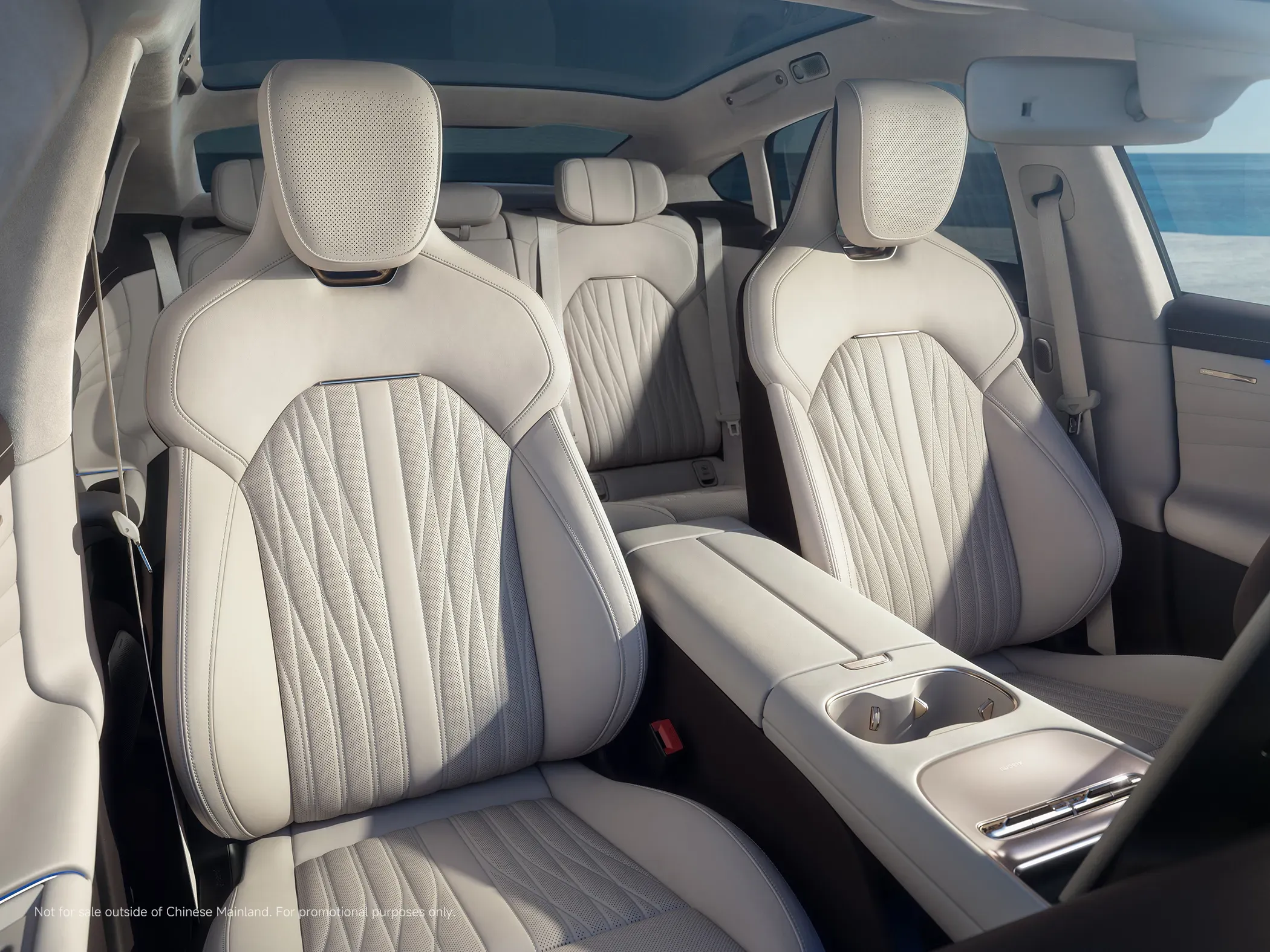
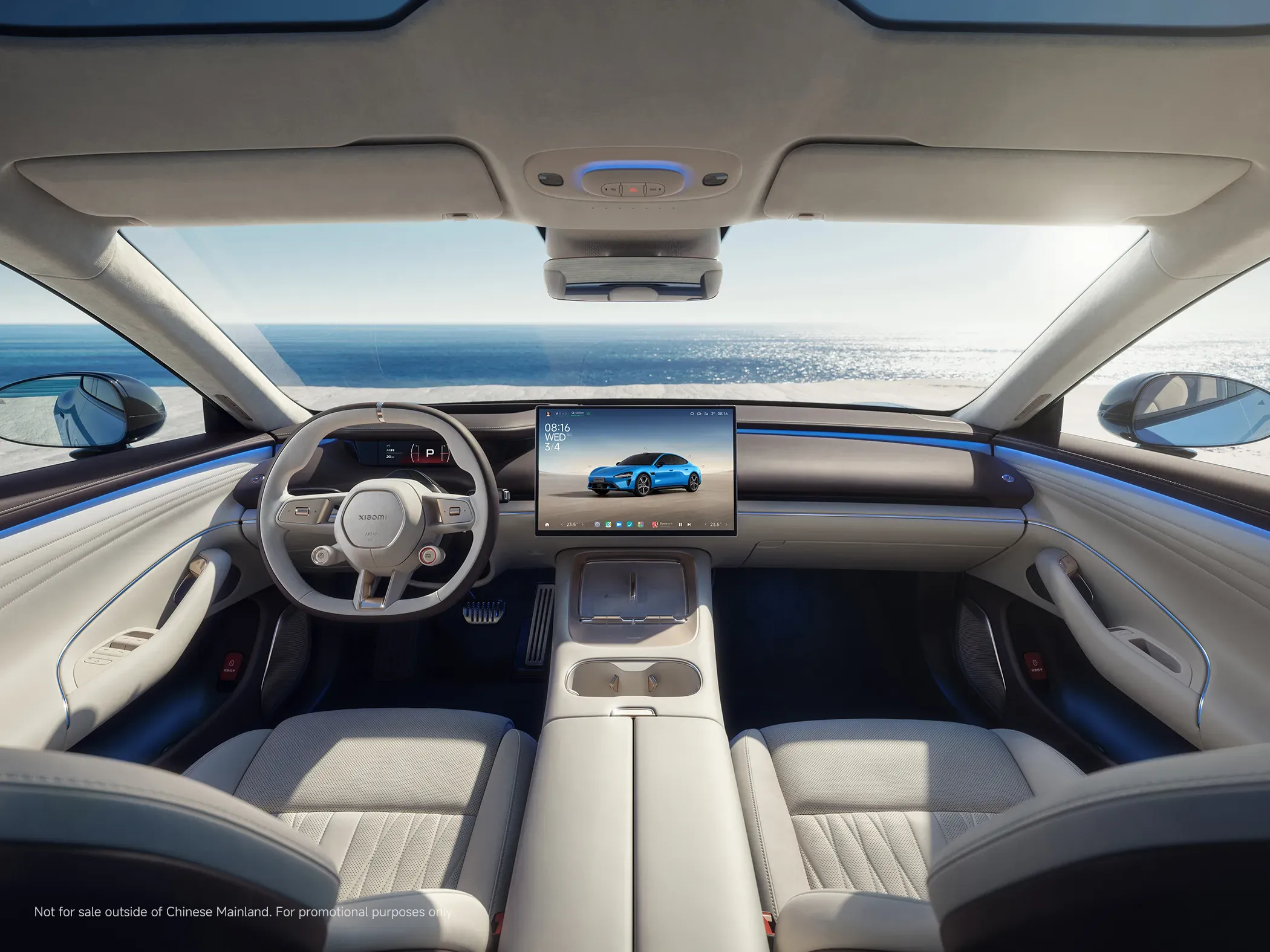
Inside, the cabin runs Xiaomi HyperOS 2.0, gains a "Dark Night Black" interior theme, redesigned steering wheel, and dynamic ambient lighting. The infotainment system centres on a 16.1-inch 3K-resolution touchscreen powered by a Qualcomm Snapdragon 8295 chip.
Mass deliveries are set to begin immediately following the March 19 launch, with Xiaomi targeting 16,000 units of March production. The company delivered over 410,000 vehicles across all models in 2025 and has set a 550,000-unit target for 2026 — a 34% year-over-year increase — with the next-gen SU7 and the YU7 SUV as the two pillars of that plan.
Advertisement – Continue scrolling for more
The launch event attracted over 55 million viewers on Xiaomi EV's streaming channel alone, a figure that reflects the brand's unusual position as a consumer electronics company with a genuine mass automotive following — and raises the question of whether its European market entry, currently planned for 2027, will generate similar levels of attention on a continent where that combination is still largely untested.
Conversion rate: 1 USD = 6.90 CNY as of March 19, 2026.
Advertisement – Continue scrolling for more